Inside the World's Largest Building: Boeing's Everett Factory

.webp)
.webp)

.webp)
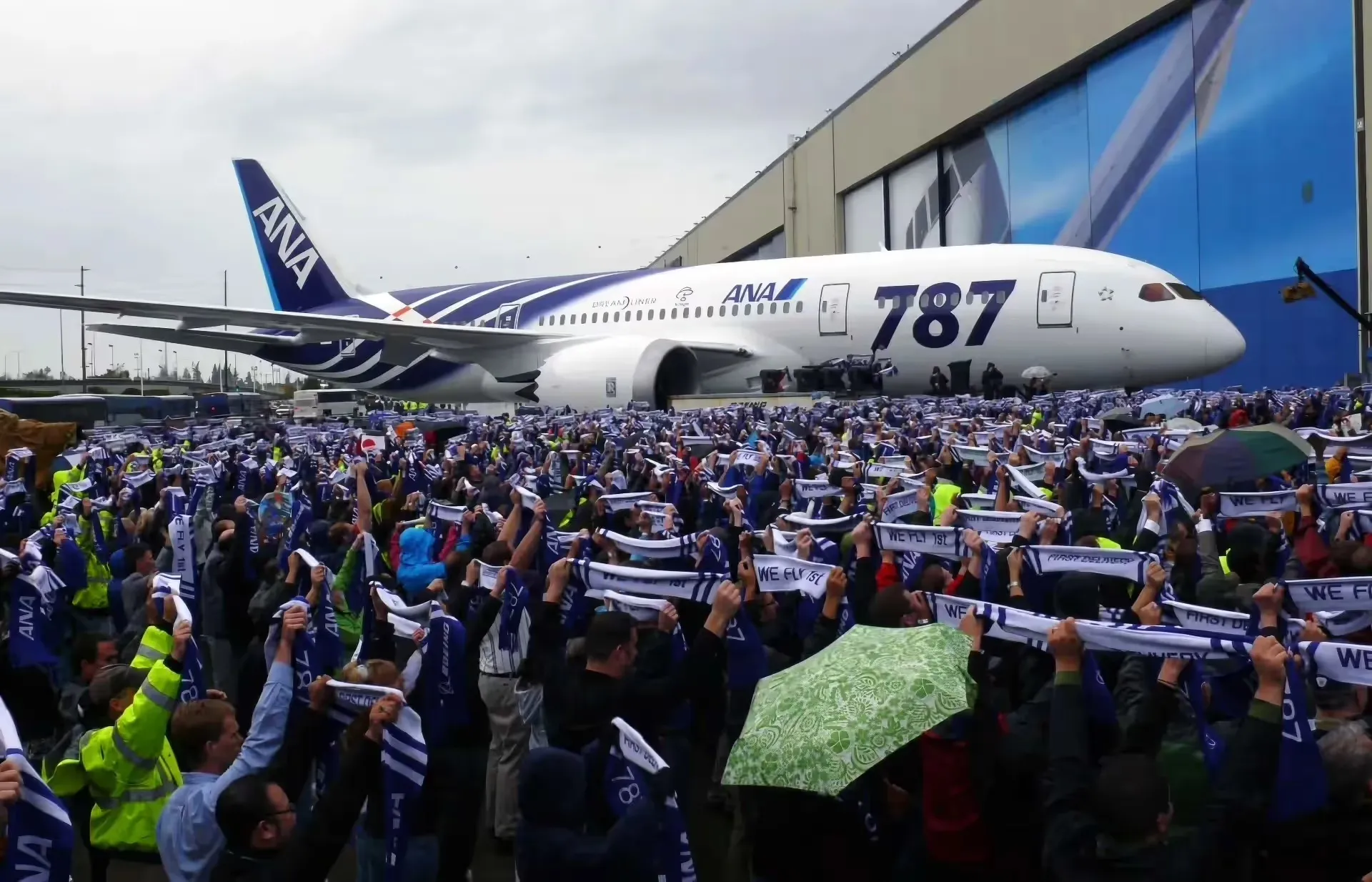
SEATTLE — There are few places on Earth where you can stand inside a building so massive it has its own weather system. The Boeing Everett Factory in Mukilteo, Washington, is one of them—and it holds the Guinness World Record as the world's largest building by volume at a staggering 472 million cubic feet.
For aviation enthusiasts, the 80-minute guided tour of this cathedral of aerospace engineering has become something of a pilgrimage.
Since tours first began in 1968 from a humble single-trailer next to the factory, over 6 million visitors from around the globe have made the journey north of Seattle to witness where aviation dreams become reality. And with seven-day-a-week operations, there's no need to wait for the weekend to experience it.
Where Giants Are Born
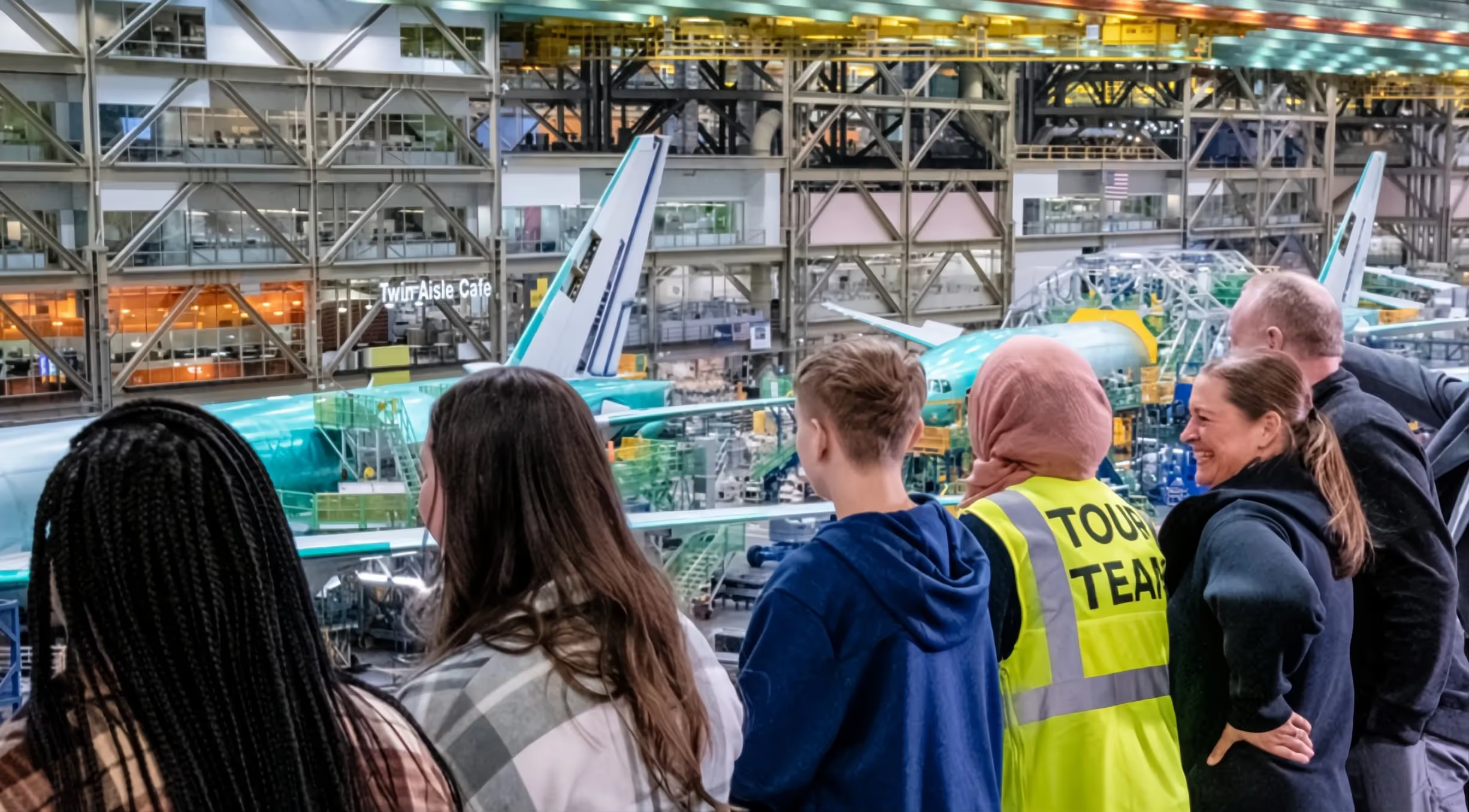
Today's tours, operating from the purpose-built Boeing Future of Flight facility that opened in 2005, offer an unobstructed view into the assembly of the 777 and 777X aircraft. Standing on the observation deck, you're confronted with a perspective that challenges comprehension: a factory floor spanning 98.3 acres—enough space to fit 75 American football fields inside.
But it's not the size alone that captivates. It's watching the meticulous choreography of aircraft assembly unfold before you. From initial component integration to the final touches before delivery, each stage of production reveals the extraordinary precision required to build these magnificent machines.
Tour guides, armed with deep knowledge of Boeing's engineering innovations and century-long history in the Puget Sound region, bring context to the controlled chaos below.
Beyond the Factory Floor
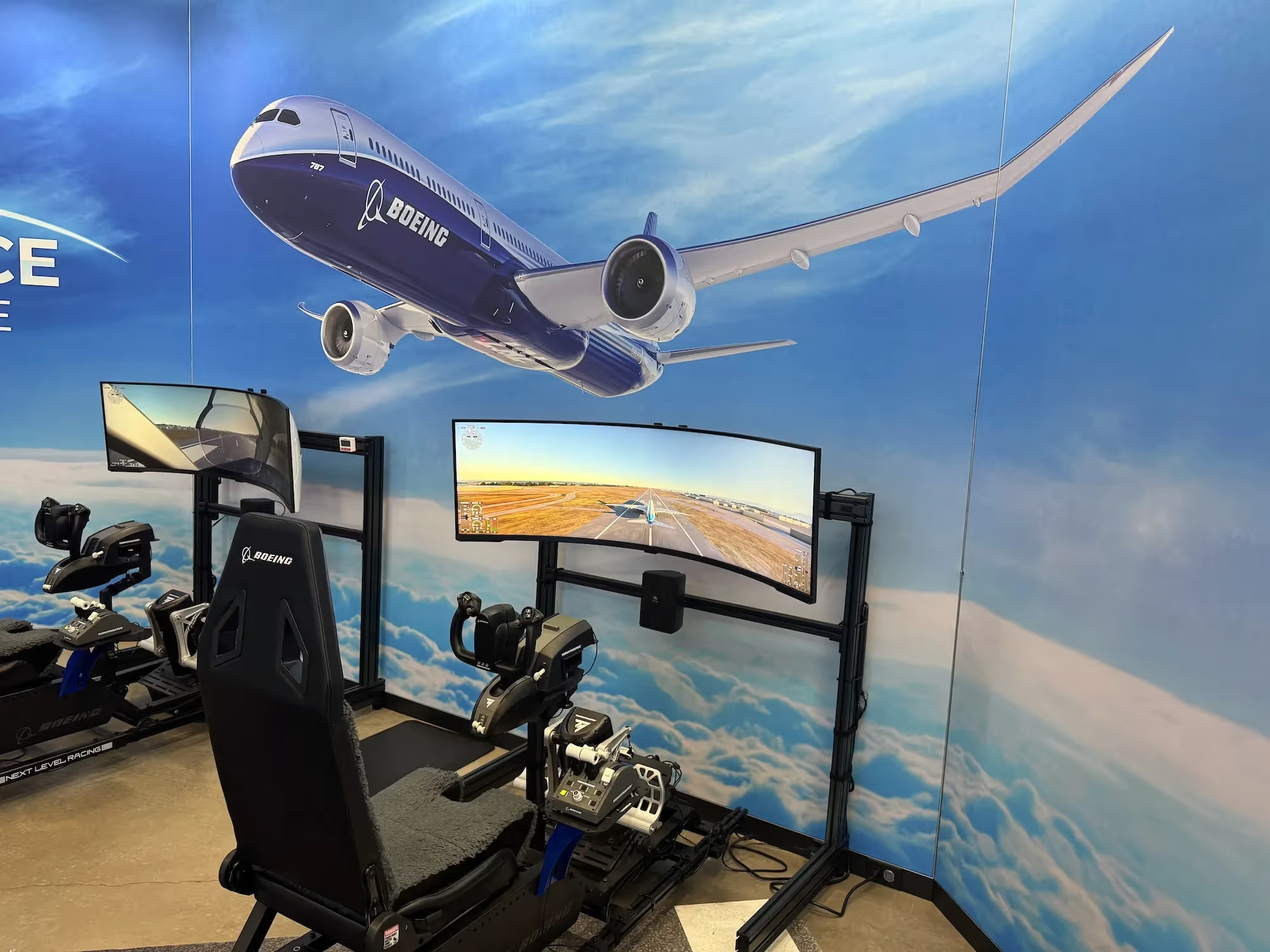
We were not allowed to take photos of the factory, but the experience extends well beyond this edifice. The Boeing Future of Flight's 28,000-square-foot Gallery serves as an immersive celebration of aerospace innovation, anchored by Boeing's three core divisions: Commercial Airplanes, Defense, Space and Security, and Global Services.
Here, visitors can step inside a mock-up of the U.S. Laboratory Destiny module, trace the storied legacy of the 747 "Queen of the Skies," and encounter something truly unique: Wisk's autonomous air taxi—the world's first self-flying, all-electric air vehicle and the only one on public display in the Pacific Northwest.
The Gallery's newest exhibits tackle aviation's most pressing challenge: sustainability. The Sustainable Aviation Fuel display details Boeing's pioneering work to reduce the industry's environmental footprint, while the Wisk exhibit demonstrates how urban air mobility could transform city transportation through electric, autonomous flight.
Engineering the Impossible
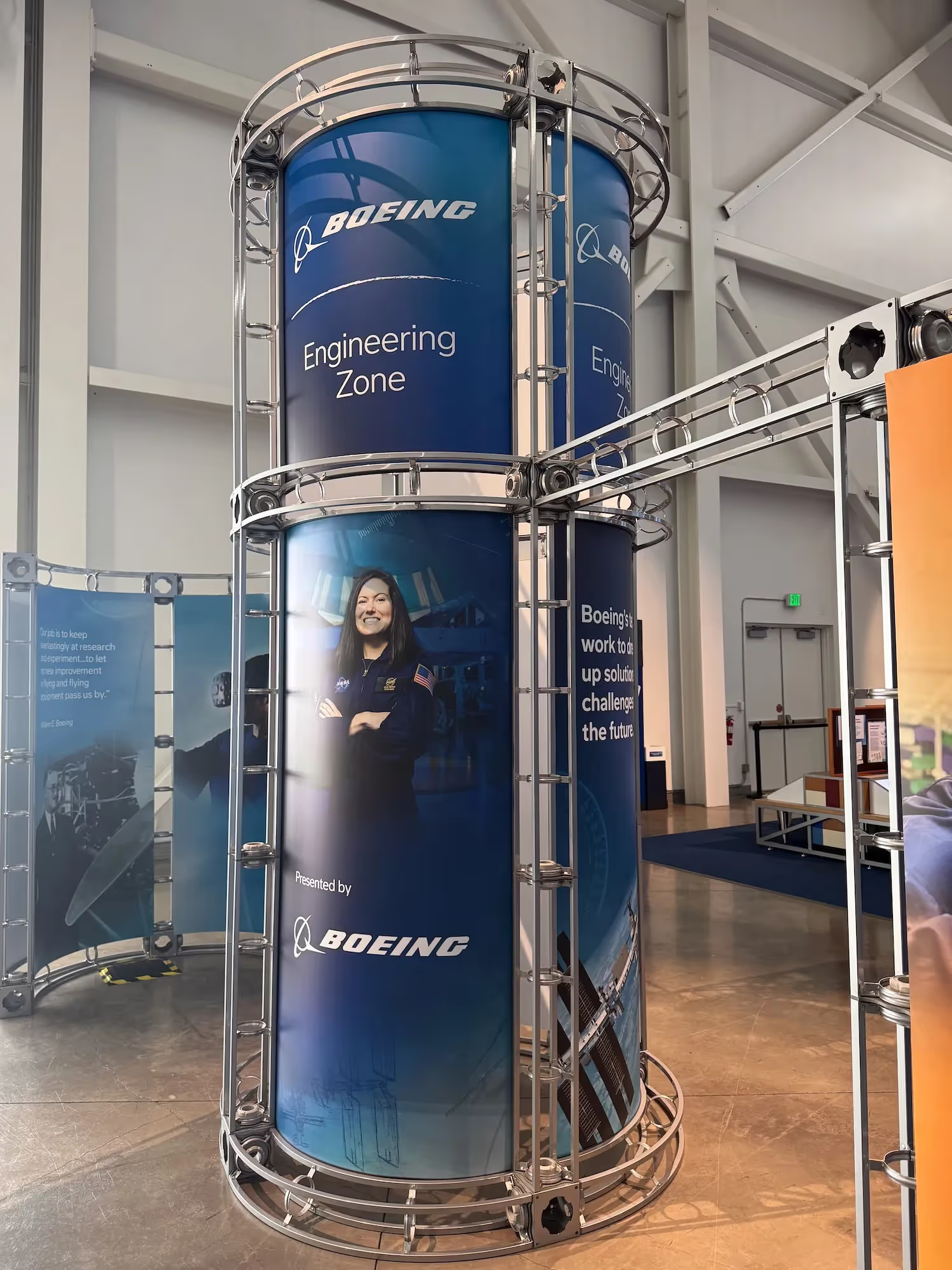
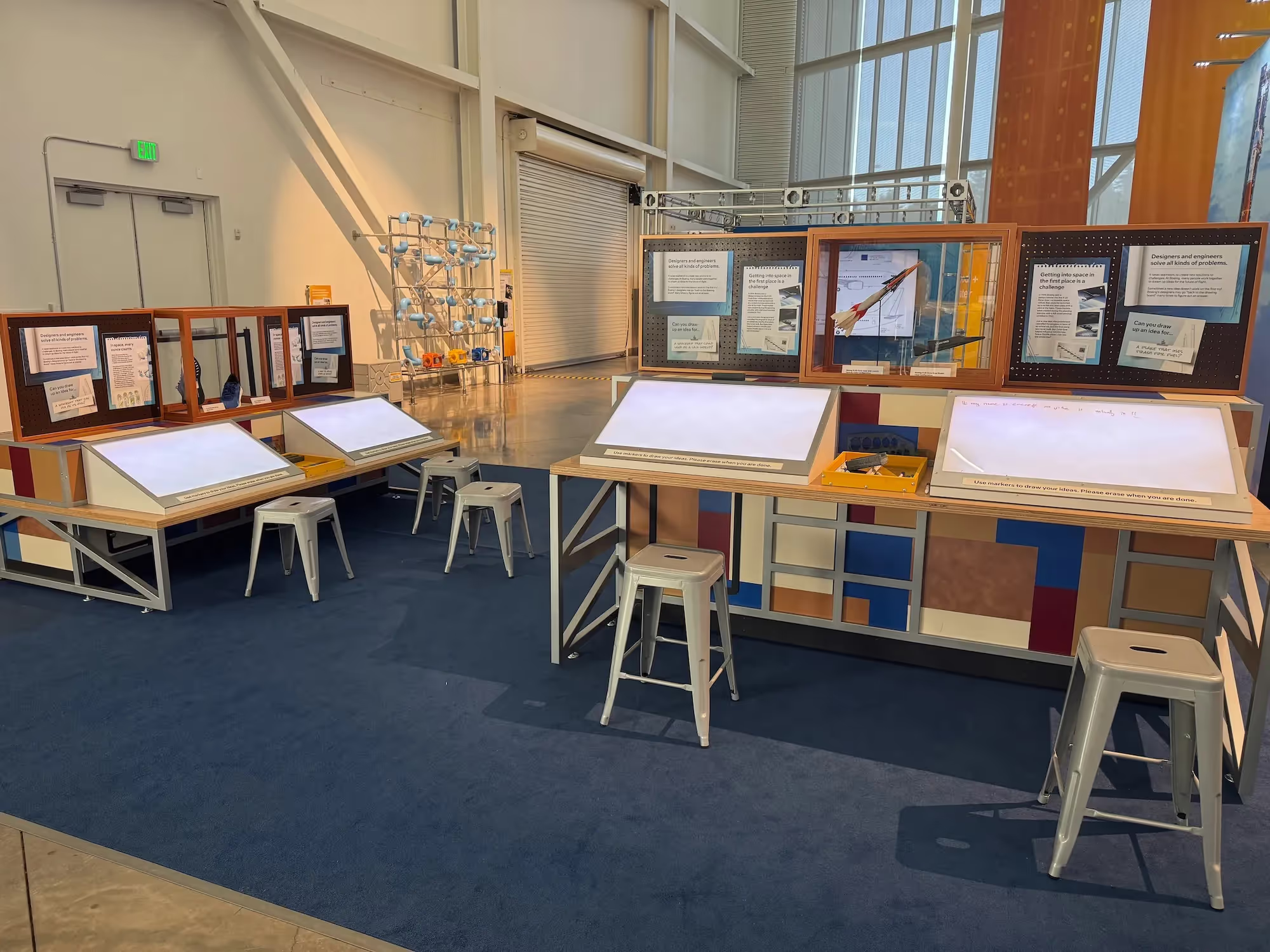
For families and aspiring aerospace professionals, the Boeing Engineering Zone offers hands-on exploration of how engineers solve the challenges of sustainable travel and living in space. Interactive activities—from designing solutions on magnetic mash-up walls to simulating plant growth in the Lettuce Lab—show how creativity transforms impossible concepts into working realities.
The "We Can Do It: The Legacy of Rosie the Riveter" exhibit pays tribute to the women of Boeing who shaped the war effort and paved the way for today's more diverse aerospace workforce, drawing from the Boeing Historical Archives to tell their powerful stories.
Views Worth the Visit
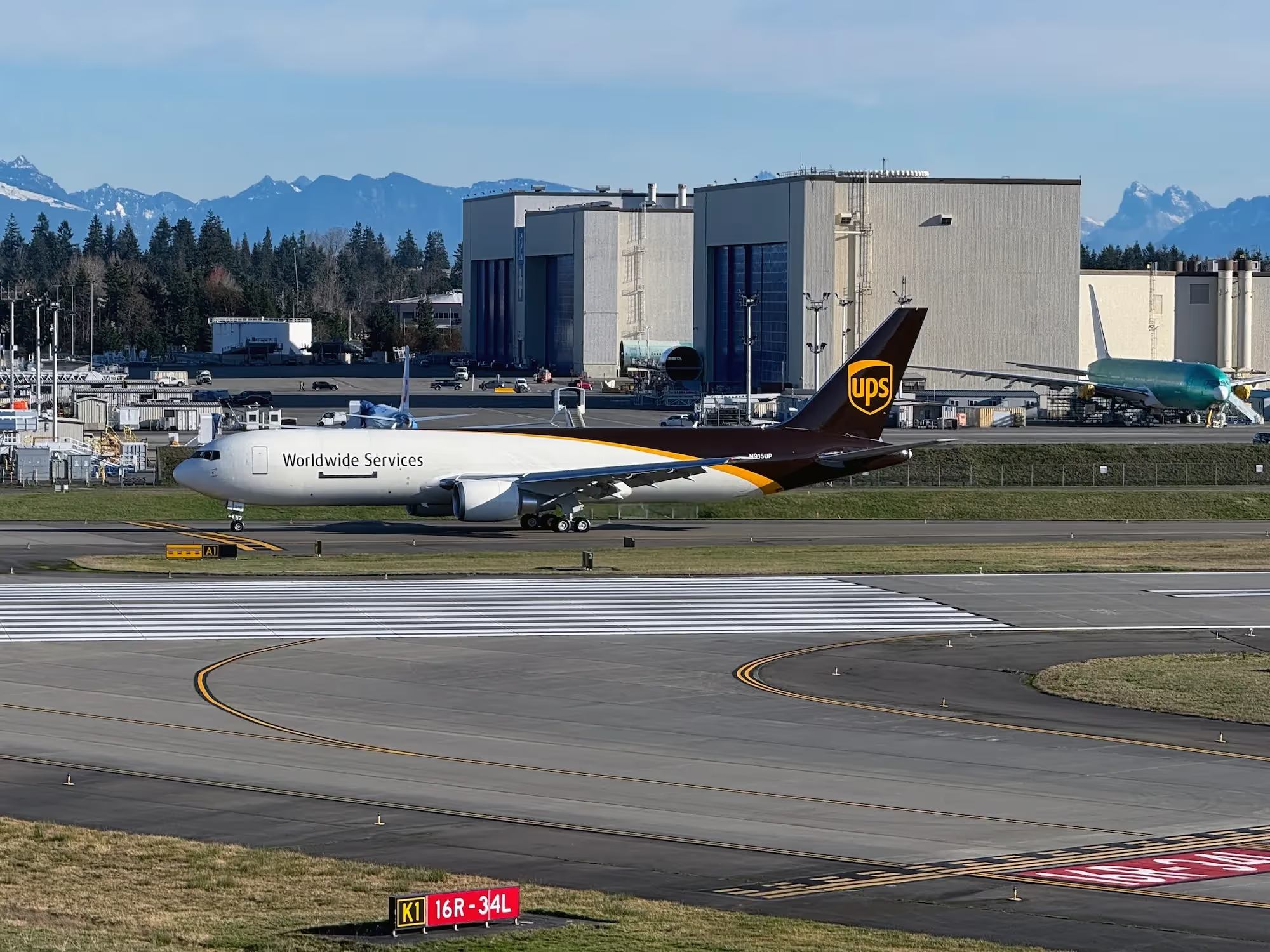
Even before entering the facility, visitors are treated to panoramic vistas from the 9,000-square-foot Sky Deck. With sweeping views of Paine Field, the Everett Factory, and the North Cascades, it's the ideal vantage point for watching daily flight operations, including test flights of Boeing's newest aircraft.
A Living Laboratory
Perhaps most intriguing for aviation geeks is the seasonal access to the Passenger Experience Research Center (PERC)—Boeing's cabin market research lab where volunteer guests participate in surveys that shape the future of air travel. This is where breakthroughs like the 787's oversized windows, LED lighting, and pivot-style overhead bins were refined, continuing a tradition of mockup testing that dates back to the 1950s.
Planning Your Visit
The Boeing Future of Flight is open seven days a week at 8415 Paine Field Blvd in Mukilteo, making it accessible to visitors any day of the year (except for select major holidays: Thanksgiving, Christmas Eve and Christmas Day, and New Year's Eve and New Year's Day). Advance ticket purchases are strongly recommended, as tours often sell out weeks in advance.
The facility also houses the flagship Boeing Store (no admission required), the Paper Plane Café featuring local Pacific Northwest specialties, and event spaces available for private gatherings.
For anyone passionate about aviation, aerospace engineering, or simply marveling at human ingenuity operating at a massive scale, the Boeing Everett Factory Tour remains an essential experience. It's where you can witness firsthand how thousands of parts, millions of rivets, and countless hours of skilled labor come together to create the aircraft that connect our world—all within a building so large it could theoretically generate its own clouds.
Just remember to check the height and safety requirements before you go, and prepare to have your sense of scale permanently recalibrated.
Boeing Future of Flight is located in Mukilteo, Washington, approximately 30 miles north of Seattle. For current hours, ticket pricing, and to book your tour, visit BoeingFutureofFlight.com or call 1-800-464-1476.
Featured image: Daniel Gorun/Airways



.avif)