

.webp)
.webp)
.webp)
.webp)
DALLAS — For much of the jet age, Maiquetía/Simón Bolívar International Airport (CCS) served as Venezuela’s primary long-haul gateway and a natural entry point into northern South America, sitting at a crossroads between the Caribbean, the Andean region, and trans-Atlantic flows.
In the 1960s, Maiquetía became a coastal long-haul hub, supported by major runway and terminal expansions. It was a large base for Pan Am, where its 707s stopped before heading further south, and it was the main base for the now-extinct VIASA, which operated in the country from 1961 to 1997.
Thanks to this traffic, along with the arrival of the Boeing 747 in the early 1970s, the government began developing purpose-built international facilities, which remain today as Terminal 1 for domestic flights and Terminal 2 for international flights. As the oil-producing country's economic ventures fluctuated largely due to oil price volatility, so did the projects to modernize and expand the 1970s terminal buildings.
In the early 1980s, just before the economic meltdown known as Black Friday, Caracas and Miami had no less than seven daily flights, with VIASA and Pan Am competing. European carriers such as TAP Portugal, Iberia, and Alitalia had large expat communities that served with flights to Lisbon, Porto, Madrid, Milan, and Rome.
At its heyday, the airport connected 45+ international destinations, positioning CCS as the so-called Gateway of the Americas.
Peak Connectivity: From Concorde to Pan Am
Just as it did for Washington Dulles (IAD) from 1976 and New York (JFK) from 1977, Air France (AF) operated regular Concorde supersonic flights between Paris and Caracas (via the Azores) starting April 10, 1976, symbolizing Venezuela's oil-boom prosperity. The roughly 6-hour route ran weekly and became a landmark at CCS until 1983.
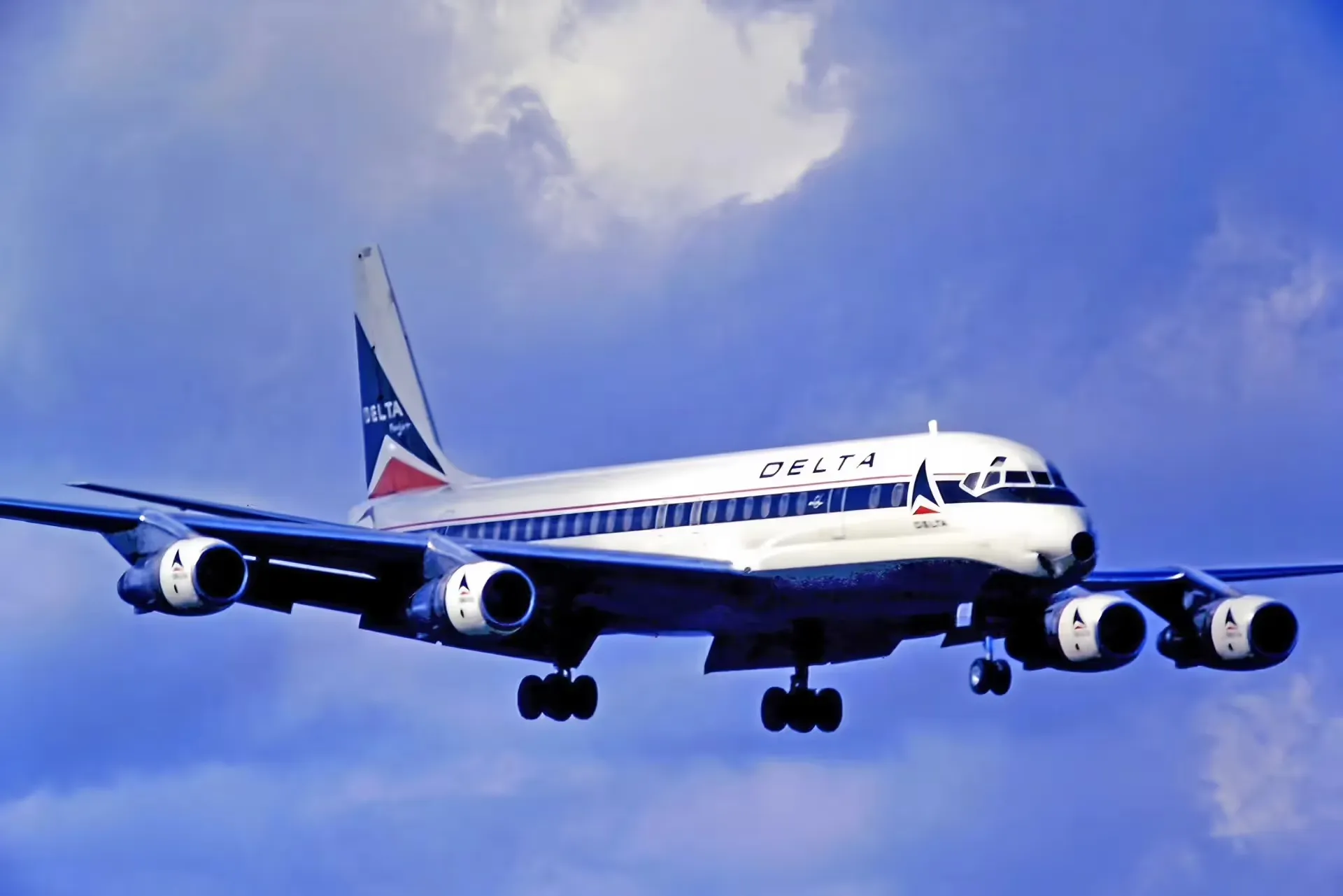
For regular travelers, a typical American family based in Venezuela would usually return to the States for summer vacations. As one of our readers recalls, “We would fly on Avensa to Caracas (Convair 340 or 440) and then to Miami on Pan Am (DC-6s), stopping in Curaçao and Port-au-Prince. When VIASA started flying to New York, we would fly with them to Idlewild (JFK) on their Convair 880s; I think we flew on all three of VIASA’s 880s. One year, 1963, we flew on a Delta 880 from Caracas to Montego Bay, Jamaica.”
The Gateway That Lost Its Connections
The decline began after the mid-1980s, with traffic numbers declining due to a severe economic recession. Still, Swissair began serving Caracas that year, which, together with British Caledonian and subsequently British Airways (BA), AF, and Lufthansa (LH), provided Venezuelans with nonstop flights to the main capital cities of Europe. Sadly, by 1994, a second economic recession spurred strict exchange rate controls, prompting LH's brief exit from the Venezuelan market. The German airline would return again in 1997, the same year that VIASA ceased operations.
The end of VIASA also meant the end of CCS’s dominance as a major destination on the continent. Declining passenger demand amid the beginning of Hugo Chavez's government and a rise in political and social unrest prompted a second stringent exchange control that artificially boosted a transient local demand for air travel, as it was the only means of exchanging the Bolivar, the local currency, for a foreign one at favorable rates.
A long-standing issue remains: the Venezuelan government owes international airlines roughly US$3.7 to US$4.1 billion in ticket revenue that it has blocked from repatriation due to such exchange rate controls. From 2013 onwards, after the death of Chavez and Nicolas Maduro becoming president, the broader Venezuelan economy entered a free fall, with international airlines leaving the country, and Venezuelans losing connectivity.
Over time, security concerns and sanctions further hollowed out the network, including the collapse of nonstop U.S.–Venezuela links. Even in late 2025, volatility still defined the market: several international carriers suspended flights to Venezuela amid FAA security warnings and heightened military activity, and Caracas moved to pressure airlines that weren’t operating.
.avif)
Why 2026 Could Mark a Turning Point for CCS
Against that backdrop, and following the recent changes in the government after the capture and indictment of Nicolas Maduro and his wife, some signals point to an economic shift. To date, American Airlines (AA) has announced its intention to return to Venezuela pending government approvals and FAA/TSA security audits, while LASER (QL) and AVIOR (9V) have filed with the U.S. DOT requests to start flying to the United States, with Miami as the prime destination.
Also, Avianca (AV) announced this week that it will resume daily Bogotá–Caracas service from Feb. 12, 2026, following an “integral” operational and air security evaluation coordinated with authorities. The Colombian carrier originally suspended its flights to CCS in August 2017 due to operational and security concerns, ending decades of service.
As for who could follow in 2026 after the recent announcements of AA and AV's return to CCS, the biggest catalyst is the U.S. shift toward the South American country: U.S. authorities rescinded the 2019 flight ban, a move that could reduce the “last-mile” friction that forced travelers to connect via third countries.
If security conditions and commercial repatriation risks stabilize, the most plausible next returns are carriers that previously served CCS and have publicly framed their return as contingent on conditions—notably Iberia (IB), TAP Air Portugal (TP), Turkish Airlines (TK), Air Europa (UX), and Plus Ultra (PU)—with longer-shot rebounds possible from historic European operators. e.g., Air France/KLM (KL), LH, once sustained stability is demonstrated.
We certainly hope so. Some of us still remember driving past KLM’s Caracas offices a couple of decades ago, when the city felt unmistakably global: plugged into the West, alive with routes, reunions, and onward connections.
Back in 1968, VIASA was a rising star among Latin American airlines, thanks to its premium service and extensive network. Its DC-8-63s enabled the airline to expand in the US and European markets. You can read more about the airline in the March/April issue of Airways Magazine, available here.
Featured image: NASA Glenn Research Center/Public Domain



.avif)