From Academy to Certification: How Air Traffic Controllers Train for the Job




.webp)
.webp)
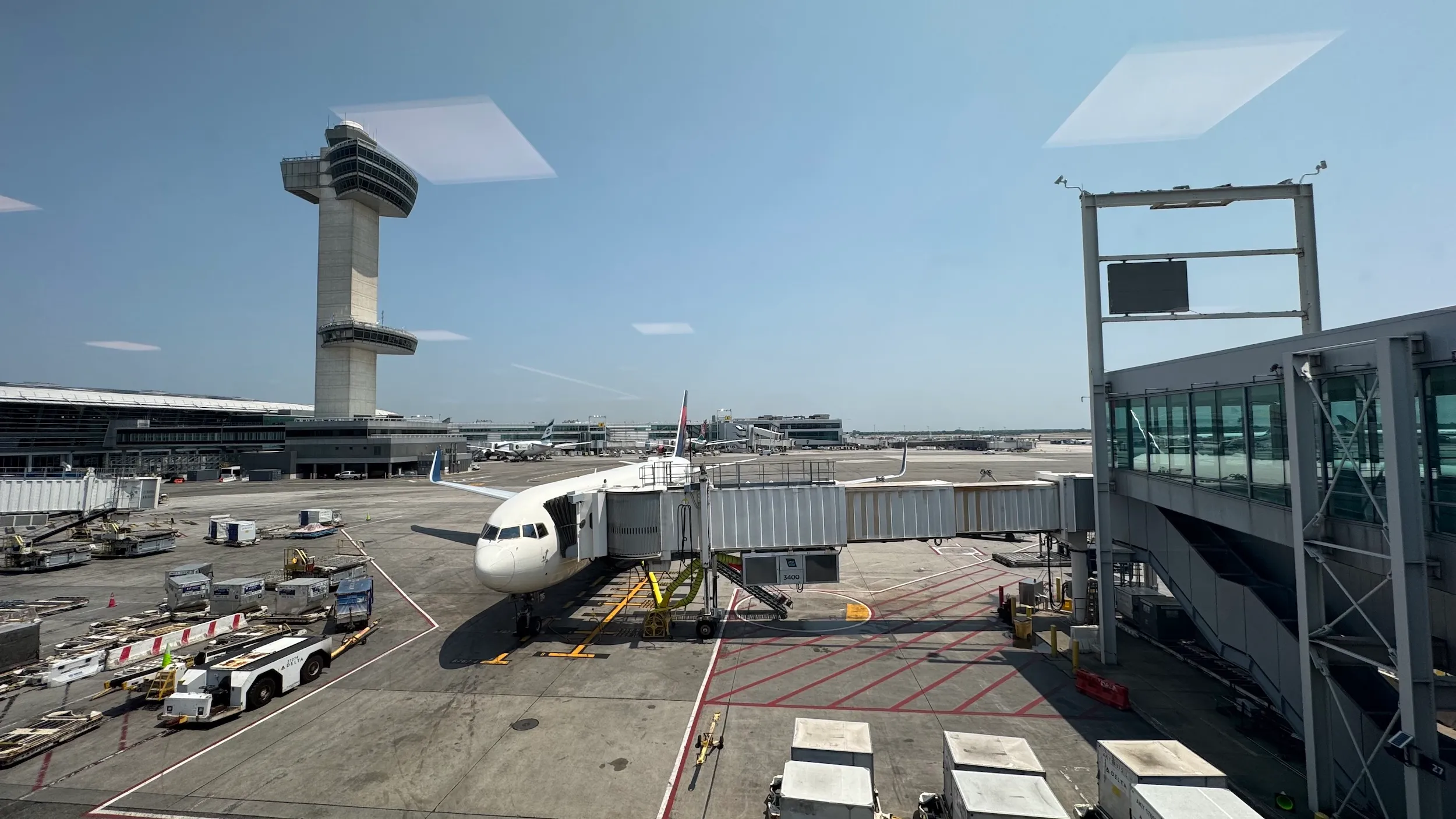
OKLAHOMA CITY — The image most people associate with air traffic control is the airport tower: wide windows, a view of the runways, and controllers issuing clearances as aircraft move below.
For a new Federal Aviation Administration controller, reaching that room is neither the first step nor the end of training. Some recruits will never work in a tower at all. They may instead manage arrivals and departures from a radar facility or separate aircraft crossing hundreds of miles of airspace from an en-route center.
The common path begins with a selective application process, continues through several months at the FAA Academy in Oklahoma City, and then moves to an assigned facility. Only after completing local classroom, simulation, and live-traffic training can a developmental controller become a Certified Professional Controller.
The FAA says fewer than 10% of applicants meet its requirements and enter the training program. Academy graduation is a major filter. It is also only the midpoint of a process that can require another two to three years.
The First Test Comes Before Oklahoma City
Entry-level applicants do not need to begin with an aviation degree. Under the FAA’s current requirements, candidates can qualify with a bachelor’s degree, one year of progressively responsible work experience, or a qualifying combination of postsecondary education and work.
They must also be U.S. citizens, generally be younger than 31 when applying, and speak English clearly enough to be understood over communications equipment. The age limit reflects the career’s special federal retirement structure, not a judgment that older applicants could not learn the work.
Meeting the minimum requirements does not secure a place. Candidates take the Air Traffic Skills Assessment, or ATSA, which the FAA describes as a 3.5-hour computer-based aptitude test. The assessment is intended to measure abilities relevant to the work rather than mastery of air traffic procedures that applicants have not yet been taught.
Those who advance must clear medical, psychological, drug, and security screening. The medical review includes vision, hearing, cardiovascular, neurological, and psychiatric standards. Controllers undergo annual medical review after hiring and must be medically cleared before returning to operational duty following a potentially incapacitating illness or injury.
Selection therefore tests more than academic eligibility. It asks whether a candidate can meet the cognitive, communication, medical, and public-trust requirements of a safety-critical federal position.
The Academy Builds A Common Foundation
Entry-level hires complete required courses at the FAA Academy in Oklahoma City and are paid while in training. The FAA’s hiring pathway describes several months of classroom and simulated instruction, with the exact course determined by the trainee’s route into the agency and assigned control track.
Simulation allows students to apply rules, phraseology, scanning techniques, coordination, and separation concepts without placing real aircraft at risk. Performance is evaluated rather than treated as practice without consequence. Students must show that they can absorb procedures and use them as traffic volume and complexity increase.
The pressure has a purpose. Controllers cannot pause live traffic to reconsider a clearance, and a correct plan delivered too late can be operationally useless. Training must develop timely judgment alongside rule knowledge.
Academy scenarios still cannot reproduce every feature of an assigned facility. Local airspace, runway configurations, traffic flows, coordination agreements, weather patterns, equipment, and adjacent sectors differ. That is why an Academy diploma is not a systemwide license to work any position.
Tower Is Only One Of The Career Tracks
Air traffic control is divided among operational environments that handle different phases of flight.
Airport tower controllers manage aircraft and authorized vehicles on or near the airport. Ground-control positions sequence movement on taxiways and other movement areas, while local control handles active runways and aircraft in the immediate airport environment. Clearance delivery and flight-data duties may be separate positions depending on the facility.
Terminal radar approach control facilities, commonly called TRACONs, manage arriving and departing traffic beyond the immediate visual range of a tower. Their controllers build arrival sequences, issue headings and altitude assignments, and transition aircraft between towers and the en-route system.
Air route traffic control centers handle aircraft across larger blocks of airspace, often during the cruise portion of flight. Their work is organized into sectors rather than airport surfaces and runway flows.
The distinctions matter to a prospective applicant. “Air traffic controller” is one federal occupation, but the display, traffic picture, qualification sequence, and daily operating environment depend heavily on the facility and position.
Graduation Begins The Longer Qualification
After the Academy, the FAA can place graduates at facilities across the country. A candidate may have limited control over location, and placement needs can change with the agency’s staffing priorities.
At the facility, the new hire remains a developmental controller. The trainee studies local procedures and airspace, completes simulations or laboratory problems where required, observes operations, and trains on individual positions under supervision.
Qualification is incremental. A trainee may certify on one position or sector and work it while continuing to train on others. Full facility certification comes only after the controller demonstrates the required performance across the assigned set of positions.
The FAA says this post-Academy stage generally requires two to three years. That public estimate should not be treated as a promise to an individual candidate. The agency does not provide a facility-by-facility range on the cited qualifications page.
Live training changes the stakes. An instructor monitors the trainee and retains responsibility for the operation, ready to intervene when necessary. The goal is not merely to complete a prescribed number of hours. The trainee must demonstrate consistent performance under the traffic conditions required for the position.
Why Hiring Numbers Do Not Equal Certified Controllers
The length of the pipeline changes how controller staffing should be understood. Hiring 2,000 candidates does not add 2,000 fully certified controllers to operational schedules that year.
Some applicants will not clear selection. Some Academy students will not graduate. Facility trainees need certified instructors, suitable traffic, simulation access, and time away from minimum operational staffing to conduct training. The new hire becomes fully useful only as qualifications accumulate.
Training itself requires operational resources. Certified instructors must supervise developmentals while facilities continue covering live positions, which is why a hiring total and a certified-controller total measure different stages of the workforce pipeline.
For airlines and passengers, the distinction matters because certified staffing affects how much traffic the system can handle reliably. A recruitment campaign starts the pipeline; it does not immediately create capacity at a congested tower, TRACON, or center.
Certification Does Not End Training
Certified Professional Controller is an operating qualification, not the end of formal learning. The FAA requires continuing proficiency training to maintain knowledge and skills. Controllers also train on procedural and equipment changes and may need additional qualification after moving to another facility or operational area.
Medical qualification continues annually. Operational performance is also monitored within the facility, and controllers must maintain currency on the positions they work.
The result is a career built around repeated demonstration rather than one graduation event. Selection shows that a candidate has the prerequisites. The Academy establishes a technical foundation. Facility certification proves that the controller can apply it in a specific piece of the National Airspace System. Recurrent training is what keeps that qualification usable as procedures, traffic, and technology change.
“Climbing the tower” captures only one possible destination. The more accurate journey is from candidate to student, student to developmental, and developmental to certified controller—one evaluated position at a time.
The State of ATC Staffing Today
Although ATC staffing shortage is no longer leading the headlines, the FAA continues to operate below optimal certified controller targets, managing shortfalls with aggressive recruitment, including recent targeted drives aiming to onboard thousands of trainees, while major hubs face ongoing strain.
Current Staffing Status
- U.S. Deficit: The FAA reported roughly 11,000 certified professional controllers against a revised internal target of 12,563, leaving an ongoing shortfall of over 1,500 fully certified personnel nationwide, according to a FLYING magazine May 18, 2026, report.
- Regional Strain: Critical facilities—especially terminal radar approach controls in high-density areas like the New York metropolitan region—continue to run well below ideal staffing levels.
- International Impact: European airspace is facing severe peak-summer delays driven by structural gaps in controller capacity.
Recruitment and Mitigation
- New Hires: According to FOX News, the agency has pushed aggressive recruitment pipelines, recently pulling in thousands of new trainee applicants utilizing fast-track testing models.
- Training Lag: Because full certification takes up to two years depending on facility complexity, the influx of trainees has not yet closed the active operational deficit.
Featured image: Brandon Farris/Airways




.avif)