Trip Report: Ethiopian Airlines Boeing 787-8 From Oslo to Stockholm


.webp)
OSLO — This report covers my experience aboard Ethiopian Airlines (ET) flight 715 from Oslo Airport (OSL) to Stockholm Arlanda Airport (ARN) on August 19, 2026. The short Scandinavian sector formed part of ET715's continuing service to Addis Ababa Bole International Airport (ADD), but I disembarked in Stockholm. I booked and paid for the trip independently.
The flight is an unusual way to travel between the two capitals. The International Civil Aviation Organization defines fifth-freedom rights as allowing an airline to pick up or put down traffic in another country on a service coming from or destined for a third state. Here, Ethiopian sells seats between Norway and Sweden before the aircraft continues to its Ethiopian hub.
For me, the 45-minute flight left considerably more to unpack on the ground than in the air.
Gate and Predeparture at OSL
Oslo Airport has one passenger terminal and is compact and easy to navigate. ET715 departed from gate F31, beyond the Schengen passport-control point. That was not immediately intuitive for a flight between two Schengen countries, but it reflected the aircraft's onward operation to Ethiopia. Avinor directs passengers using the F gates through passport control because that pier handles non-Schengen departures.
Passengers booking only Oslo–Stockholm should therefore allow time for border formalities even though both airports are within the Schengen Area.
I arrived at the gate about 30 minutes before departure after officers processed passengers manually at passport control. The biometric equipment was not working during my passage, and boarding had already finished by the time I reached F31. The early boarding call and manual checks left me with little margin.
That describes what I encountered at OSL. Airways has not independently confirmed the duration or cause of the apparent equipment failure.
A Worn Boeing 787-8 Cabin
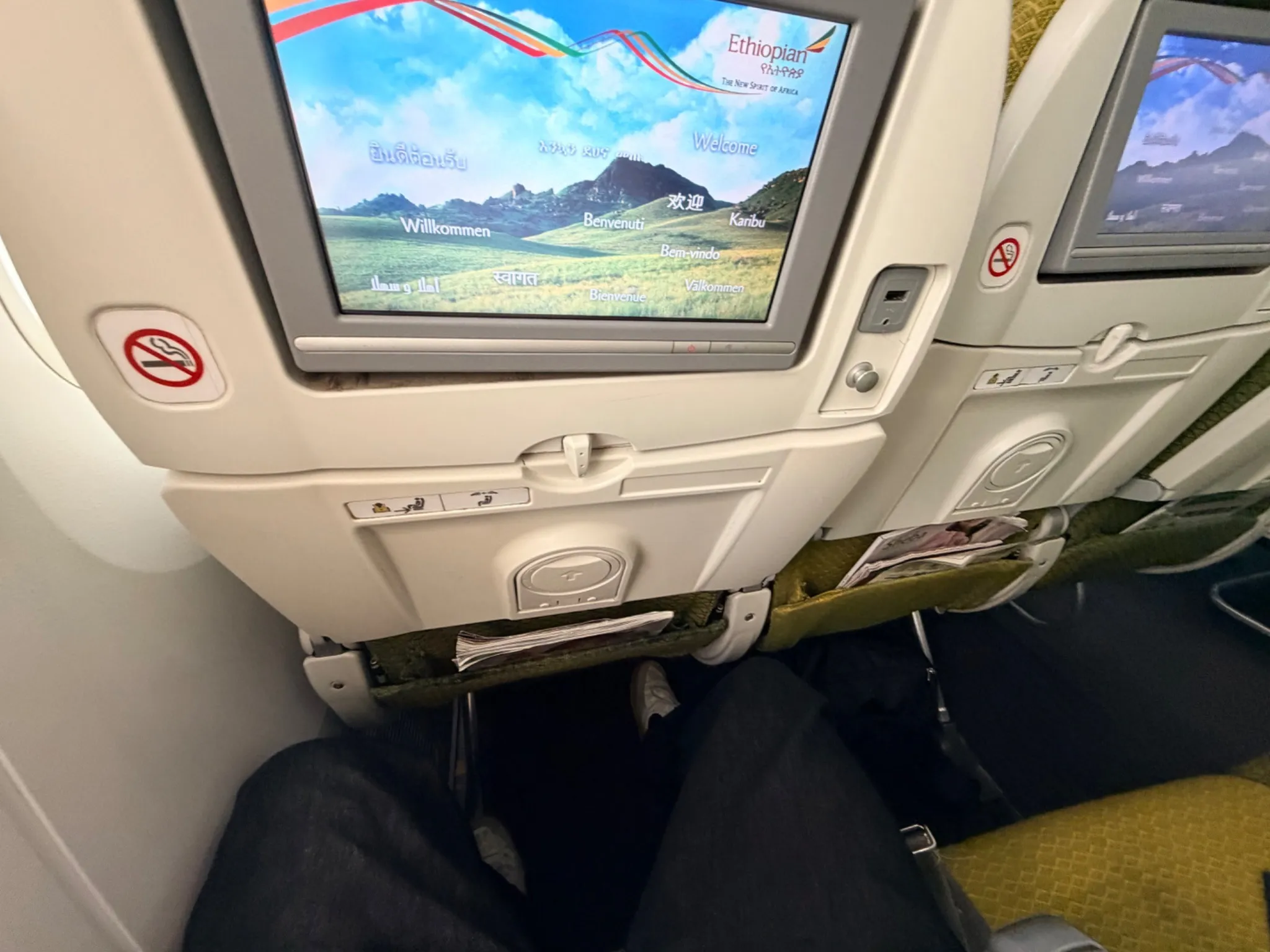
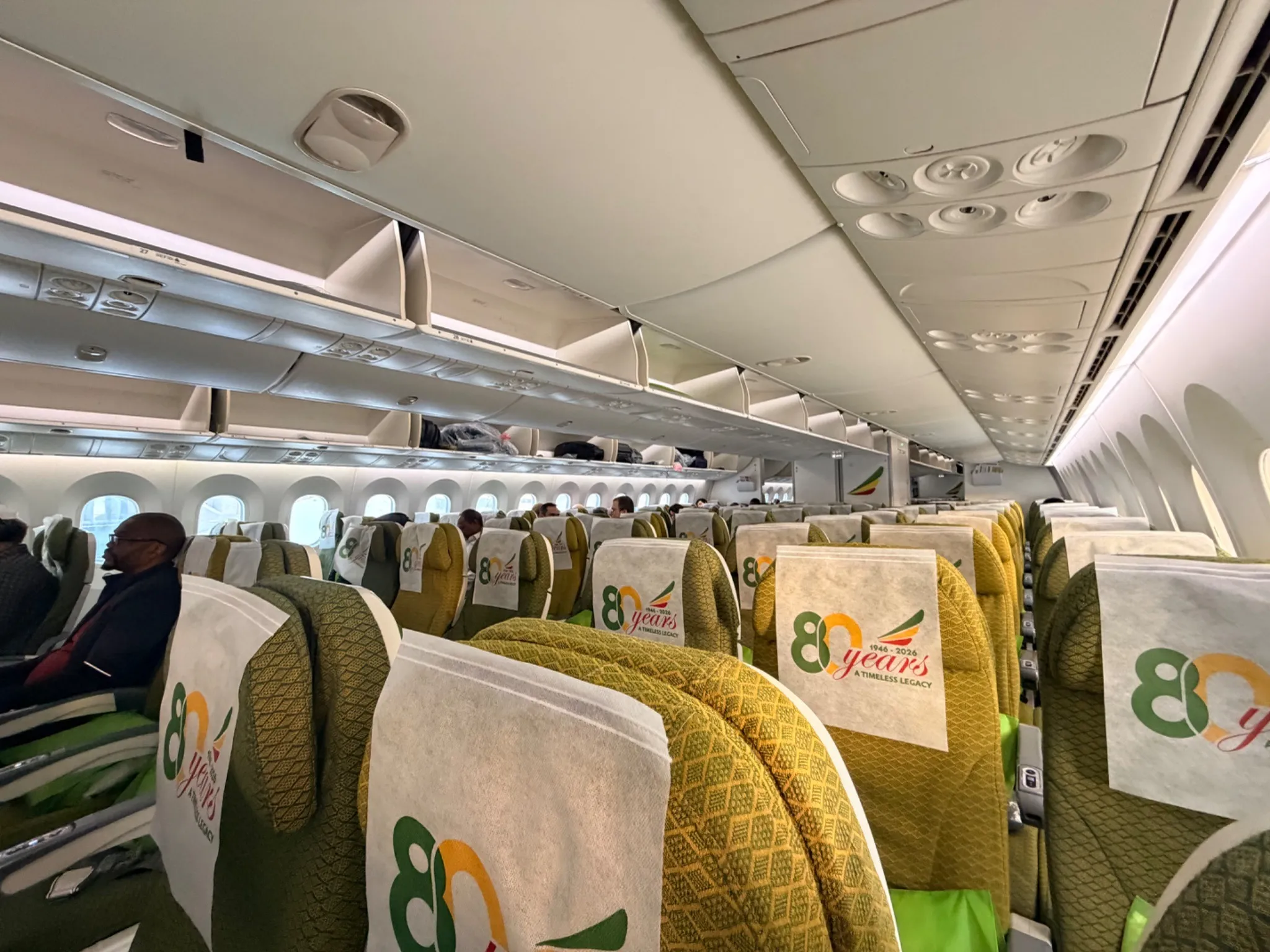
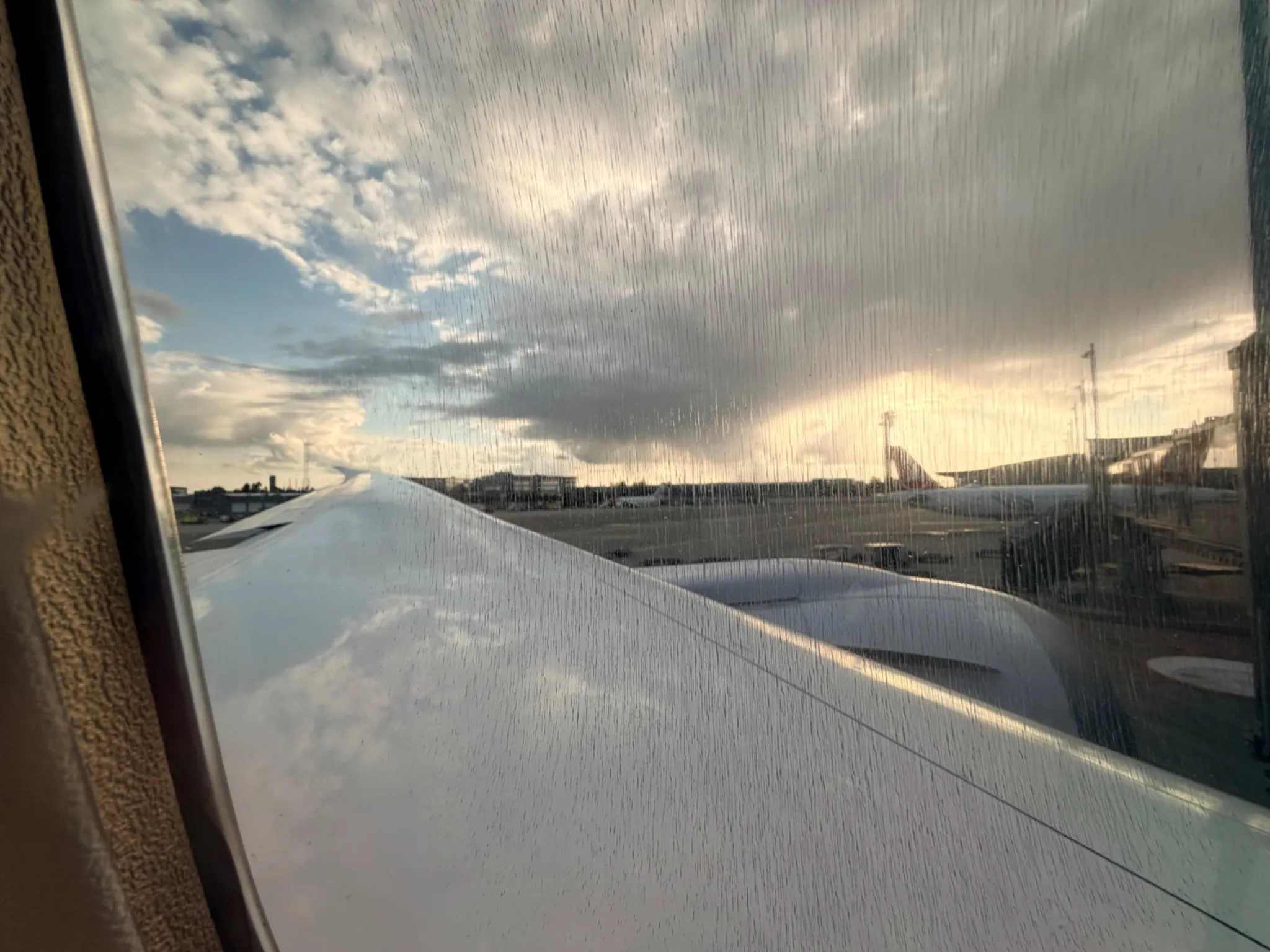
ET715 was operated by Boeing 787-8 ET-ARF. The Dreamliner is a modern long-haul aircraft, but this cabin told a different story.
The interior was visibly worn and poorly presented. The inflight-entertainment screen at my seat, 27A, was partially detached from the seatback ahead and hung at an angle. The cabin was also dirty enough to be noticeable on a short sector. Passengers joining in Oslo for the full journey to Addis Ababa would have had to live with those conditions for much longer than I did.
The seatback in front of me was fully reclined, and I could not return it to the upright position. It remained that way throughout my flight. It was a minor inconvenience over Scandinavia; on the continuing long-haul sector, it would have been considerably less acceptable for the passenger sitting behind it.
The cabin's saving grace was the sense of space and light. Boeing says the 787 combines large windows with pressurization at a lower equivalent cabin altitude, features that remained welcome regardless of the interior's condition.
The Oslo–Stockholm sector was lightly loaded. Many seats around me were empty, and several nearby passengers also left the aircraft at Arlanda. Airways previously reviewed Ethiopian's flight in the opposite direction aboard another 787-8, finding a similarly worn cabin but a different onboard-service experience.
A Brief Flight to Stockholm
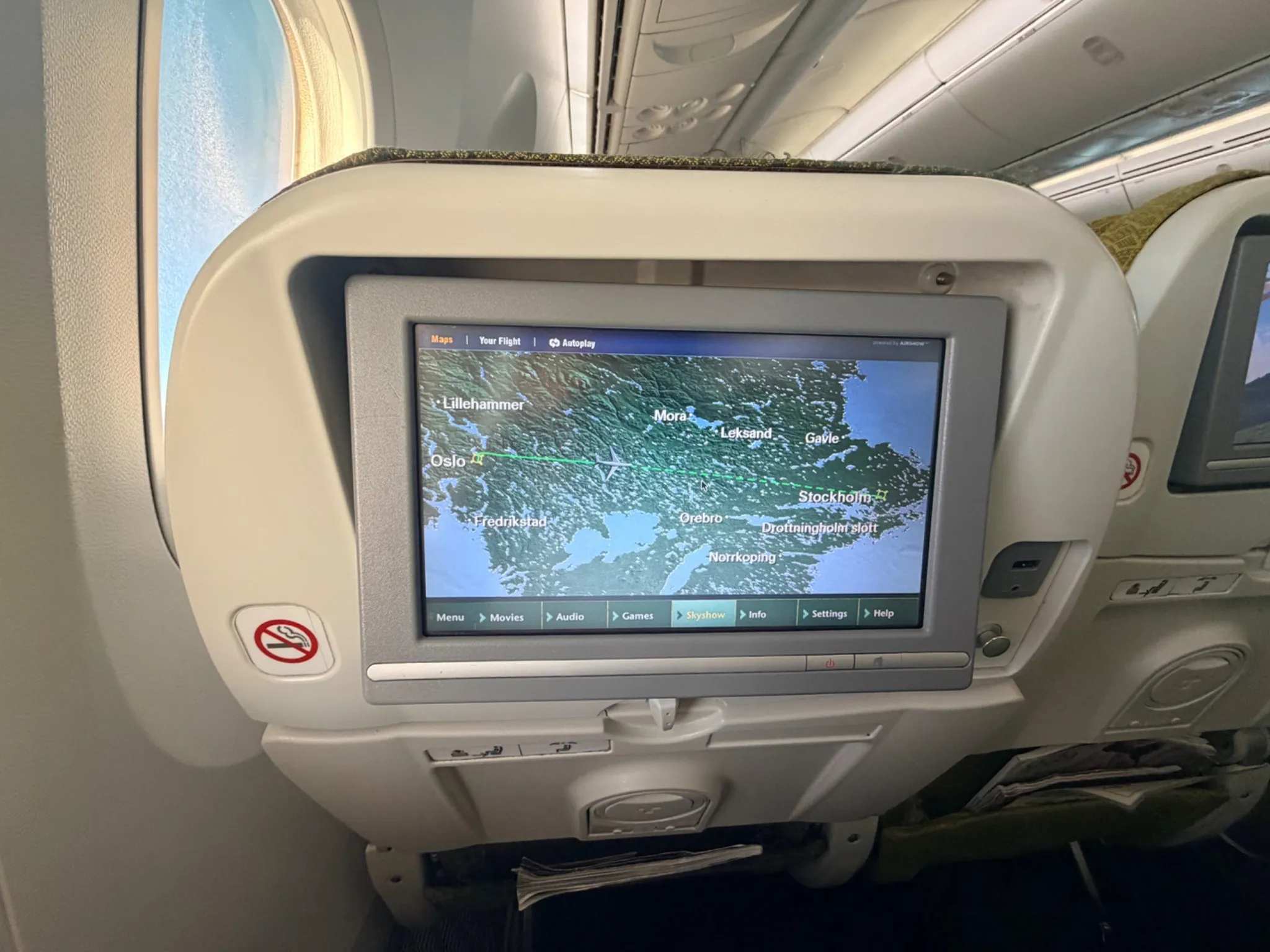
No inflight service was offered on this sector, which I found reasonable given the short flying time. The only announcement I heard was a brief welcome as the aircraft approached Stockholm.
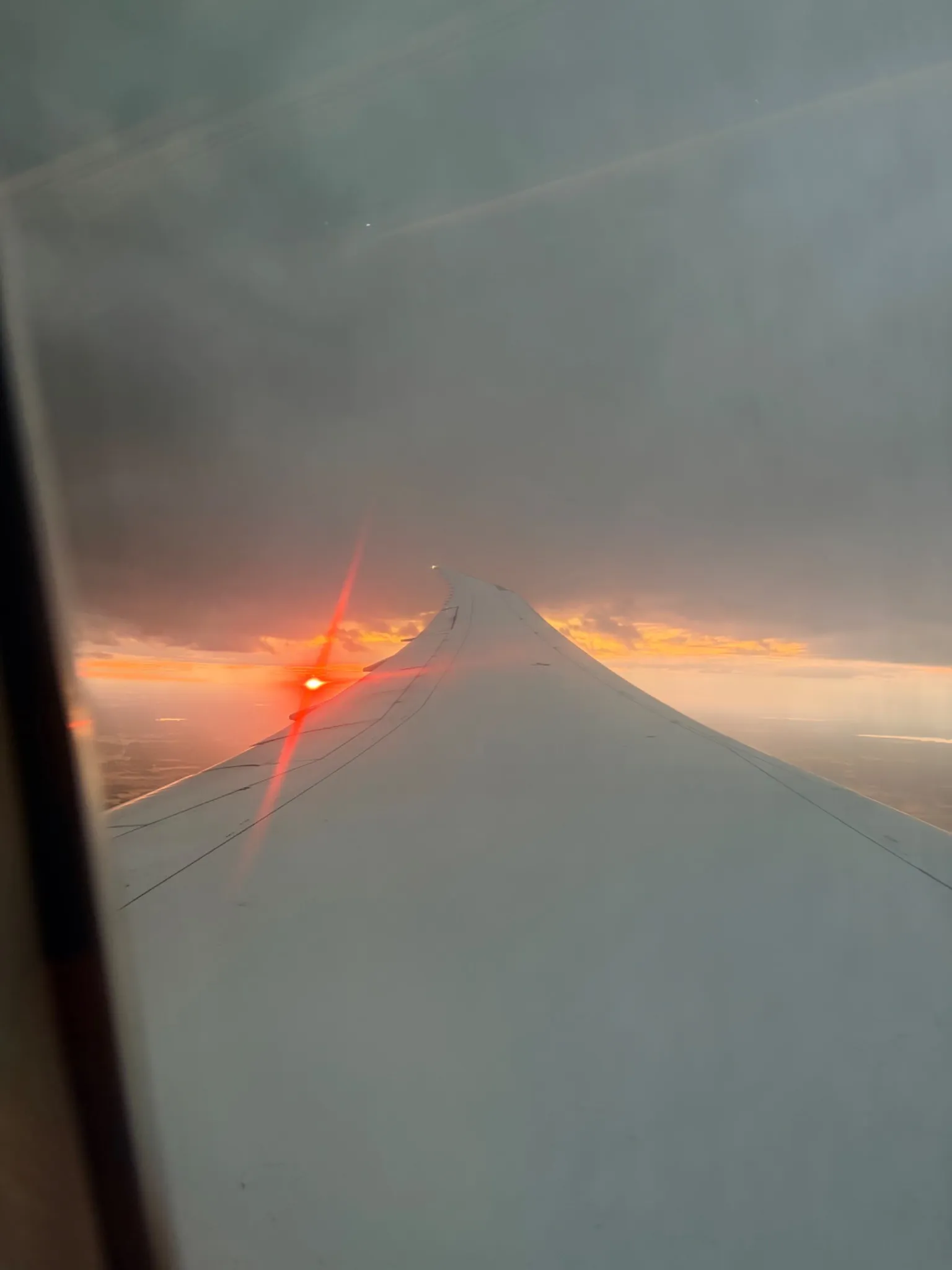
The crossing passed quickly over southern Scandinavia in the early evening. Darkness was beginning to settle, and light rain met us at Arlanda.
After an extended taxi, ET715 reached gate F59 in Terminal 5. Because I had passed through the non-Schengen zone in Oslo, I went through passport control again on arrival in Stockholm.
The EES Problem Followed Me to Arlanda
The arrival gave me another opportunity to address a border record problem that had followed me for several weeks.
The European Commission says the Entry/Exit System became fully operational on April 10, 2026. It electronically records entries and exits for eligible non-EU nationals making short stays and replaced routine passport stamping for covered travelers. Swedavia describes the biometric process used at Swedish borders as collecting passport information, a facial image, fingerprints, and the time and place of the crossing.
Several weeks before this flight, I left the Schengen Area at Paris Charles de Gaulle Airport (CDG) for London. Officers visually checked my passport and waved me through, but I later learned that the exit did not appear in my electronic record. The absence of a manual stamp was not itself unusual under EES; the missing digital exit was the problem.
At a later border check in Frankfurt, officers questioned why the record showed no corresponding exit and raised what appeared to be an overstay. We discussed the discrepancy, but it was not fully resolved. I explained the history again to the officer at Arlanda.
My experience shows how a missing digital crossing can follow a traveler through later checks. It does not establish how often these failures occur or whether the central EES, national equipment, or local handling caused this one. Those broader conclusions require confirmation from the relevant border authorities.
Conclusion
ET715 is a curiosity worth knowing about for Scandinavian aviation enthusiasts: a fifth-freedom link between two Schengen capitals on a widebody aircraft continuing to East Africa. The non-Schengen gate process also makes the journey less straightforward than the map suggests.
As a product, my flight was difficult to recommend. The 787-8 cabin was in poor condition, and the presentation I saw aboard ET-ARF fell short of what the aircraft can offer. The sector was short enough that none of it mattered greatly to me, but Ethiopian's European fifth-freedom operation deserved a better showing.
The more compelling story unfolded at the border. A missing EES exit record turned several routine crossings into repeated explanations, and the equipment problem I encountered in Oslo added another delay. Forty-five minutes in the air was the simplest part of the trip.
Featured/All images: Declan Daleilen/Airways



.avif)