



.webp)
.webp)
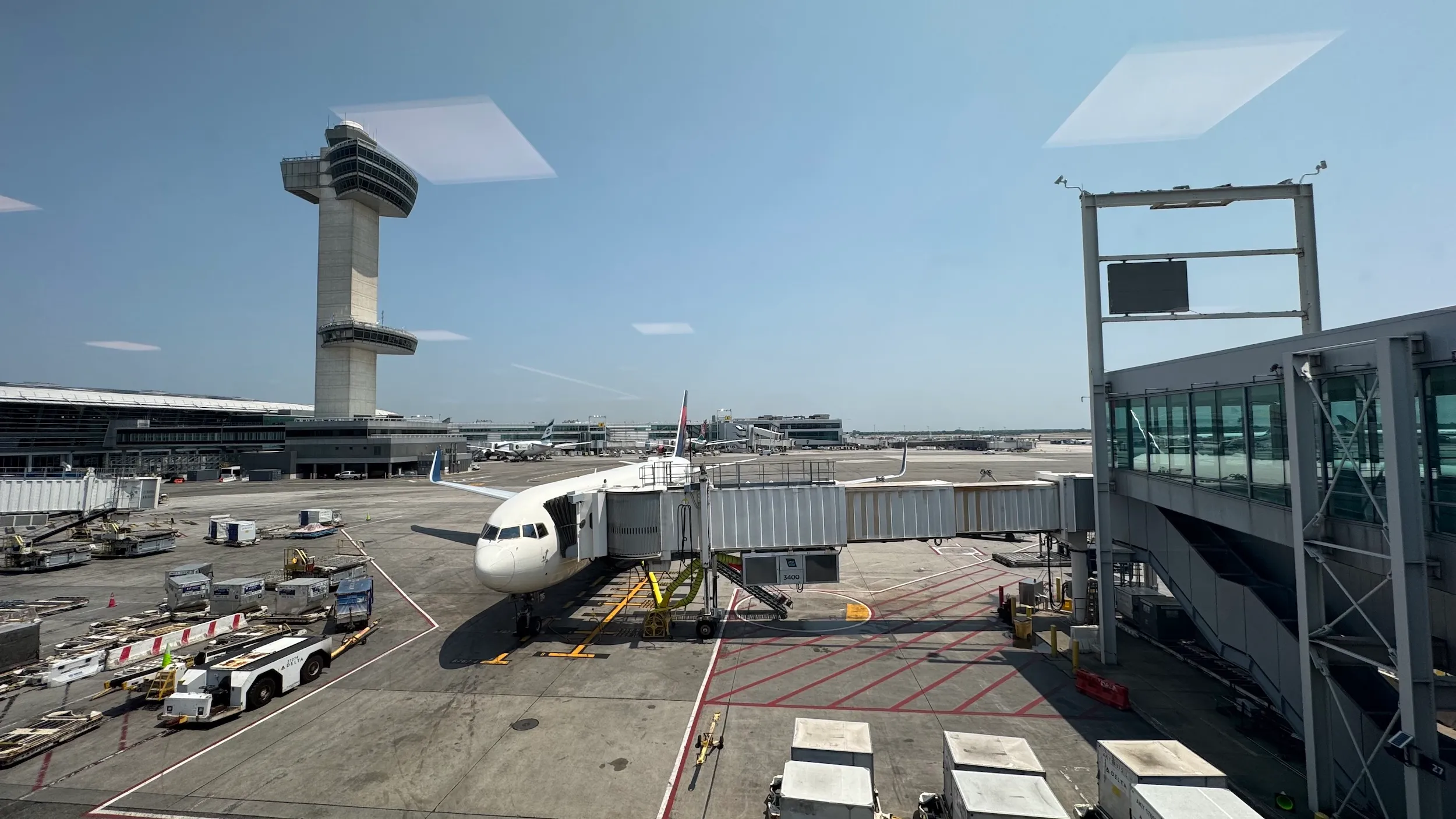

WASHINGTON — The Federal Aviation Administration (FAA) installed a new Surface Movement Radar Model 4 at Ronald Reagan Washington National Airport (DCA) on Friday, upgrading the primary sensor controllers use to track aircraft and vehicles moving across runways and taxiways.
The FAA said Reagan National is the fifth U.S. airport to receive SMR-4. Newark Liberty International Airport (EWR) received a similar installation earlier in the week as the agency accelerates replacement of aging surface radars at large and operationally complex airports.
At DCA, the change is part of a broader $30.5 million air traffic infrastructure program planned over the next three years. The work includes telecommunications, controller displays, radios, and voice systems as well as the new radar.
The installation date does not by itself establish whether the radar has completed testing, site acceptance, and operational commissioning. The material reviewed for this article did not specify that status.
SMR-4 Is a New Sensor Within ASDE-X
SMR-4 should not be confused with an entirely new controller-surveillance platform. DCA has operated Airport Surface Detection Equipment, Model X, or ASDE-X, since July 2010. The FAA describes ASDE-X as a runway-safety tool that combines data from several sources to show controllers aircraft and vehicles on airport movement areas.
The surface movement radar supplies one of those data streams. It is a primary, or non-cooperative, sensor: it detects a target from reflected radio energy rather than depending on that aircraft or vehicle to transmit its identity and location.
That capability matters when visibility is poor and when a target is not providing usable transponder data. ASDE-X can combine the radar return with cooperative surveillance and flight information, creating a more complete display and supporting safety logic that warns controllers of potential runway conflicts.
The FAA acquired SMR-4 under a program specifically intended to replace aging Airport Surface Detection Equipment Model 3 radars. Procurement documents called for the new sensor to interface with existing surface-surveillance systems and contemplated work at up to 34 locations.
That figure is a maximum procurement scope, not a confirmed list of 34 funded or scheduled installations. The FAA has not provided a complete public deployment sequence in the sources reviewed for this draft.
What the Radar Can and Cannot Address
Surface surveillance gives controllers a clearer picture of traffic after aircraft and vehicles are on the airport movement area. It can support the detection of runway incursions, such as an aircraft or vehicle entering a protected runway without authorization, and help controllers maintain awareness during rain, fog, darkness, or other reduced-visibility conditions.
It does not solve every source of runway risk. Controllers still depend on correct clearances, pilot and vehicle-operator compliance, reliable communications, and the alerting logic and displays that use surveillance data. The new radar also does not add runway pavement, change DCA's compact geometry, or remove the operational pressure at a slot-controlled airport.
Most importantly, SMR-4 is not designed to resolve airborne conflicts between aircraft near Reagan National. The January 29, 2025 collision involving PSA Airlines flight 5342 and a U.S. Army UH-60L occurred in flight near DCA, not on a runway or taxiway.
The National Transportation Safety Board's investigation addressed helicopter-route design, separation, and oversight issues. The FAA's responses have included permanent restrictions on helicopter and powered-lift operations in designated airspace near the airport. Those measures operate in a different part of the safety system from surface radar.
That distinction does not make the SMR-4 installation minor. DCA has been under unusually close examination across airspace design, tower staffing, communications, surveillance, and runway operations. Replacing an aging surface sensor strengthens one layer of that system without substituting for work on the others.
DCA Is Moving From Copper to Digital Systems
The FAA says 67% of DCA's copper communications wiring has been replaced with fiber. Fiber connections carry voice, radar, and other operational data between facilities and are a central part of the agency's plan to move away from older analog infrastructure.
DCA has also received electronic flight strips and new radios. Electronic strips replace paper flight-progress records with continuously updated digital information, improving the way controllers share and sequence flight data.
The remaining program includes new controller displays and internet-protocol voice systems through 2028. The FAA's Modern Skies program describes those nationwide workstreams as replacements for legacy displays, voice switches, radios, and copper telecommunications.
The agency has not disclosed how the $30.5 million assigned to DCA is divided among those projects. It also did not provide a completion date for the remaining 33% of the airport's copper-to-fiber conversion in the material reviewed for this article.
Those details matter because the individual upgrades depend on one another. A new radar improves the surveillance input, but controllers also need reliable data links, displays, radios, and voice switches to use and communicate that information during normal operations and disruptions.
Newark Installation Shows a Broader Rollout
The DCA installation followed work at Newark earlier in the week. FAA planning documents had scheduled Newark's old ASDE-3 radar to be removed and replaced with SMR-4 during summer 2026, followed by integration, testing, and restoration of the full ASDE-X service.
Houston's George Bush Intercontinental Airport (IAH) received the first operational radar in the replacement program in December 2025, according to the FAA's timeline of nationwide safety actions. The FAA says DCA is site number five, but the agency did not identify all five sites or state the commissioning status of each installation in the material reviewed for this article.
Five installations are still an early stage for a procurement designed to cover as many as 34 locations. The pace at Newark and DCA nevertheless shows that the replacement effort has moved from contracting into installation at some of the country's busiest airfields.
For DCA, the next meaningful milestones are operational acceptance of the radar, completion of the remaining fiber work, and deployment of the new displays and IP-based voice systems. The safety benefit will come from how those components work together, not from the radar antenna alone.
Featured image: DCA



.avif)