KLM to Feature Starlink WiFi, Uniform E2 fleet, Expects Five A350s in 2027


.webp)
ZEELAND — On October 7, KLM (KL) celebrated its 107th birthday. The world’s oldest airline operating under its original is facing intense years with fleet modernization, on board product changes and both domestic and international geopolitical uncertainties.
Ahead of its anniversary celebrations, held in Zeeland to unveil the airline’s latest Delft Blue house, the Dutch flag carrier held a media roundtable with international and national delegates. We discussed the airline’s anniversary, latest news and outlook with Marjan Rintel, President and Chief Executive Officer, as well as with Frédérique Pelger, Director of KLM in The Netherlands. We later had the opportunity to sit down with Bas Brouns, Chief Financial Officer.
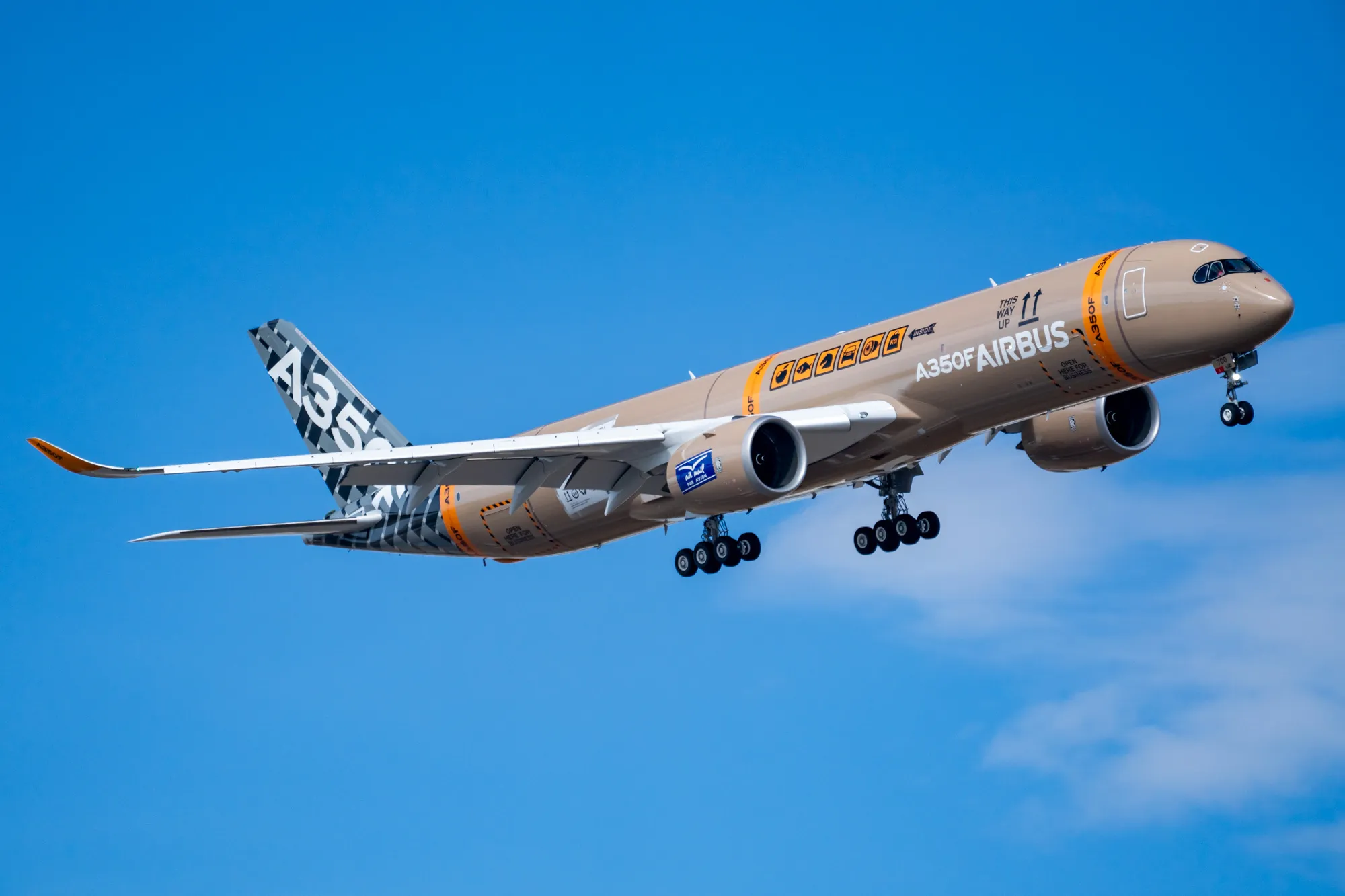
KLM is expecting to receive its second A350 before the end of 2026, with five units joining the airline in 2027. The third unit is now expected in March 2027. In particular, 4Q27 will see the introduction of two units around the month of December, adding pressure on the end-of-the-year delivery chain at Airbus. Brouns commented that the A350Fs will directly replace the Boeing 747 freighters, with the first unit expected in 2028 due to the programme’s delay. The A350F is expected to touch down in Amsterdam for loading tests in early 2027, where both Airbus and KLM will work together on the campaign.
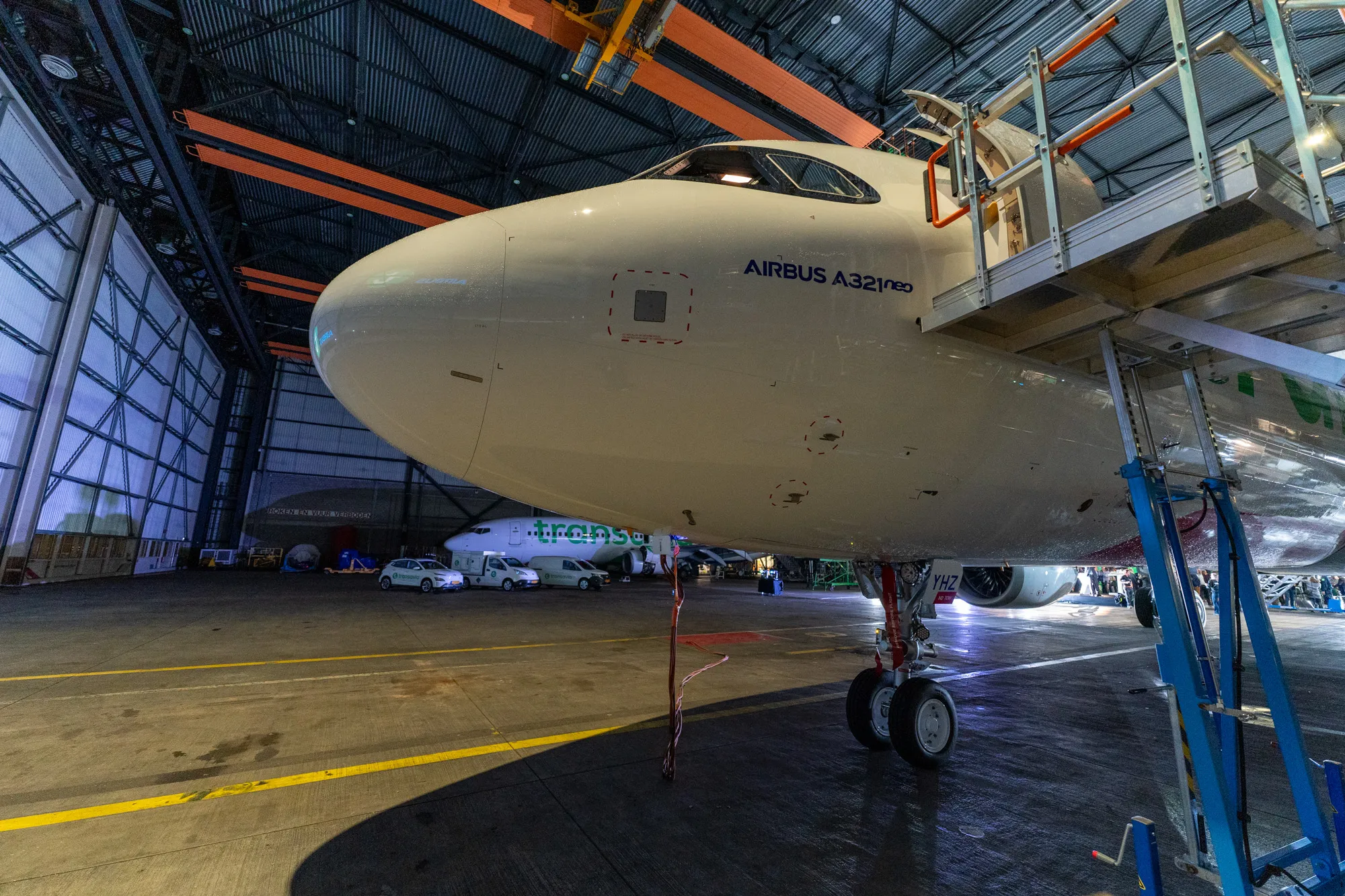
The A350 integration marks a significant investment for KLM, with training accounting for a non-negligible part of finances. Rintel commented on the topic: “It’s always a huge investment with a new fleet. Similarly to the introduction of the Airbus A321neo, we need to train pilots to operate on the new aircraft. It’s easier to train pilots from the A330 to the A350, but still, it’s a huge investment.”
KLM will replace the A330s and B777s with the A350s, and as explained by Brouns, the replacement is direct, with no additional fleet growth.
KLM will eventually replace the Embraer E1 fleet, comprising both E175s and E190s, with an “all-E195-E2 lineup” as explained by Rintel. “It will be exclusively for the E195-E2. We will not consider the E190-E2,” Rintel commented about the future Cityhopper fleet commitment.
The main motivation lies with the noise reduction around Amsterdam, as well as increased capacity on popular regional routes. It should be noted that replacing the E175s with the E195-E2s will bring a significant capacity boost to the Cityhopper fleet. Rintel added that the order will aim to directly replace aircraft rather than further expanding the fleet.
The Dutch flag carrier is navigating a complex combination of international uncertainties combined with a challenging environment to operate out in Amsterdam. Airport taxes in the Netherlands are the highest in Europe and directly affect the minimum airfares. Rintel highlighted that a worrying trend was observed in recent months, where 20 to 30% of Dutch travellers opted to fly from airports in Belgium and Germany rather than in the Netherlands, weakening the country’s aviation footprint. Despite higher fuel costs, the airline was able to turn a profit in the first half of 2026.
Rintel hopes for a shared European regulation for the industry, allowing airlines to better compete against middle eastern carriers as well as major airlines from China. “The buck stops at the EU,” Rintel told Airways at the end of the event. While a European framework is necessary, KLM is still subjected to a rather volatile domestic political environment, with factors such as Schiphol’s flight caps, noise restrictions and public opinion all playing a potentially jeopardizing role in KLM’s long-term growth.
As the AF-KLM group prepares to integrate Scandinavian Airlines (SK) and bid on the acquisition of TAP Portugal (TP) to expand its connections to South America, KL’s needs an effective long-term growth strategy and guarantees from regulators and partners, with Amsterdam Schiphol being the first on the list, that its position will not be undermined.

During the event, KLM announced its latest WiFi product, powered by Starlink.
“KLM has chosen Starlink to deliver ultra-fast Wi-Fi on intercontinental flights. Starlink delivers high-speed, low-latency internet from a constellation of satellites in low Earth orbit, with coverage over oceans and remote routes as well as land,” said the airline in a note.
The service will be available free of charges to all passengers and builds on the recent introduction of complimentary WiFi on European flights. While it is expected that the Airbus A350, Boeing 777 and Boeing 787 fleets will feature the service, at this stage it is not clear if the soon-to-be-retired A330s will also be equipped with it.
Featured image: Simone Chellini/Airways



.avif)