Oslo Airport Reopens After Five-Hour Closure as Norway ATC Strike Continues



.webp)

OSLO — Oslo Airport (OSL) reopened to scheduled traffic at about 11:30 local time Sunday after a five-hour closure caused by Norway's air traffic controller strike. Cancellations and delays continued into the evening as airlines worked through the disrupted schedule.
The reopening followed the five-hour shutdown Airways reported Saturday. The airport had stopped scheduled movements at 06:30 on August 23. Avinor Flysikring Director Jan-Gunnar Pedersen said the restart would be controlled and capacity would return gradually.
Avinor's live data recorded the first departure after the closure at 11:36 and the first arrival at 11:43. Several flights originally scheduled during the shutdown operated hours later.
139 Oslo Movements Listed as Canceled
At 19:28 Central European Summer Time (CEST), an Airways count of Avinor's official Oslo timetable found 139 scheduled movements marked canceled: 75 departures and 64 arrivals.
The count treats each flight-leg record as one movement. Live timetable totals can change as airlines revise their schedules.
Norwegian (DY) accounted for 64 of the canceled OSL movements in Avinor's feed, while SAS Scandinavian Airlines (SK) accounted for 47 and Widerøe (WF) for six. Norwegian separately told NRK that Sunday's closure affected about 9,000 of its passengers, according to a Ritzau report.
Forty-eight of the cancellations had scheduled times at or after the 11:30 reopening. Forty-four were arrivals.
Sunday was already expected to be unusually busy. In a June traffic forecast, Avinor projected 95,521 passengers through OSL on August 23, placing it among the airport's busiest days of the summer.
Western Norway Disruption Stranded Passengers
The strike affected more than Oslo. Airspace serving Bergen Airport, Flesland (BGO), and Stavanger Airport, Sola (SVG), closed to scheduled traffic from 18:45 to 22:20 Saturday, according to NTB's account of the western Norway disruption.
More than 300 passengers spent the night at Bergen Airport. Avinor placed camp beds in the terminal and opened seating areas beyond security.
The initial action involved 12 controllers from units serving Gardermoen, its approach control, Bergen/Flesland and the western Norway area control center. Avinor has said reduced staffing forces traffic to match the available air traffic control capacity. Search and rescue, ambulance, police and operational military flights receive priority, followed by scheduled airline and offshore helicopter traffic.
Strike Parties to Meet Monday
Norsk Flygelederforening (NFF) and employer organization Spekter will meet at 08:00 Monday, August 24, for their first talks since negotiations failed Friday. NFF leader Robert Gjønnes confirmed the time to NTB, while Spekter said it initiated contact through the national mediator.
Spekter said the strike continues until further notice. NFF says the dispute centers on working conditions, including breaks for controllers working alone, instructor arrangements and policies for different career stages. Spekter and Avinor say the rejected package also included pay and that the union's proposed working-time changes would increase staffing costs.
The next escalation is scheduled for Tuesday, August 25. Avinor says eight additional controllers are due to join the strike, directly affecting Tromsø Airport (TOS) and airspace over central and northern Norway.
Avinor expects residual delays at Oslo and Bergen on Monday. Its current airport notice says the strike is still reducing Norwegian airspace capacity and advises passengers to follow instructions from their airline. Travelers can check individual services through SAS flight status and Norwegian's current operations notice.
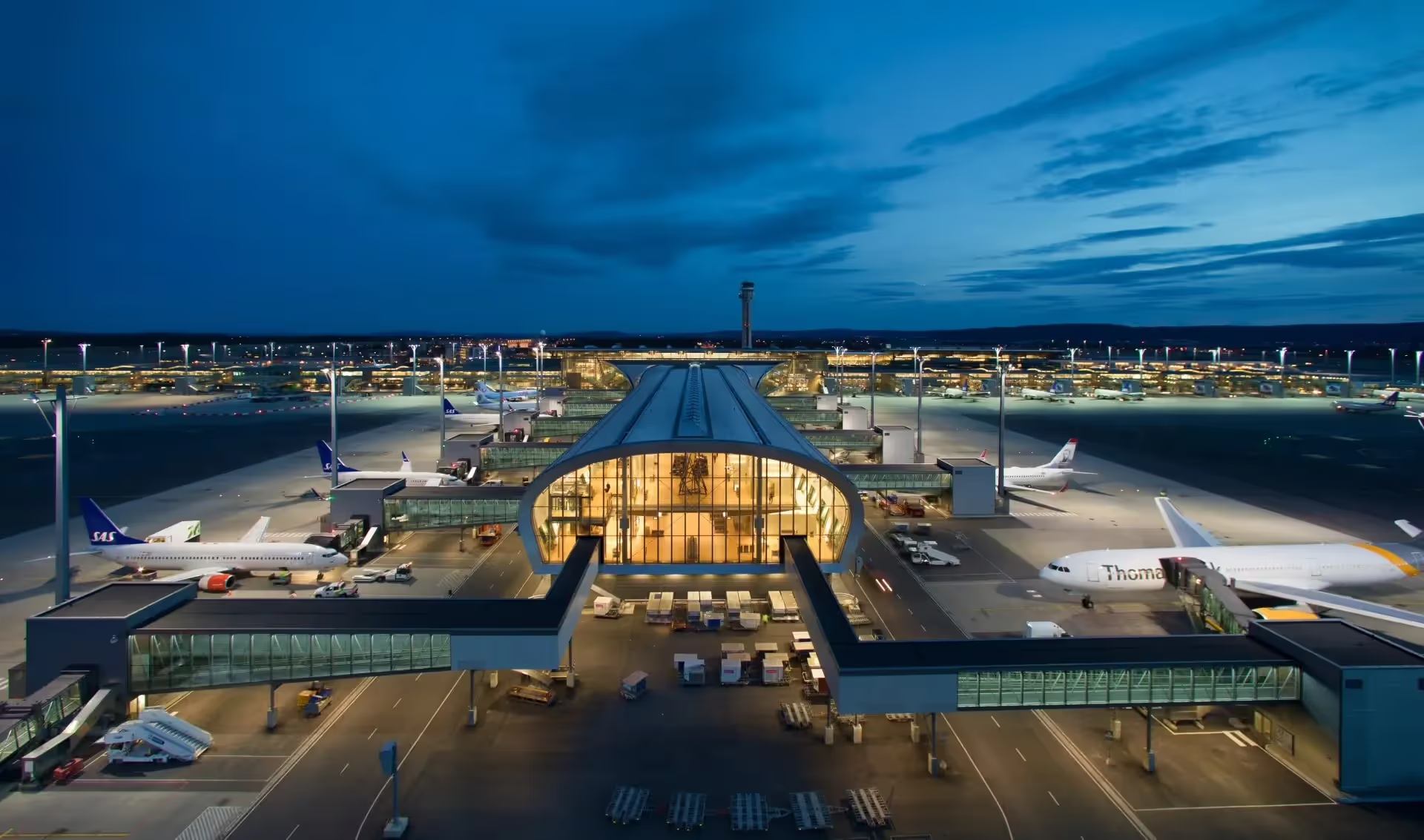
Featured image: Oslo Airport



.avif)