Engineering the Future: Rome Fiumicino Airport’s Master Plan


.webp)

ROME — Leonardo da Vinci Rome Fiumicino Airport (FCO), Italy’s largest airport, is gearing up for a major aesthetic and infrastructural transformation to support the future economic and tourism growth of the Italian capital’s primary gateway.
The airport handled 50.9 million passengers in 2025, retaining its position as Italy’s busiest passenger airport. It also continued its record run by winning ACI EUROPE’s 2026 Best Airport Award in the over-40-million-passenger category.
Not Just a New Runway
As announced over the past few years, the airport has experienced strong growth in flight and passenger demand, which continues to rise. This upward trend calls for expanded space and new infrastructure to maintain safe and efficient operations.
To optimize incoming traffic flows while strictly complying with noise abatement regulations, plans for a fourth runway have been drawn up, with integration into the surrounding territory serving as a fundamental pillar of the airport’s development strategy. Faced with high traffic volume and tight slot availability, ADR S.p.A. (Aeroporti di Roma, the operator managing Rome’s Fiumicino and Ciampino airports under an ENAC concession) has also evaluated the development of a new terminal, specifically in the eastern area of the current airport field.
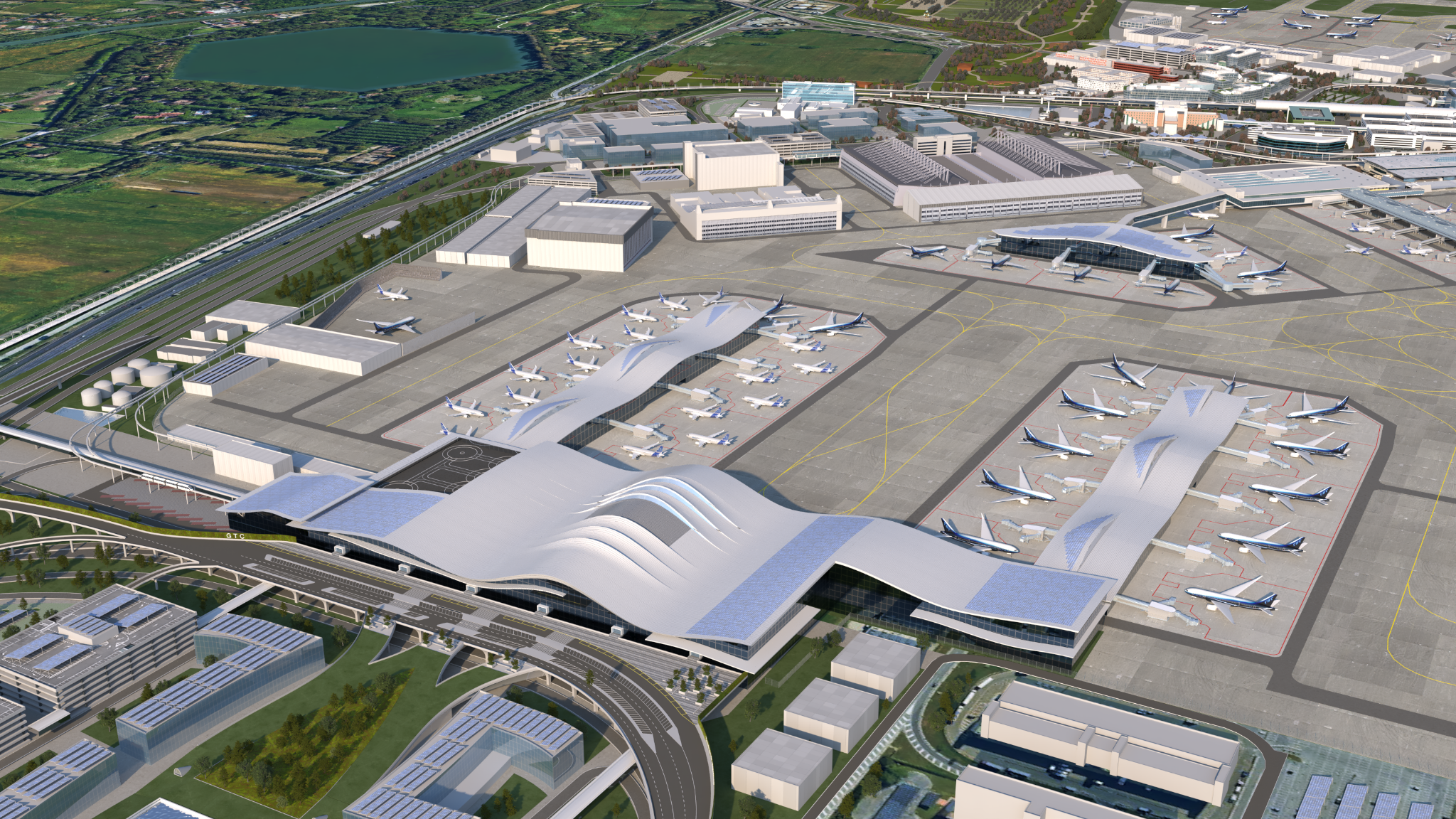
As announced by ADR, the new terminal will feature iconic, sustainable architecture with undulating rooflines, extensive glass facades, and a design that seamlessly blends visual lightness with operational functionality.
“It will not merely be a terminal, but a space that tells the story of the region and guides passengers through art, history, and cultural identity. Spanning a total gross floor area of approximately 350,000 square meters across multiple levels, it will house two new boarding piers equipped with over 76 gates, catering to more than 35 million passengers annually.”
The new Boarding Areas K and L, as they will be designated, can be directly connected to the existing terminals, expanding airport capacity and service quality to accommodate up to 100 million passengers per year at Rome Fiumicino Airport by 2046.
As specified in the project outline, the operator’s vision is to achieve LEED Platinum certification—the highest certification level in the LEED green-building system—driven by innovative energy, water, and indoor environmental-quality technologies.
Beyond providing additional capacity and gate facilities for flight operations, the terminal requires updated landside transport infrastructure to enable seamless passenger access and provide parking.
To this end, focus has been placed on future surface access to the airport’s eastern sector, connecting with existing internal roadways, highways, and rail links. A new transit network will also interconnect the current terminals, the airport rail station, and the technical support area, offering both passengers and airport staff alternative mobility options.
Last but not least, parking infrastructure will be fully reorganized to serve the new terminal for the benefit of both passengers and airport workers. The project places particular emphasis on sustainable mobility, including dedicated car-sharing zones and micro-mobility infrastructure, as well as new pedestrian and cycle paths extending the existing ‘Pedalaria’ cycleway. The extension will improve sustainable access to the airport for employees and local communities, providing an alternative to private-car travel.
The new terminal will also be complemented by hospitality and administrative facilities, including office spaces, retail areas, green zones, and public spaces designed to be experienced rather than just passed through.
The Fourth Runway
While the fourth runway represents one of the most critical infrastructure developments, its operational efficiency in meeting service demands can only be fully realized in conjunction with the new terminal.
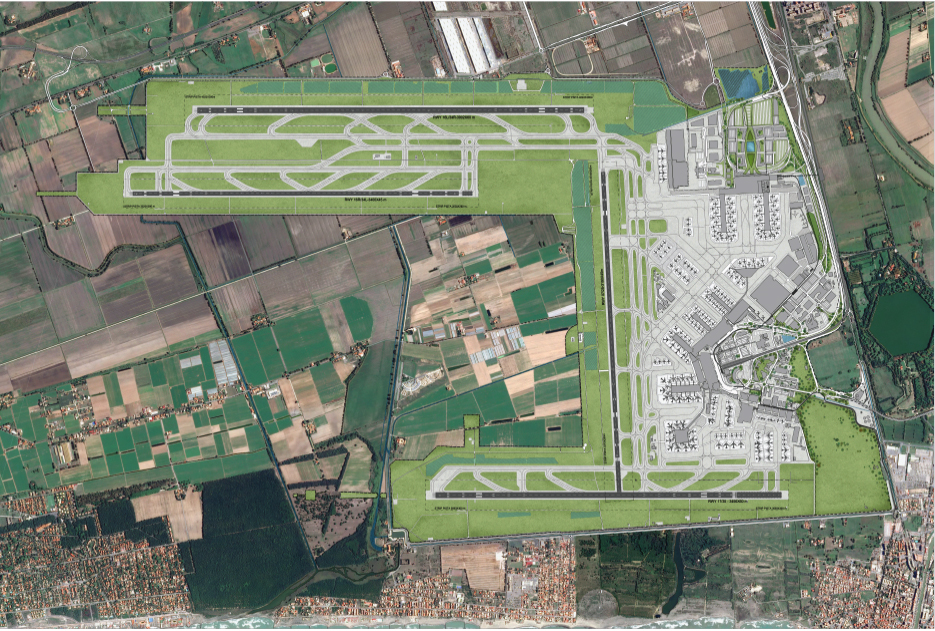
Also located on the eastern side of the airfield, it will run parallel to the existing Runway 16L/34R, at a distance of 820 meters from the existing runway, requiring an expansion of the airport site of only 267 hectares. Measuring 3,400 meters in length, it will absorb operations currently handled by Runway 1, designated 16R/34L, enabling a major reconfiguration of the airside infrastructure.
In addition to ensuring sufficient capacity expansion aligned with Rome Fiumicino Airport’s strategic role, ADR projects that the new operating arrangement will reduce noise exposure in nearby residential areas by up to 80%. Furthermore, this operational concept will restrict Runway 1 primarily to a reduced number of arrivals, phasing out takeoff operations currently conducted on it.
As ADR S.p.A. announced, shifting the operational center of gravity eastward and dedicating Runway 16R/34L only to arrivals will allow for its shortening, with arriving aircraft landing approximately 900 meters farther along the runway than they do today.
This will raise aircraft overflight altitudes over the residential areas of Isola Sacra and Cancelli Rossi, located south of the airport, thereby significantly reducing noise exposure in these communities.
The area made available as a result of the shortening of Runway 16R/34L will be returned to the local community through the creation of a public archaeological park built and maintained by Aeroporti di Roma. The 80-hectare park, larger than Villa Borghese, one of Rome’s largest and best-known parks, will be developed on the ancient site of the Roman imperial harbors of Claudius and Trajan, combining the enhancement of its archaeological heritage with new public spaces for the local community.
The construction of the new runway will be accompanied by the expansion of taxiways, aprons, and rapid-exit turnoffs to fully support the overall runway capacity and the entire airfield ecosystem.
The Beginning of the Change
Today, in 2026, the airport continues its evolution, developing new spaces, facilities, and upgraded ground-transport infrastructure.
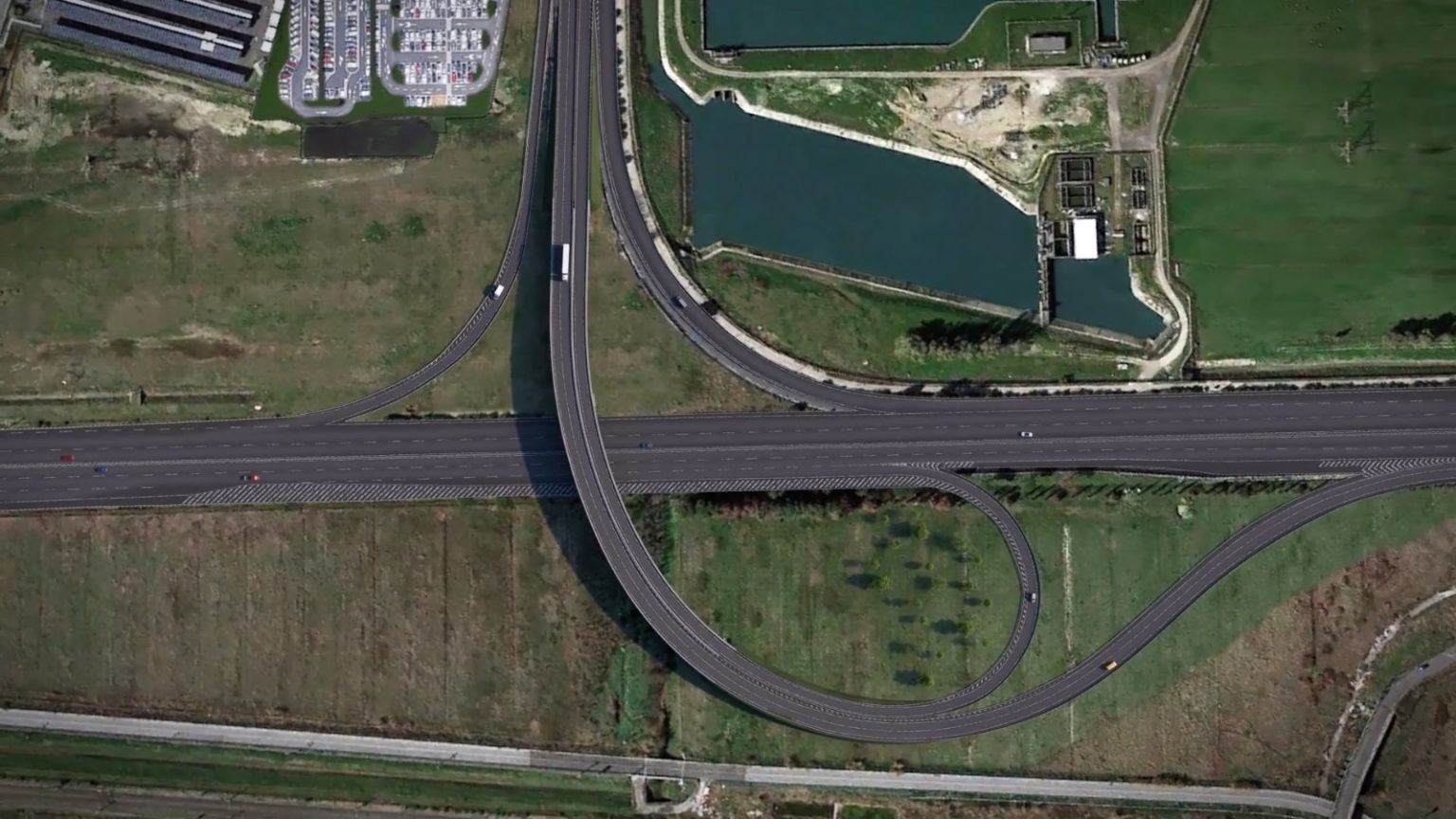
To pave the way for this major transformation, anchored by the new terminal and fourth runway, the operator has taken its first concrete step: constructing a new junction on the A91 Rome–Fiumicino highway.
The project will redesign accessibility to the Cargo City sector and the Long-Term Parking area, aiming to make connections between the airport, the motorway network, and the surrounding territory both faster and more sustainable. Looking ahead, this infrastructure will serve as one of the primary access links to the new terminal.
Work began in November 2024, and the interchange is scheduled for completion in spring 2027. It will add two ramps connecting the Rome-bound A91 carriageway with Cargo City and the Long-Term Parking area, separating commercial and passenger traffic from the airport’s internal road network.
Traveling through the new terminal will be a remarkable experience, but first, we look forward to being there to admire every detail of its completion.
Featured image: ADR.



.avif)