American Airlines Reshuffles Leadership Amid Profit, Union Pressure


.webp)
.webp)
.webp)
FORT WORTH — American Airlines (AA) is reorganizing its senior management, expanding the responsibilities of several executives and hiring former Spirit Airlines (NK) Chief Operating Officer John Bendoraitis to lead technical operations as pressure builds on CEO Robert Isom to improve the carrier's performance.
The changes were detailed in an internal letter from Isom reported by The Dallas Morning News. Isom described the reorganization as the first in a series of actions and acknowledged a “meaningful gap” between where American is today and where the airline “can — and should — be.”
That language makes this more than a routine change to reporting lines. American is altering who controls several of the functions that determine revenue, reliability, and the passenger response to disruptions, while Isom continues to defend the company's broader strategy.
The immediate question is whether a new management structure can produce results quickly enough to narrow American's financial gap with Delta Air Lines (DL) and United Airlines (UA) and ease open criticism from two of the airline's major frontline labor groups.
What American's New Structure Changes
Chief Commercial Officer Nat Pieper will add marketing and branding to a portfolio that already includes network planning, revenue management, loyalty, sales, distribution, cargo, and commercial partnerships. The broader remit brings the way American presents its product closer to the executive responsible for deciding how the airline prices, sells, and deploys that product.
Chief Customer Officer Heather Garboden will take responsibility for reservations and service recovery. That consolidation matters most during irregular operations, when passengers move among the app, call centers, airport agents, rebooking tools, hotel or meal vouchers, and baggage support. Putting those functions under one executive creates a clearer line of accountability for how American handles a disrupted journey.
JC Gulbranson will add airport operations and planning. The combination potentially links schedule design more closely with what American's hubs, gates, ground teams, and operating system can reliably deliver. It does not, by itself, guarantee better operational control; the test will be whether planning decisions begin to produce measurable gains in completion, punctuality, connections, and recovery.
Bendoraitis will join American to lead technical operations, replacing Kevin Brickner, who is departing. Spirit's executive biography for Bendoraitis says he served as its chief operating officer from 2013, after earlier leadership roles at Frontier, Comair, Compass, and Northwest. He began at Northwest as an aircraft technician and later became vice president of base maintenance operations.
That background helps explain the appointment. American is not simply hiring a former low-cost-carrier executive; it is putting a leader with maintenance and airline-operations experience over a function that directly affects aircraft availability and schedule reliability. His long tenure at Spirit also means the choice will invite scrutiny because the airline went through two Chapter 11 filings, even though a corporate restructuring does not, on its own, establish the performance of an individual operating executive.
Communications chief Ron DeFeo and government-affairs executive Nate Gatten are also leaving, according to the report. Four executives are expected to join American's senior leadership team; American has not publicly detailed the effective dates of the changes.
The Financial Gap Is the Central Pressure Point
American's second-quarter numbers show both the progress management is defending and the scale of the problem the reorganization is intended to address.
The airline reported record quarterly revenue of $16.7 billion, up 16.3% from a year earlier. Managed corporate revenue rose 26%, premium passenger unit revenue increased 13.4%, and on-time arrival performance improved by 2.8 percentage points.
Yet American produced only $71 million in GAAP net income and $99 million in adjusted net income during the quarter after fuel expense rose by more than $2.2 billion. Its full-year adjusted earnings guidance now ranges from a loss of $0.65 to a profit of $0.65 per diluted share, putting the midpoint at roughly break-even.
Delta and United face the same broad fuel-price environment but continue to forecast meaningful profits. Delta affirmed full-year adjusted earnings guidance of $6.50 to $7.50 per share after generating $1.4 billion in adjusted pre-tax profit in the second quarter. United raised its full-year adjusted guidance to $9 to $11 per share after reporting $843 million in adjusted pre-tax earnings for the quarter.
Per-share guidance is not a direct comparison of absolute profit because each carrier has a different share count. The direction, however, is unambiguous: American's range straddles zero while both of its largest U.S. network competitors expect solidly positive earnings.
That is why the leadership changes will be judged on execution rather than organizational logic. Broader portfolios may reduce handoffs and clarify ownership, but they can also concentrate more work under executives who already carry major turnaround responsibilities.
Union Pressure Makes This an Accountability Test
The Allied Pilots Association (APA), which represents more than 16,000 American pilots, told the company's board in February that the airline was on an underperforming path and had failed to define a credible identity or strategy. The union said its members had lost confidence in management's ability to correct course and asked the board for decisive action.
Airways previously reported how American's pilots pressed the board over strategy and execution, including concerns about persistent operational and financial underperformance.
The Association of Professional Flight Attendants (APFA), representing 28,000 American flight attendants, went further. Its board issued a unanimous vote of no confidence in Isom and later called for his removal.
The reorganization addresses parts of that criticism by assigning clearer ownership over customer recovery, airports, planning, branding, and technical operations. It does not meet the unions' demand for a change at the top, nor does it replace the strategy APA has questioned.
That distinction is the strongest signal in Isom's move. He is changing the management system used to execute American's strategy while arguing that the strategy itself—premium growth, a stronger global network, customer improvements, and loyalty revenue—remains capable of closing the gap.
The Forseeable Future for AA
Isom's description of the reorganization as a first action creates an expectation of additional changes, but American has not publicly specified the next steps, their timing, or performance targets tied directly to the new structure.
The near-term measures are straightforward. Pieper's expanded commercial role will be tested by revenue quality and brand demand. Garboden's larger customer portfolio will be tested during disruptions. Gulbranson's airport and planning responsibilities will be tested through reliability and hub performance. Bendoraitis will be judged by aircraft availability, maintenance execution, and the resilience of the operation.
The larger measure is financial. If American converts record revenue into materially stronger margins through 2027, the reorganization will look like an early intervention that improved execution. If the gap with Delta and United persists, broadening the responsibilities of Isom's existing team will intensify questions about whether the problem lies with the structure, the strategy, or leadership at the top.
For now, Isom has chosen evolution over replacement. Calling these moves a first step also starts the clock on proving that more is coming—and that the results will be visible.
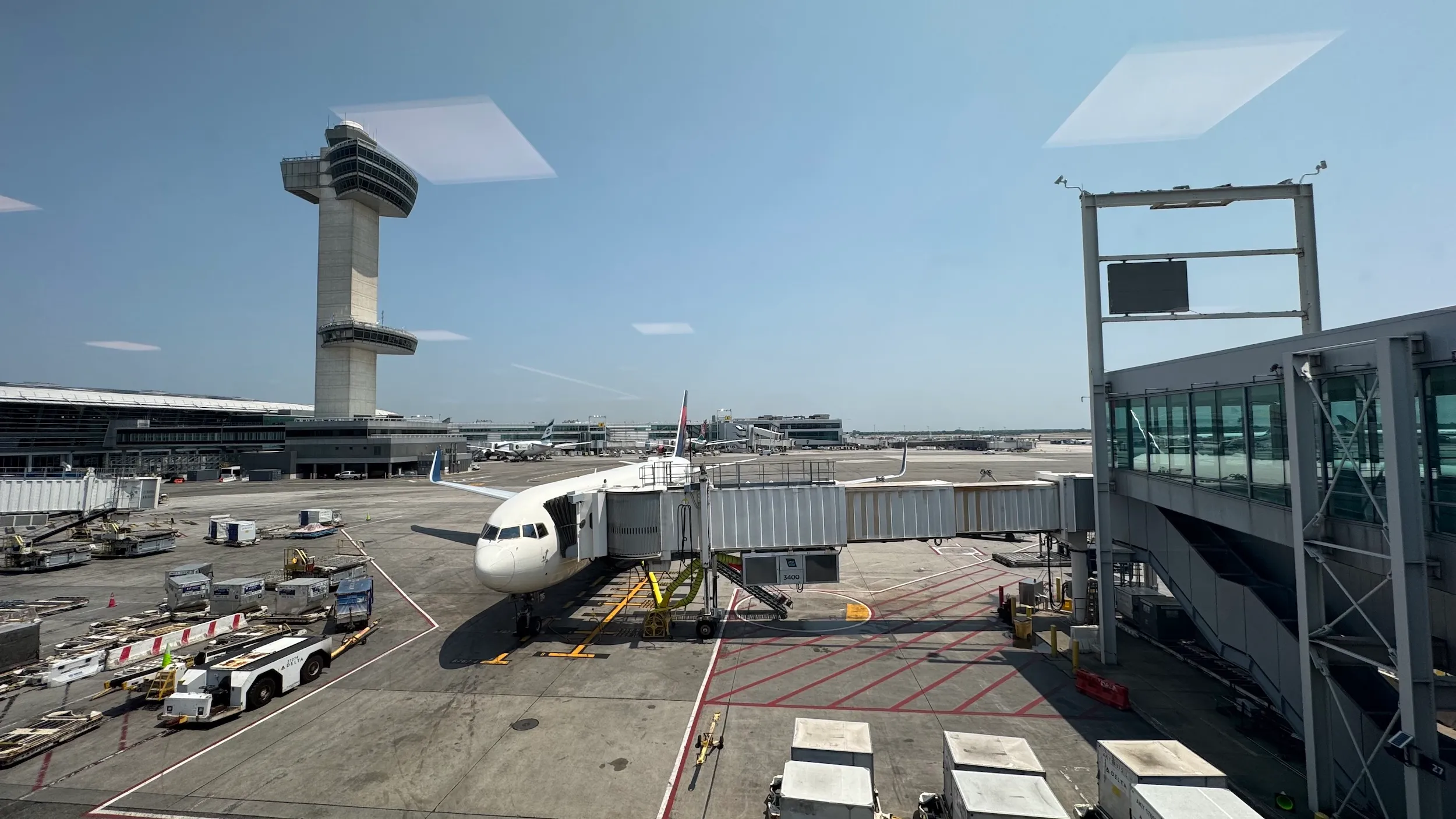
Featured image: Chris Goulet/Airways



.avif)