


.webp)

DALLAS — Aircraft Rescue and Firefighting, or ARFF, is a function that remains remarkably invisible yet essential within the aviation industry.
Although passengers are aware that fire vehicles are staged during a precautionary landing, the complexity of the training, regulatory, and operational standards remains unknown. Airports are domains where minutes make a matter difference, vehicles are tens of tons, and the room for error could mean closing airports or threatening lives.
Today, ARFF training has advanced from the traditional firefighting environment. It encompasses vehicle dynamics, human factors considerations, stress management, and a high degree of cooperation with air traffic control (ATC) as aircraft size increases, air traffic volume increases, and margins of error dwindle.
What Sets ARFF Different from Conventional Firefighting Operations
The ARFF discipline is a specialized practice that focuses exclusively on aircraft-related emergencies. Compared with other fires in the municipality, the firefighting team must respond to aviation fuel fires, pressurized cabins, composites, and massive evacuations simultaneously. Incidents involving the aircraft tend to escalate quickly. For that reason, a set of specific response guidelines has been provided.
ARFF operations may include: rapid response to runway, taxiing, or apron runway emergencies; firefighting with foam, dry chemicals, or clean agents; rescue operations in aircraft cabin compartments and cargo areas; mitigation of fuel spills and electrical hazards; support for evacuations; and support for medical emergencies. These activities necessitate organized training in controlled yet realistic scenarios.
Global ARFF Training Requirements, Considerations
ARFF training schemes are founded on international and domestic regulations. According to ICAO Annex 14, Vol. The minimum standard specifications for rescue and firefighting services require reaching any point in the movement area within three minutes. For example, to ensure compliance, regulations in the United States are enforced under Part 139 of the FAA, and EASA enforces the exact requirements for all European aerodromes.
The standard learning requirements in regulations typically include initial and recurring live-fire drills, aircraft familiarization across various models, vehicle operations qualification, and coordination with ATC, among others. Although these ensure a uniform standard, they also enable airports to tailor their training to local conditions, such as runway configurations, traffic volume, and available aircraft.
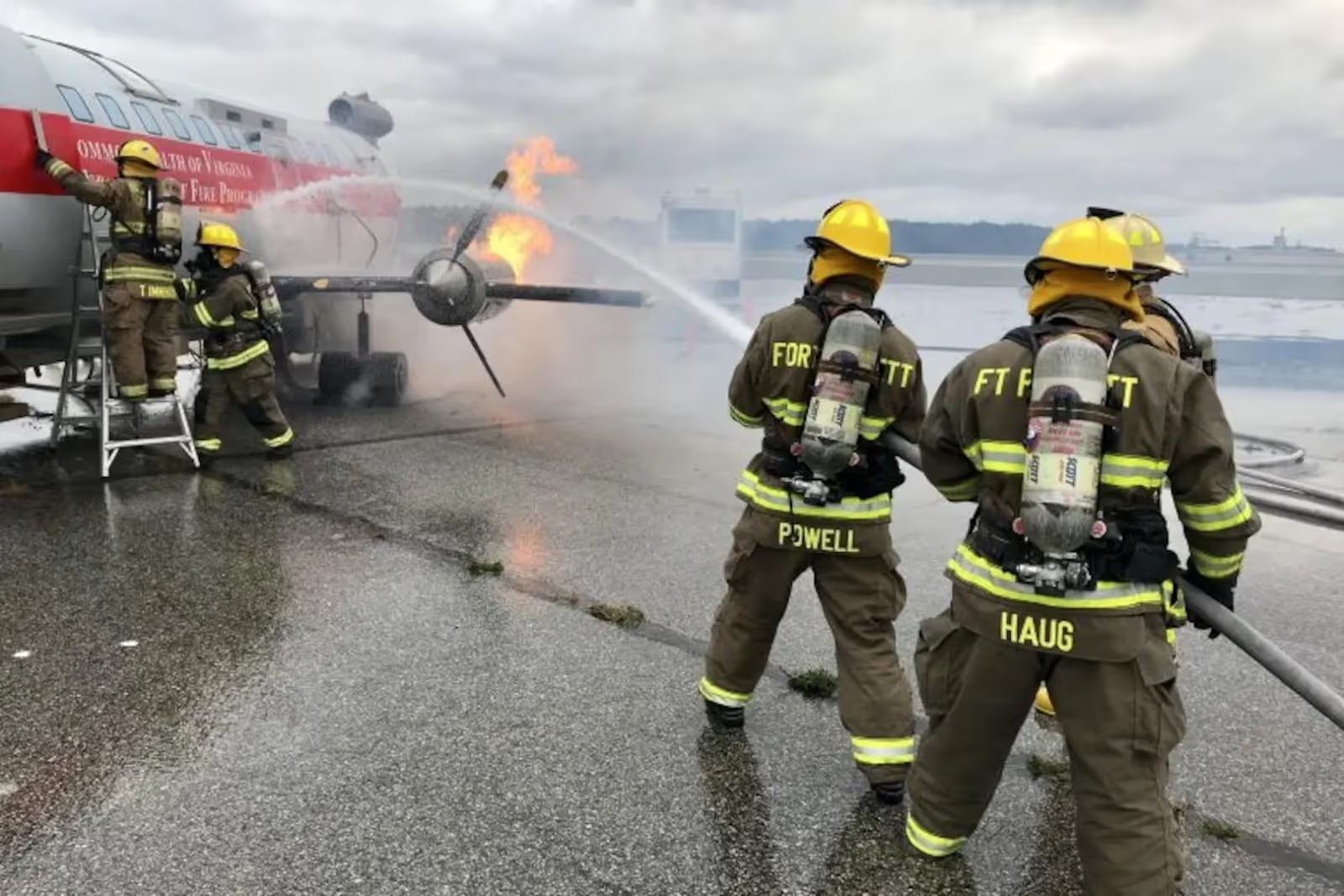
Inside an ARFF Training Facility
Simulated ARFF training facilities reproduce aircraft emergencies with less risk to personnel. The facilities comprise live-fire simulators, aircraft section models, and command-and-control elements. The Fuel Spill Trainers are used for large-scale exterior fuel fires. At the same time, Specialised Aircraft Fire Trainers are used to generate fires in the cockpit, cabin, cargo, wheel, engine, and auxiliary power unit.
Most recent ranges employ propane-fired systems and software that allow instructors to control the intensity, position, and sequences of fires. The training courses are typically designed to cover airports rated ICAO Index A to Index E.
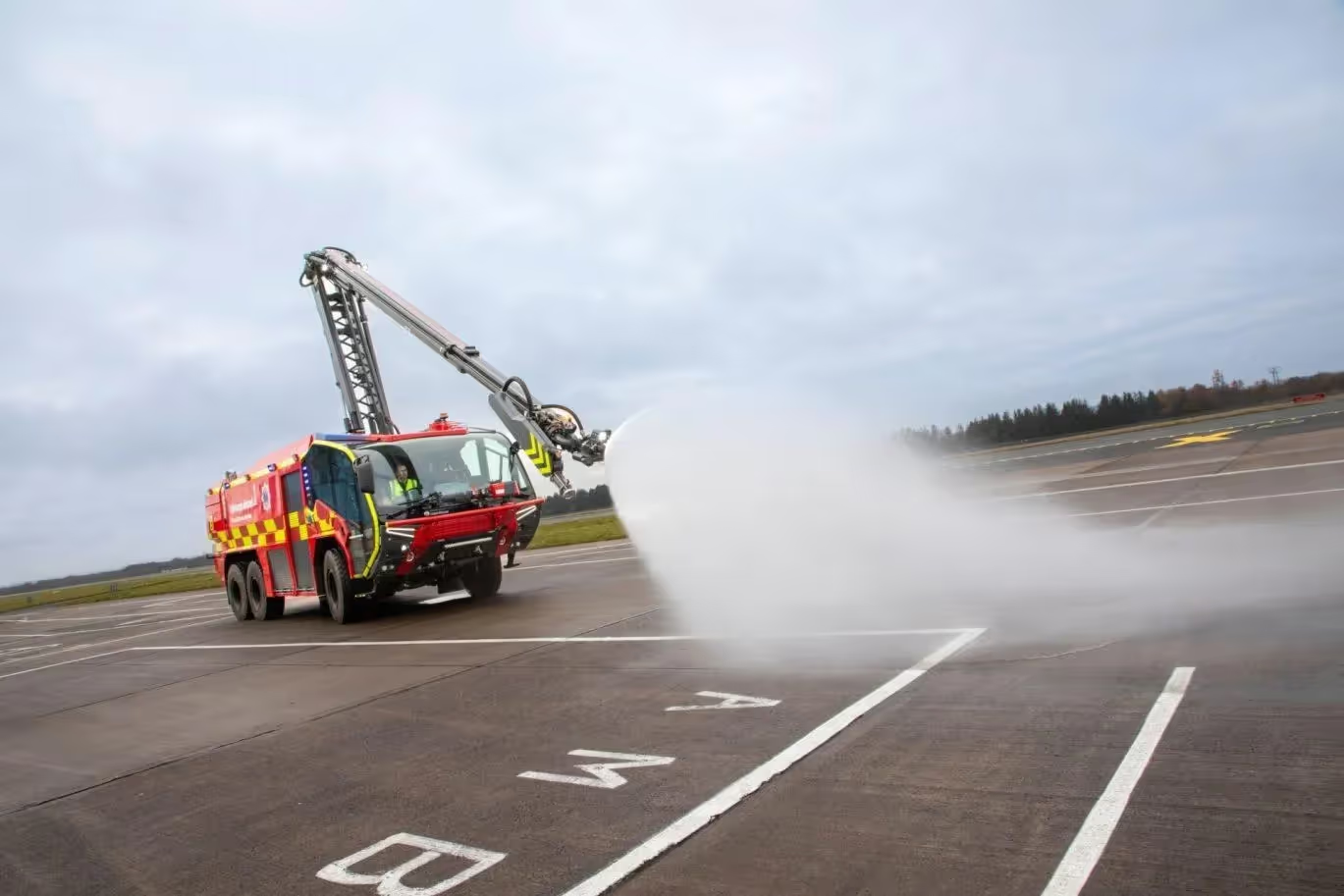
Driving Dynamics: A High and Underscored Risk
Driving the vehicle remains one of the least underestimated factors in ARFF training. The present-day ARFF vehicle weighs up to 58,000 kg and delivers more than 1,000 horsepower, with speeds exceeding 120 km/h. The cars must travel through a complex airside route and navigate intersections while operating under tight time constraints.
Traditionally, ARFF drivers' skills were learned in-house, with airport-specific driving practices playing a considerable role and a lack of standardization. Notwithstanding this, there are concerns about accidents that have damaged aircraft, closed runways, and disrupted airport operations.
Modern training focuses on vehicle dynamics, braking characteristics, route-planning ability, environmental awareness and situational awareness, controlled speed regulation, and maintenance-friendly speeds. Modern training is increasingly characterized by performance-related exercise training rather than the traditional from-point-to-point exercise training that formerly predominated.
Human Factors, Stress Management
Stress, incomplete data, and time-pressured decision-making characterize ARFF operating conditions. Training in Human Factors has thus become essential for readiness for ARFF operations. Stress can be known to cause attentional narrowness, impaired cognition, and communication breakdowns when drivers are required to deal with navigating, communicating with ATC, and system monitoring at the same time.
Good training programs emphasize stress recognition, workload, prioritization, crew resource management, and situational awareness. The aim here is not to create an elite individual but to ensure that all trained personnel perform effectively under high-demand conditions.
Specialisation Vs Generalisation
There is a paradigm shift in ARFF philosophy. The conventional approach, adopted mainly by airport fire departments, used a generalist model in which all members had to handle all tasks, including operations. The current complexity, coupled with training limitations, has rendered a largely outdated practice obsolete.
Today, a trend in airports is to adopt specialized models in which small teams of fire personnel are trained solely to operate ARFF vehicles. This enables greater skill development through increased exposure, fewer accidents, and improved accountability. Specialization does require planning, but it is in tune with aviation culture, where clarity of roles is a key focus.
Coordination with Air Traffic Control
ARFF response relies heavily on close cooperation with ATC, whose personnel are often the first to recognize a life-threatening situation, whether from a pilot's report, data from the air surveillance system, or direct visual observation. After declaring a life-threatening situation, ATC provides ARFF response personnel with vital data: aircraft type, fuel capacity, occupancy, and the expected landing site.
It is therefore crucial that joint training exercises be carried out between the ARFF and ATC. These training sessions include simulating emergency declarations, runway and taxiway closures, aircraft evacuation, and the involvement of various agencies, such as medical and security agencies.
Learning from the Past: Real World Examples
Asiana Airlines Flight 214 in 2013 illustrated a well-coordinated ARFF and ATC effort. In the San Francisco Airport case, quick deployment and a logical firefighting system helped to increase survivability, even in a damaged aircraft.
Likewise, the Emirates Flight EK521 incident in 2016 highlighted the importance of periodic training, on the one hand, and the best possible equipment, on the other. Dubai's airport rescue firefighters handled evacuation and firefighting operations at one of the world's busiest airports effectively.
Infrastructure, Environmental Factors
ARFF training extends beyond personnel to infrastructure. The training ranges include exposure to heavy vehicle traffic, live firefighting missions, and environmental protection. Most airports employ heat-resistant, porous surfaces to meet all required environmental protection needs, particularly for runoff and soil conservation.
These investments enable safe vehicle operations during training drills, regulatory compliance, and durability under extreme thermal loads. Infrastructure options are thus intertwined with the training for aircraft rescue and firefighting.
The Future of ARFF Training
As aircraft materials, propulsion systems, and airfield designs evolve, ARFF training procedures must also adapt. Recent challenges in the area include those posed by the use of composite materials and lithium batteries, the evacuation of larger aircraft, command-and-control systems, and cost.
Airports that view ARFF training as a strategic safety investment, rather than merely a regulatory requirement, are more likely to manage such risks.
Conclusion
Airport fire department training is a complex, multifaceted process that goes well beyond fire suppression. Today, successful ARFF operations require sophisticated knowledge of vehicle dynamics, human factors, regulatory requirements, and interagency coordination.
The recent global emphasis on formalized, standardized, and specialized training reflects the aviation industry’s ever-expanding safety philosophy: systems should support, not compromise, human performance during critical missions. The increasing complexity of airports will make ARFF training the keystone of aviation safety.
Featured image: Edinburgh Airport



.avif)