JetBlue Restructures Operations Leadership as JetForward Turnaround Continues


.webp)
.webp)

NEW YORK — JetBlue Airways (B6) has promoted Jeffrey Winter to senior vice president, flight operations, inflight experience and technical operations, consolidating three of the airline's largest operating groups under one executive as it works to improve reliability and restore profitability.
Winter joins JetBlue's senior leadership team and continues to report to Chief Operating Officer Warren Christie. JetBlue said the new structure is meant to establish clearer accountability, speed decisions, and improve coordination among the teams responsible for flying aircraft, serving customers onboard, and keeping the fleet airworthy.
The reorganization is therefore broader than Winter's promotion. It places pilots, flight attendants and maintenance operations in a single management portfolio at a point when operational performance is one of the four stated priorities of JetBlue's JetForward turnaround.
Winter's Remit Expands Beyond the Flight Deck
Winter previously led Flight Operations, with responsibility for flight standards and a group of nearly 4,700 pilots. JetBlue named him vice president of the division in October 2022.
He joined the airline in 2015 and has held positions in flight operations, training, and project management. Winter also led JetBlue University, the carrier's training organization for employees across airports, customer support, flight operations, inflight, system operations, and technical operations.
Before joining JetBlue, Winter served 26 years in the U.S. Navy, predominantly as an F/A-18 pilot and instructor. His JetBlue experience now gives one leader direct oversight across three functions whose constraints frequently meet during day-to-day operations.
A maintenance problem, for example, can require a different aircraft assignment, a crew change, and a new passenger-recovery plan. Combining the three groups does not remove those constraints, but it can reduce the number of senior-level handoffs required to settle competing operational priorities.
JetBlue has not disclosed a timetable, cost-saving target, or reliability target tied specifically to the new organization. Its announcement also did not explain whether Flight Operations, Inflight Experience, and Technical Operations will retain their existing divisional leadership below Winter.
What Remains Under Warren Christie
Christie remains responsible for JetBlue's overall operation. When the airline promoted him to chief operating officer in February 2024, it said his remit covered airports, flight operations, inflight experience, safety, security, system operations, technical operations, and JetBlue University.
The latest change moves three of those functions beneath Winter rather than transferring them away from the COO organization. Christie retains the broader responsibility for day-to-day operational performance and for coordinating Winter's portfolio with functions outside it.
Airport and system operations appear to remain a separate branch. JetBlue appointed Steve Olson head of System Operations and Airports in March 2025, reporting to Christie. That combined organization includes the System Operations Center, which leads daily flight execution, and the airport teams that handle customers and aircraft on the ground.
JetBlue's announcement does not say Olson's responsibilities changed. Under the airline's last publicly described structure, that leaves an important boundary: Winter controls three major sources of operational resources, while systemwide execution and the airport response remain aligned under Olson and ultimately Christie.
Reliability Gives the Change Its Urgency
JetBlue launched JetForward in 2024 with “Reliable & Caring Service” as one of its four priority moves. The latest results show why management coordination remains a live issue rather than a completed turnaround item.
In the first quarter of 2026, JetBlue's systemwide on-time performance fell to 68.8%, from 75.1% a year earlier. Completion factor dropped to 95.0% from 98.6%. The airline cited severe winter weather, airspace constraints, and other external disruptions, while saying operational problems added about four percentage points to its adjusted unit-cost growth.
Performance improved in the following quarter. JetBlue said its A14 arrival measure rose by about one percentage point year over year, and Net Promoter Score increased five points. A14 measures the share of flights arriving within 14 minutes of schedule.
Yet a July disruption prompted fresh criticism of crew recovery. The JetBlue unit of the Air Line Pilots Association said scheduling-system failures left crews out of position, with pilots facing long hold times and some crews stranded without overnight accommodations. Those claims came from the union and were not independent findings by Airways.
Technical Operations also faces an availability constraint that a reporting-line change cannot solve by itself. JetBlue had four aircraft grounded at June 30 because of Pratt & Whitney PW1100G and PW1500G engine availability and expected the count to remain in the mid-single digits for the rest of 2026.
Putting maintenance, pilots, and inflight under Winter may help the airline make faster choices about the aircraft and crews it does have. It cannot create spare engines, maintenance capacity, legal crew duty time, or unconstrained airspace. Those limits make the eventual performance data more important than the organizational rationale.
JetForward Needs Operational Gains to Hold
JetBlue estimates that JetForward generated US$470 million of cumulative incremental earnings before interest and taxes through June 2026. It continues to target US$850 million to US$950 million of annual incremental EBIT by the end of 2027.
Reliability supports that financial goal in several ways: completing more of the published schedule protects revenue, fewer severe disruptions lower recovery costs, and better coordination can improve aircraft and crew utilization. JetBlue's recent quarterly results show that the carrier still needs those gains. Despite stronger revenue, it posted a US$141 million operating loss in the second quarter.
The move follows American Airlines' separate senior-management reorganization earlier in the week. American broadened several executives' responsibilities and brought in former Spirit Airlines Chief Operating Officer John Bendoraitis to lead technical operations. JetBlue is instead concentrating three frontline operating divisions under an internal leader.
The timing makes the two announcements comparable as responses to execution and profitability pressure, but two reorganizations do not establish an industry-wide management trend. Each airline has a different operating structure and set of performance problems.
For JetBlue, the next evidence will come during irregular operations. The structure will have practical value if it shortens decisions across aircraft maintenance, pilot staffing, and cabin staffing without creating a new bottleneck between Winter's organization and the System Operations Center. JetBlue has not provided metrics or a deadline by which that claim can be tested.
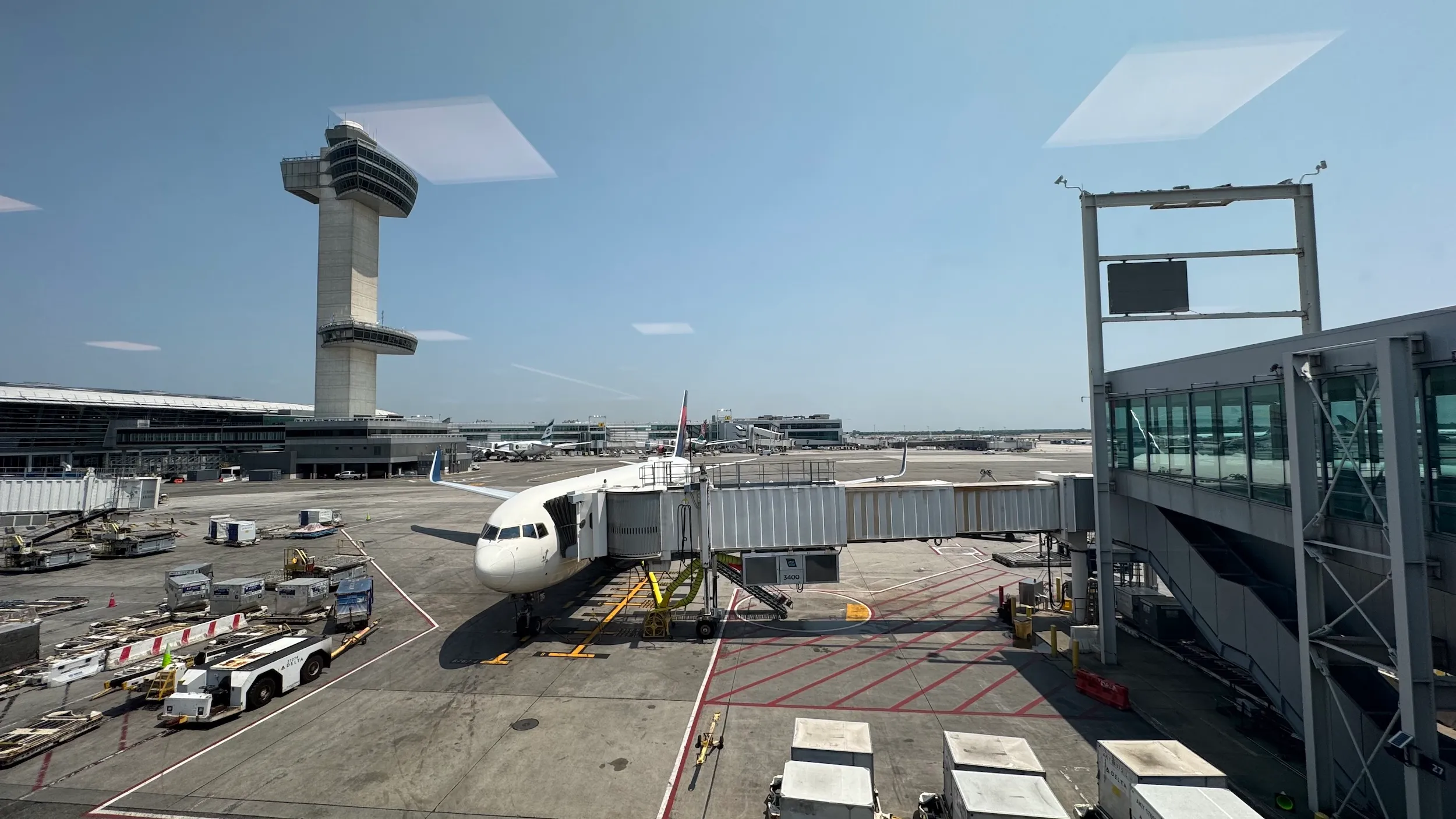
Featured image: Helwing Villamizar/Airways



.avif)