

.webp)
.webp)

.webp)
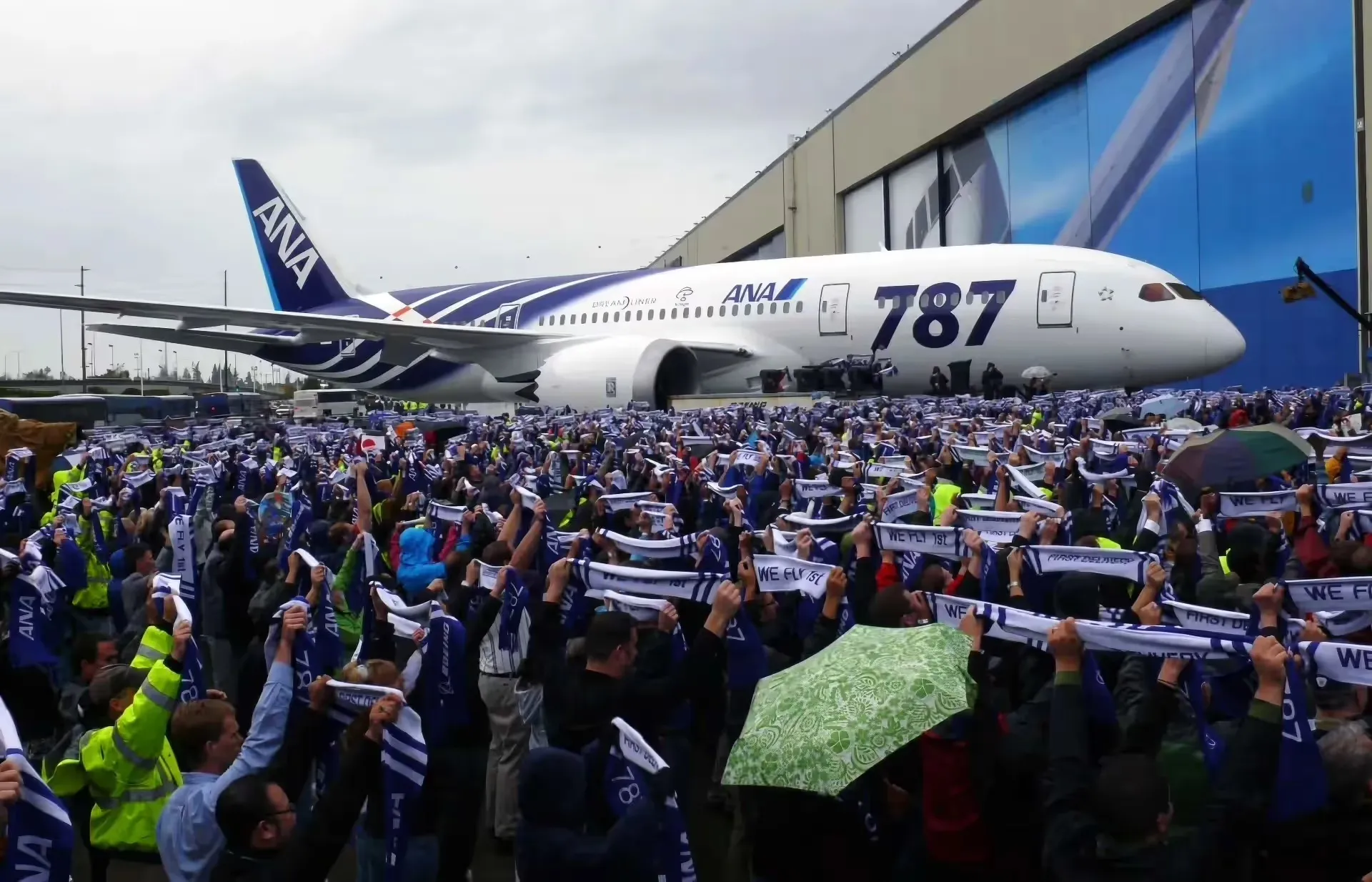
BLAGNAC — On Thursday, KLM’s (KL) CFO, Bas Brouns, held a media briefing about the upcoming Airbus A350-900. At the end of December 2023, the Air France-KLM Group signed an agreement to allocate 50 A350 aircraft across the group.
KLM’s order book counts 22 A350-900s, with combined options with Air France (AF) for up to 40 more units. KL will also replace the Boeing 747F with the freighter version of the A350F. Combined with previously placed orders, the AF-KLM is set to become the world’s largest Airbus A350 operator.
“We are in the midst of a huge transformation of our fleet. As you see the five key levers here, we are performing one of the largest transitions ever. From regional and medium-haul to long-haul and cargo, every part of our fleet is evolving,” said Bas Brouns, CFO at KLM.
KLM’s next-generation fleet currently counts 25 Embraer E195-E2, 28 Boeing 787s, and 14 A321neos. Thanks to the introduction of the Airbus A321neo and Airbus A350, the share of next-generation fleet will increase from ~40% to ~70 before the end of the decade.
“This investment in our A350 fleet is a strategic imperative for KLM. It secures our financial strength, enhances operational excellence, and critically, positions us for a future of quieter, cleaner, and more fuel-efficient operations,” continued Bas.
Following the first aircraft, MSN809, KL will take delivery of two more units in Q4 2024. Three more aircraft will join in 2027. The Dutch flag carrier welcomed the Netherlands’ first A350-900 simulator in October 2025 and has been training its pilots in cooperation with Air France (AF) and Finnair (AY).
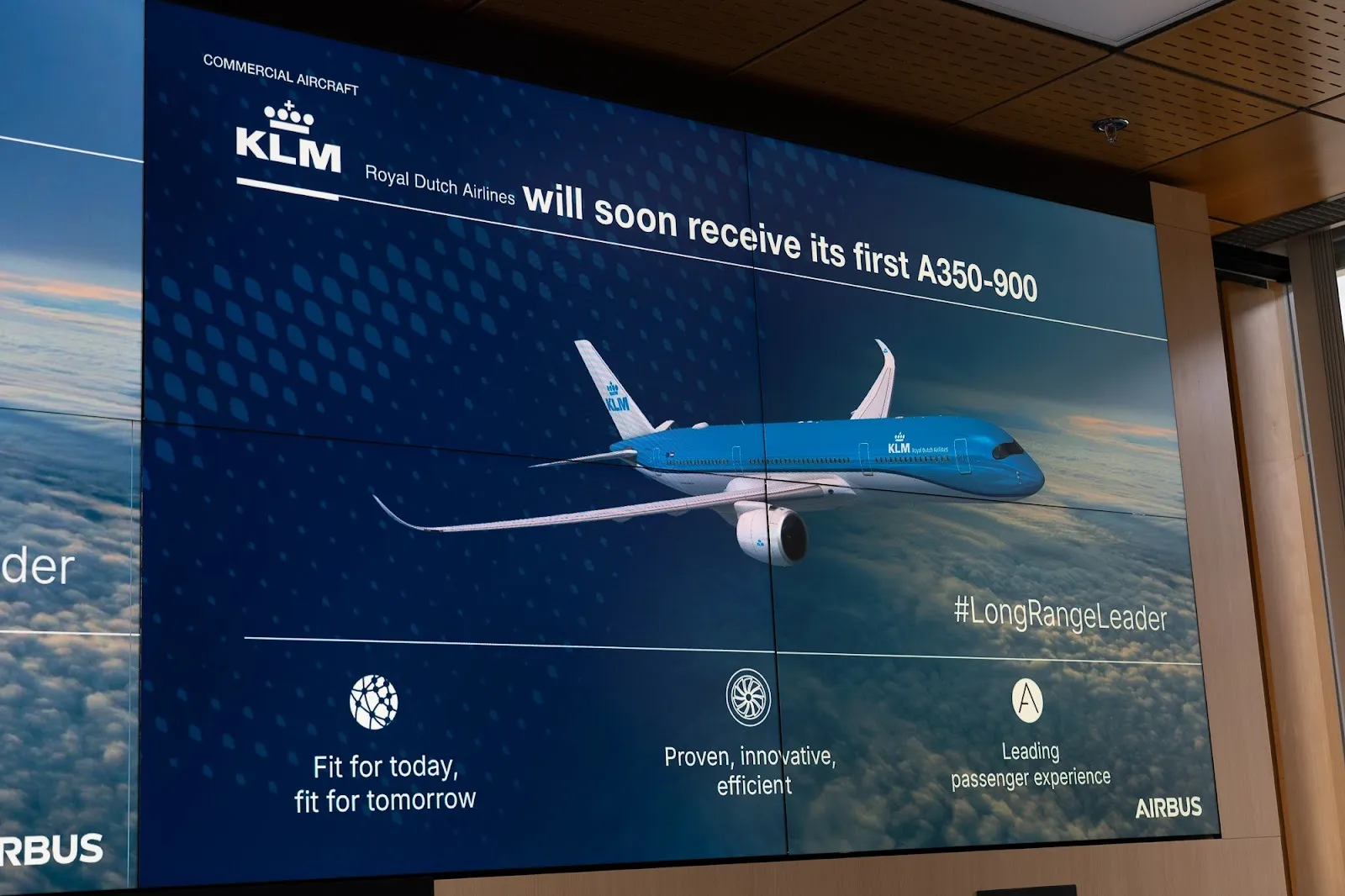
KLM Fleet Strategy
KLM’s first A350-900 will fly to Toronto (YYZ), likely replacing the A330 on non-stop flight KL695/696, and Dar es Salaam (DAR).
Over the upcoming years, the Airbus A350-900 will replace KL’s A330-200, A330-300 and Boeing 777-200ER fleets. About the option for the larger A350 variant, the A350-1000, Bas mentioned that “Our assessment is that the -900 is a perfect fit at this stage, especially because of the aircraft it replaces (the A330 and 777-200). We never know what the future brings, but for the near term, the -900 is the best fit for KLM.”
While the A350-900 improves the range and capacity of the A330 fleet, the airline will introduce the type as a direct replacement for its old Airbus widebody fleet.
“The A350 has more capabilities than the A330. It gives us more flexibility and a longer range. It covers the A330 network, the 777-200 network, and probably more. In the current situation with the circumvention of Russia, it is the best fit. Initially, they replace the older planes one-on-one as the Airbus A330s go out this year,” said Bas.
Full-service airlines are investing in seat “premiumization”, offering a record-high number of Business Class and Premium Economy seats. The trend is consistent worldwide, from North America to Southeast Asia. KLM has not ruled out adjusting the layout of passenger accommodations (LOPA) in future deliveries to meet growing premium demand.
“We do see a trend towards premiumization. That is why we introduced Premium Comfort. Business Class and Premium Comfort are doing very well. This configuration - 34 seats in Business and 28 in Premium Comfort - is the best fit for now. We continue to look at customer trends and can adapt in the future if needed.” Bas commented on the topic.
The upcoming A350-900 will feature 34 Business Class, 26 Premium Comfort, 33 Economy Comfort, and 238 Economy Class seats, for a total of 331. Each seat will be equipped with Panasonic Astrova IFE, USB-C chargers, and Viasat Wi-Fi. KL has selected the Stellia Opera seat for its Business Class cabin, complete with privacy doors, a 19” 4K UHD IFE display and a lie-flat bed. In Premium Comfort, the Collins MIQ seats are arranged in a 2-4-2 layout with 38” of seat pitch. The Economy Class features the Recaro R3 in a 3-3-3 layout, with improved legroom and recline at the front of the cabin.
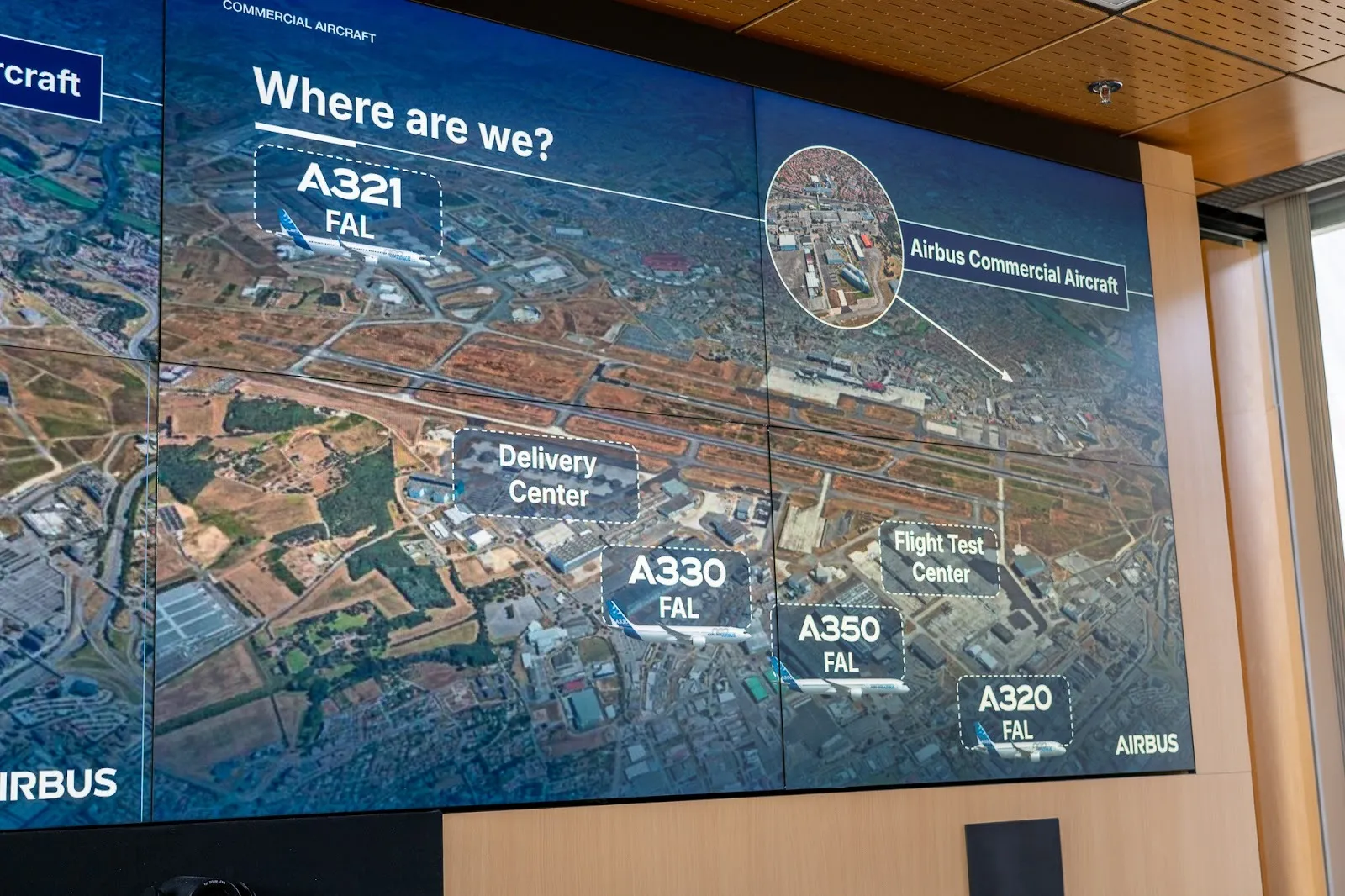
Airbus Commercial Aircraft and FAL tour
On Thursday, March 26, a KL delegation was hosted at the Airbus Customer Showroom in Blagnac. Following Bas’ presentation, Bertrand Pabon, Head of Widebody Market Development, provided an overview of the A350 programme. Today, the European OEM employs over 165,000 people worldwide. The company’s backlog is estimated at EUR 619 billion at the end of 2025.
Since its inception, Airbus has sold over 25,000 aircraft to 400+ customers. Its backlog counts 8,776 narrowbody and widebody aircraft. The A350 programme gained 1,529 orders from 67 customers. Airbus has delivered 702 aircraft, with its backlog standing at 827 units.
The programme gained traction across the globe, with Europe and APAC accounting for 66% of orders. As Bertrand explained, airlines phasing out ageing Boeing 777s have elected to integrate and expand their fleets with Airbus’s next-generation widebody. Airbus extended its A350 order book by 193 units in 2025, registering substantial interest in the freighter variant, which is expected to take off for the first time in 2026.
The innovations and advantages of the A350 over any current-generation widebody aircraft are well documented and appreciated by airlines and passengers. From improved aerodynamic and propulsion systems to lower cabin altitude, the A350 innovates across all systems and subsystems, significantly reducing emissions and noise. Replacing old equipment with next-generation products remains the most effective way to reduce fuel consumption and the noise footprint, a topic particularly important for KLM given its main hub at Amsterdam Schiphol (AMS) and the noise limitations and surcharges.
We then toured the A350 cabin demonstrator, which features several seating layouts across different travel classes. Customers visiting the facility can visualise several different products on board the wide A350 fuselage. In particular, the economy class section featured several seat types, all arranged in a 3-4-3 layout, a configuration that has only been successful with a few airlines worldwide on high-density routes.
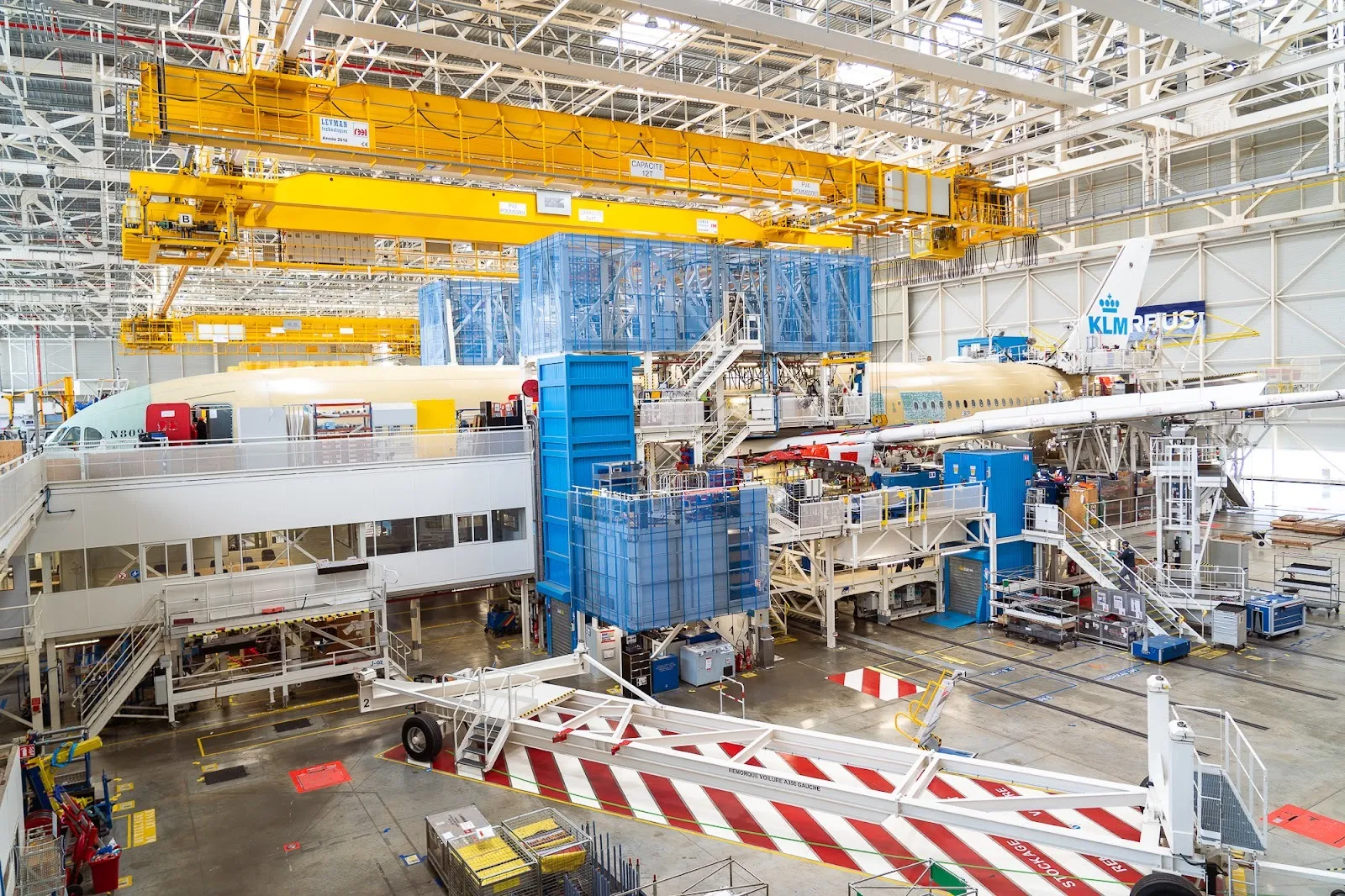
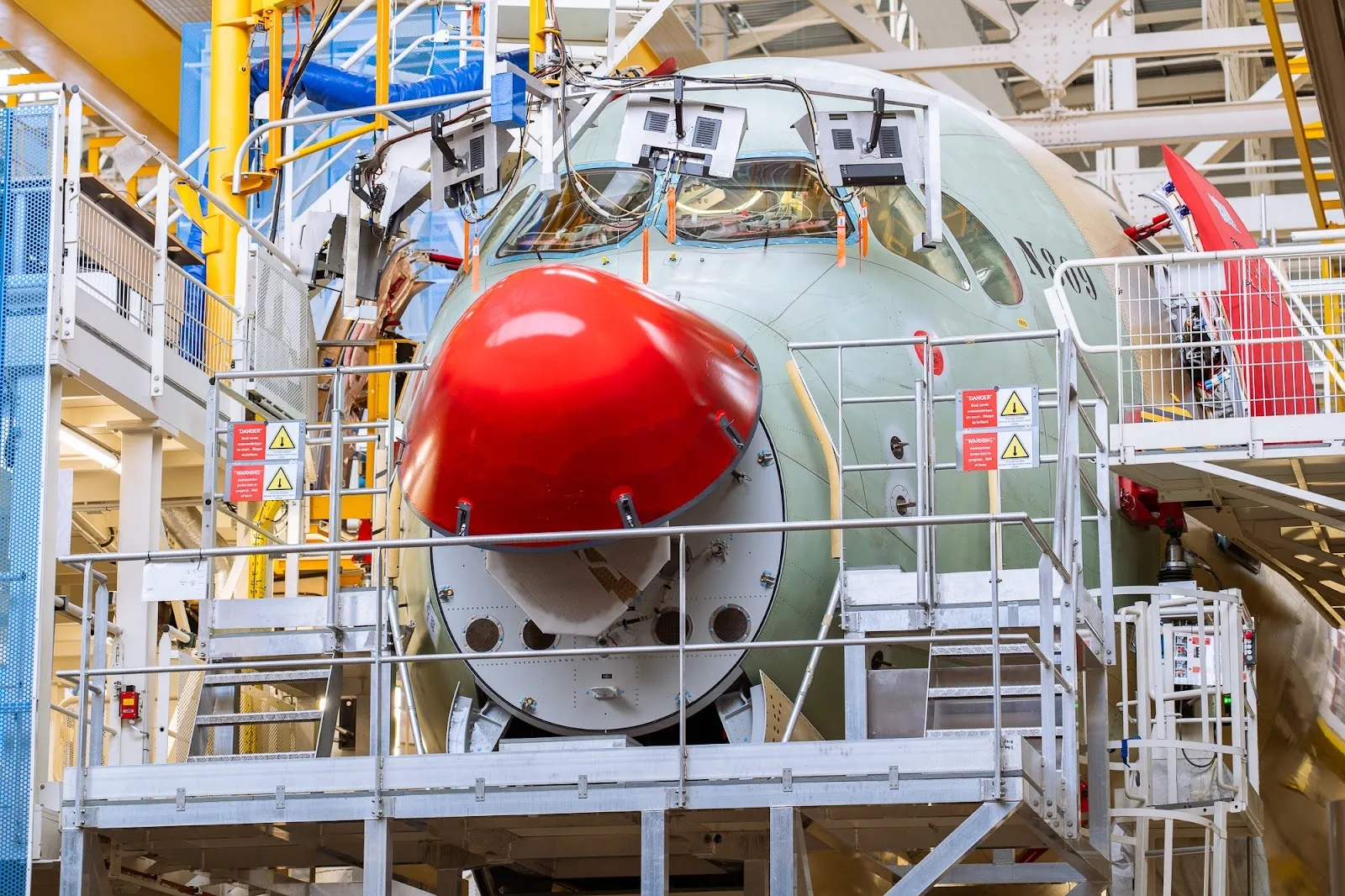
After lunch, our visit continued to the Airbus A350 Final Assembly Line (FAL). Here we found MSN 809, the first A350-900 for KLM. The aircraft already had its painted tail, Viasat antenna, landing gear, and tail plane installed. MSN809 is expected to leave station 40 in the coming days to continue installing the cabin, winglets, engines, and more.
We were able to get up close to the fuselage, checking out the details on the flaps, wingbox and bare fuselage. While it was not possible to step inside the aircraft, several details, such as the front galley and doors, were already installed.
Featured image: Simone Chellini/Airways



.avif)