Explained: Rising Fuel Prices, Fuel Hedging, and How Airlines Protect Their Margins



.webp)
.webp)
DALLAS — The biggest variable expense in commercial aviation is fuel, which typically accounts for 20-40% of an airline's operating costs.
Fuel prices differ from labor, fleet planning, and airport charges in that they are influenced by global commodity and currency exchanges, as well as geopolitical events, all of which are beyond an airline's control. This vulnerability has been revealed once again by the recent upsurge in tensions in the Middle East involving Iran.
Oil prices have been above US$80 per barrel, and jet fuel prices in major markets have reached US$197 per barrel, more than twice as high as before the war in some markets.
Such volatility generates short-term financial stress. Airlines offer tickets months in advance, yet they have to buy fuel constantly at current market rates. If prices increase dramatically within that window, margins are squeezed or wiped out completely. In severe cases, airlines have to downsize capacity, cancel flights, or implement cost-cutting measures in a crisis. Against this background, fuel hedging is one of the few resources available to deal with cost uncertainty, though it entails its own trade-offs in terms of financial commitment.
Economics of jet fuel in the airline operations
Airline profitability is directly affected by Jet fuel prices more than any other external variable. The world trades fuel in USD, meaning that airlines are subjected to both exchange-rate risk and oil price volatility. This bipolar exposure has escalated in the present environment. Some currencies have weakened against the dollar, pushing fuel prices even higher amid rising commodity prices.
A slight fluctuation in fuel prices can have a tremendous impact on the airline's finances. According to industry estimates, a 1-cent-per-gallon increase can impose tens of millions of dollars in additional annual expenses on a large network carrier. Today, with international jet fuel prices about to hit USD 5 per gallon, it has ceased to be incremental and has become structural.
Airlines have many limitations that restrict their timely responsiveness:
- Ticket selling usually starts 6-12 months in advance.
- Fuel has to be bought at all times, irrespective of the current demand.
- The fierce competition restrains instant fare increments.
- Short-term schedules and fleet deployment are fixed.
Such structural features render cost predictability more valuable than forecasting market movement.
Current fuel spike: Uneven risk exposure reshapes capacity, margins
By late March 2026, the conflict-driven increase in oil prices had become a significant cost threat to the airline sector. The surge in jet fuel prices since late February has compelled carriers to reassess schedules, reduce less profitable flights, and prepare for sustained margin pressure. The primary concern is not an immediate industry-wide collapse, but rather the uneven risk exposure among airlines. Carriers with weak balance sheets, limited pricing power, and minimal fuel hedging are now considerably more vulnerable than their better-capitalized counterparts.
Operationally, the initial response is evident in capacity discipline. Airlines are eliminating unprofitable flights, reducing marginal routes, and prioritizing core networks where yields are stronger. United Airlines (UA) has announced plans to reduce underperforming capacity over the next two quarters, while other carriers have already implemented substantial flight reductions. This approach aligns with established industry practices during fuel shocks: preserving cash, defending profitable hubs and trunk routes, and discontinuing weaker point-to-point or discretionary services.
From a commercial perspective, the increased costs are likely to be transferred to passengers. Outside the United States, fuel surcharges remain a prominent mechanism. In the U.S., where explicit surcharges are typically avoided, higher base fares are the more probable response, particularly in markets with constrained capacity. Current projections indicate that fares could be 5% to 10% higher than previous expectations through 2026 and 2027, with the potential for sharper increases in specific markets if fuel prices remain elevated.
The highest risk is concentrated among airlines already in a weakened financial position. Carriers with thin margins, substantial debt, and limited fuel hedging have reduced capacity to absorb a prolonged increase in fuel costs. Spirit Airlines (NK), currently undergoing restructuring, remains particularly exposed. Frontier Airlines (F9) faces challenges to the ultra-low-cost carrier (ULCC) model as fuel inflation undermines the viability of ultra-low fares. JetBlue (B6) is also considered vulnerable due to ongoing turnaround efforts, cash outflows, and limited hedge protection. Even larger network airlines, such as American Airlines (AA), may experience intensified margin pressure if fuel prices remain high and fare increases do not keep pace.
A significant geographic dimension also exists. U.S. airlines are particularly exposed because most have discontinued meaningful fuel hedging, making them more susceptible to market volatility. On the West Coast, the 'fuel island' phenomenon exacerbates this strain, as limited pipeline and refining flexibility can intensify local price pressures. This dynamic increases risk for lower-margin operations from secondary hubs and markets with a high concentration of leisure travel.
Exposure levels vary among carriers. European low-cost operators, including Ryanair (FR) and easyJet (U2), entered this period with robust hedging positions, affording them greater short-term protection and increased capacity to maintain pricing discipline. While this does not render them immune to fuel price volatility, it does widen the disparity between airlines capable of withstanding market fluctuations and those that must respond more aggressively.
For the industry, this situation represents a test of resilience rather than solely a fuel-price challenge. The central issue is not whether all airlines can continue operations, but which carriers can absorb the shock without significant harm to their networks, profitability, or strategic positions. In this context, the recent oil price spike is less a uniform industry crisis and more a stress event that reveals the sector's most vulnerable areas.
Lets' now explore what fuel hedging is.
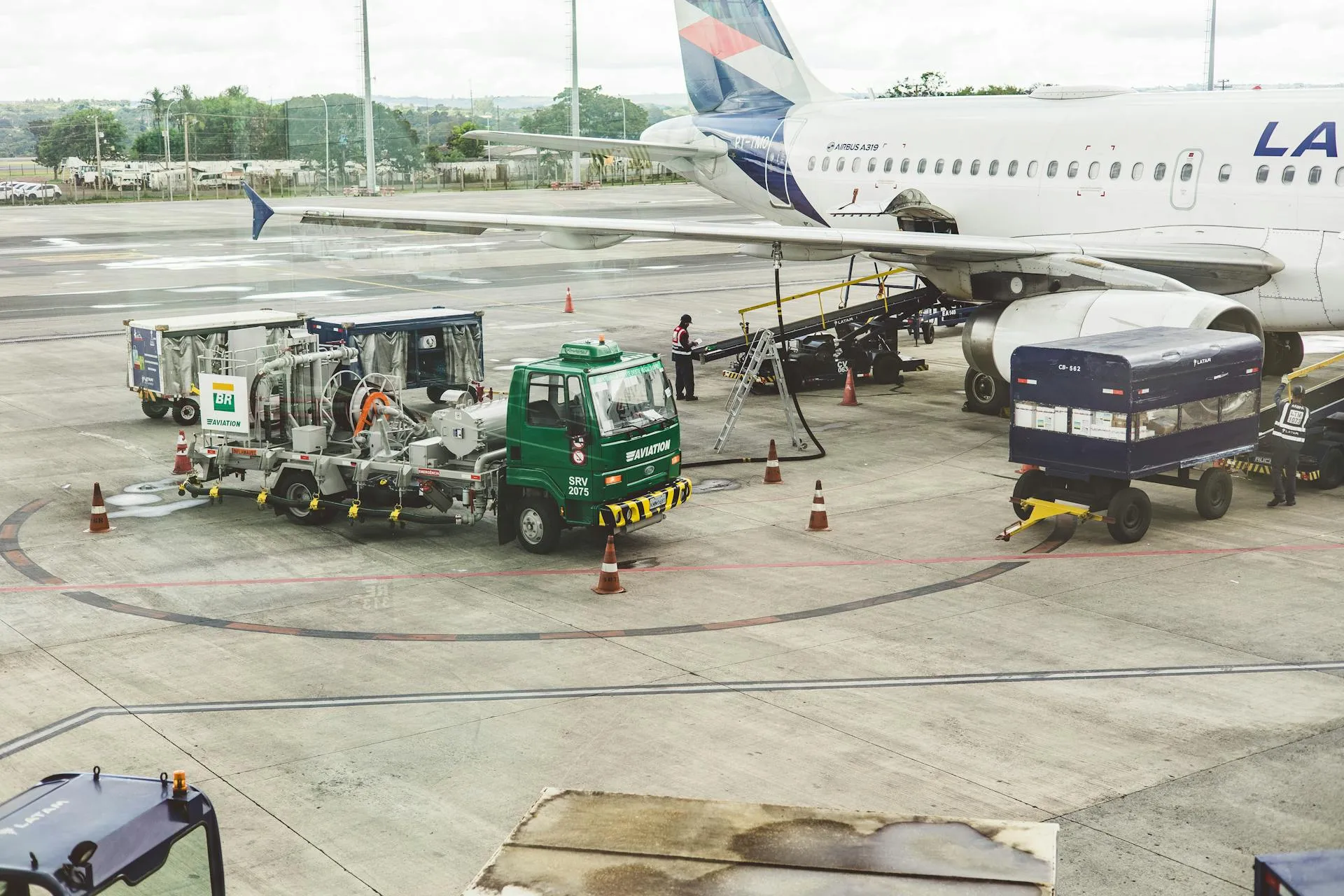
What is fuel hedging in aviation and how does it work?
Fuel hedging is a risk-management method that enables airlines to hedge against future fuel price risk using futures, swaps, options, and forward contracts. It is intended not to save on fuel costs, but to reduce volatility.
Practically, hedging changes a variable cost to a predictable cost. This will help airlines make pricing, capacity, and network deployment decisions with greater confidence, especially during periods of market volatility.
It starts with fuel consumption forecasting according to network schedules, fleet usage, and seasonal demand. Airlines then strike deals with financial agreements for certain volumes of fuel, delivery timeframes, and price levels.
When market prices exceed the contracted price, the airline will benefit because it will be paying a lower price. In the event of a price decrease, the airline pays more than the market rate. Such an unequal structure has led to hedging often being referred to as insurance rather than a profit-making strategy.
Confidence/uncertainty vs. risk in the market
Fuel hedging yields three different outcomes depending on the market environment. Once prices rise, airlines benefit from reduced locked-in costs. In the case of price stability, the financial effect is not significant. At a lower price, the airlines have increased the relative cost compared to buying at the spot market.
Though this is an asymmetry, the airlines are willing to bear the trade-off because the stability is usually worth more than the short-run savings. Fixed fuel expenses promote long-term planning, minimize earnings volatility, and ensure margins when prices rise suddenly, as is currently being seen in the world market.
Hedging in the industry
Airlines use various hedging patterns based on their financial position, risk tolerance, and market exposure. Many of the carriers hedge a high percentage of their near-term fuel requirements, whereas some do not hedge at all.
Common approaches include:
- Huge hedge coverage (70-90) on short-term consumption.
- Reduced coverage of the long-term horizons.
- 3-year rolling hedging programs.
- Instead of single-fuel and currency hedging, consider a combined fuel-and-currency hedging strategy.
In the past, European and Asian-Pacific airlines have maintained higher hedge ratios than U.S. airlines. Conversely, some of the largest U.S. airlines have minimized or eliminated hedging in favor of operational and price flexibility over financial hedging.
Case studies
In the case of Southwest Airlines (WN), the company adopted a comprehensive hedging plan that hedged fuel prices at much lower levels than market prices during the early 2000s, when oil prices were high. This has enabled the airline to keep fares lower and survive while its competitors struggled with rising costs and financial reorganization.
In 2022, Air France-KLM (AF-KL) had a sizeable hedge cover when US fuel prices hit US$170 per barrel. The approach minimized the effects of market fluctuations and contributed to the recovery of operations after the pandemic.
The recent war in the Middle East has caused one of the most severe fuel shocks in aviation history. The issue of supply has been associated with regional instability, such as disruptions to main transit routes, including the Strait of Hormuz, which have combined to limit global fuel supply and hasten price rises.
In certain markets, the price of jet fuel has increased to more than twice its pre-war level. Meanwhile, exchange-rate pressure has also added to the cost of airlines whose costs are in dollars. This has been operational in the immediate:
- Suspensions of routes, such as long-haul routes, where fuel consumption is the most important.
- Cutting down frequency to both the recreational and business markets.
- Capacity changes to prioritize profitable routes.
- Introduction of fuel surcharge and ancillary fee charges.
Some airlines have entered formal cost-controlling stages focused on maintaining the network's liquidity and profitability. This is especially susceptible to low-cost carriers, most of which are not financially able to undertake the large-scale hedging programs.
Moreover, fuel suppliers in certain areas have added a surcharge or changed their price structure to raise per-flight operating costs above the minimum fuel price. This has further contributed to the increase in the financial burden on already-tight airline margins.
.webp)
The reason why some airlines do not hedge
Although fuel hedging has its benefits, not everyone is using it. The plan requires significant liquidity to cover derivative contracts and carries the risk of financial losses if market prices fall.
The complexities of financial reporting are also driven by hedging, as mark-to-market accounting can introduce volatility in earnings even when underlying operations are not volatile.
Due to this, other airlines would rather do it in other ways:
- Investing in airplanes that have low fuel consumption.
- Minimizing operational mass and maximizing flight scheduling.
- Tilting fares and introducing fuel surcharges.
- Being flexible to adapt to the conditions in the market.
According to recent industry trends, even airlines with hedging programs are turning to pricing strategies to control rising costs, especially amid systemic discontinuity.
Non-cost benefits in operations
Fuel hedging not only affects financial performance. Predictable fuel prices allow airlines to keep their pricing systems stable, schedule seasonal capacity without worry, and secure profitability at the route level.
This is essential in an industry where schedules are announced months in advance and network planning decisions have long lead times. The lack of cost predictability would compel airlines to make reactive decisions that may disrupt their operations and passenger demand.
Limitations of fuel hedging
Risk cannot be completely reduced by fuel hedging. Several limitations remain:
- Lack of perfect correlation between the prices of crude oil and jet fuel.
- Hedging contracts and actual consumption are mismatched in timing.
- Exposure to financial risks amid extended price declines.
- Less likelihood of benefiting from the decreasing fuel price.
Overhedging might also result in strategic inflexibility, which restricts an airline's capacity to adapt to the market.
The future of fuel risk management
Fuel risk management strategies are becoming increasingly sophisticated as the aviation industry evolves. Airlines are considering hedging to use sustainable aviation fuel (SAF), including accounting for the cost of carbon in fuel planning, and using analytics to predict demand and model prices.
Nevertheless, traditional jet fuel will remain the most common energy source in the short term. Consequently, fuel hedging will remain a primary focus of the airline's financial management, especially amid geopolitical uncertainties.
Conclusion
Fuel hedging is a very important financial instrument that enables airlines to control one of their most unpredictable cost factors. Its significance and shortcomings are evident in the current surge in fuel prices, driven by geopolitical conflict, supply constraints, and currency pressure.
Although hedging does not completely stop the rise in costs, it offers stability in a volatile industry. Airlines that strike a balance between hedging, operational efficiency, and pricing strategy are better placed to navigate prolonged uncertainty and maintain financial sustainability.
Featured image:Eran Menashri/Pexels.com



.avif)