United Airlines to Resume Houston–Caracas Flights After Eight Years


.webp)
.webp)

.webp)
HOUSTON — United Airlines (UA) will resume daily nonstop service between George Bush Intercontinental Airport (IAH) and Simón Bolívar International Airport (CCS) near Caracas on August 11, marking the carrier’s return to Venezuela after an eight-year absence.
The route will operate with a Boeing 737 MAX 8 and remains subject to government approval, according to United. Tickets are already on sale through the airline’s website and mobile app. United previously served Venezuela for more than 20 years before suspending flights in June 2017.
United returns via Houston
United’s initial schedule lists flight UA1046 departing Houston at 23:45 and arriving in Caracas at 05:30 the following day. The return flight, UA1045, is scheduled to depart Caracas at 08:00 and arrive in Houston at 12:30.
The Houston route gives United a distinct commercial advantage over the Miami–Caracas market now served by American Airlines (AA). Miami (MIA) remains the most obvious U.S. gateway for Venezuelan diaspora and family-linked traffic, while Houston adds an energy-sector, business, and connecting-hub component.
United said its IAH hub offers up to 100 daily flights to more than 50 destinations across Latin America and the Caribbean, with connections to more than 180 cities worldwide. The airline is also preparing a US$2 billion Terminal B transformation at IAH, including 22 new mainline gates and a larger United Club.
U.S.–Venezuela air links reopen
United’s return follows the restart of U.S. commercial passenger flights to Venezuela in late April, when American resumed Miami–Caracas service. Reuters reported that American’s April 30 flight was the first U.S.–Venezuela commercial passenger service in seven years.
The regulatory backdrop is important. The U.S. Department of Transportation approved American’s service to Venezuela in March after the U.S. lifted a 2019 order that had barred U.S. airlines from operating flights to the country.
For travelers, however, restored flights do not mean the market is fully normalized. The U.S. State Department still lists Venezuela at Level 4: Do Not Travel, citing safety and security risks and limited U.S. government ability to provide emergency services in the country.
Bottom line
United’s return is not just another route resumption. It gives the U.S.–Venezuela market a second major U.S. network carrier and restores a Houston link that historically served business, oil-and-gas, family, and connecting traffic.
The route also reinforces IAH’s role as United’s principal gateway to Latin America. For Venezuela, the service adds another direct U.S. connection at a time when international connectivity is gradually rebuilding after years of political, regulatory, and security-driven disruption.
The key test for everyone will be whether the market can support daily mainline service beyond the initial reopening phase. American’s Miami flights address the strongest diaspora corridor; United’s Houston route will depend more heavily on a mix of corporate demand, energy-related traffic, and connecting passengers across the broader United network.
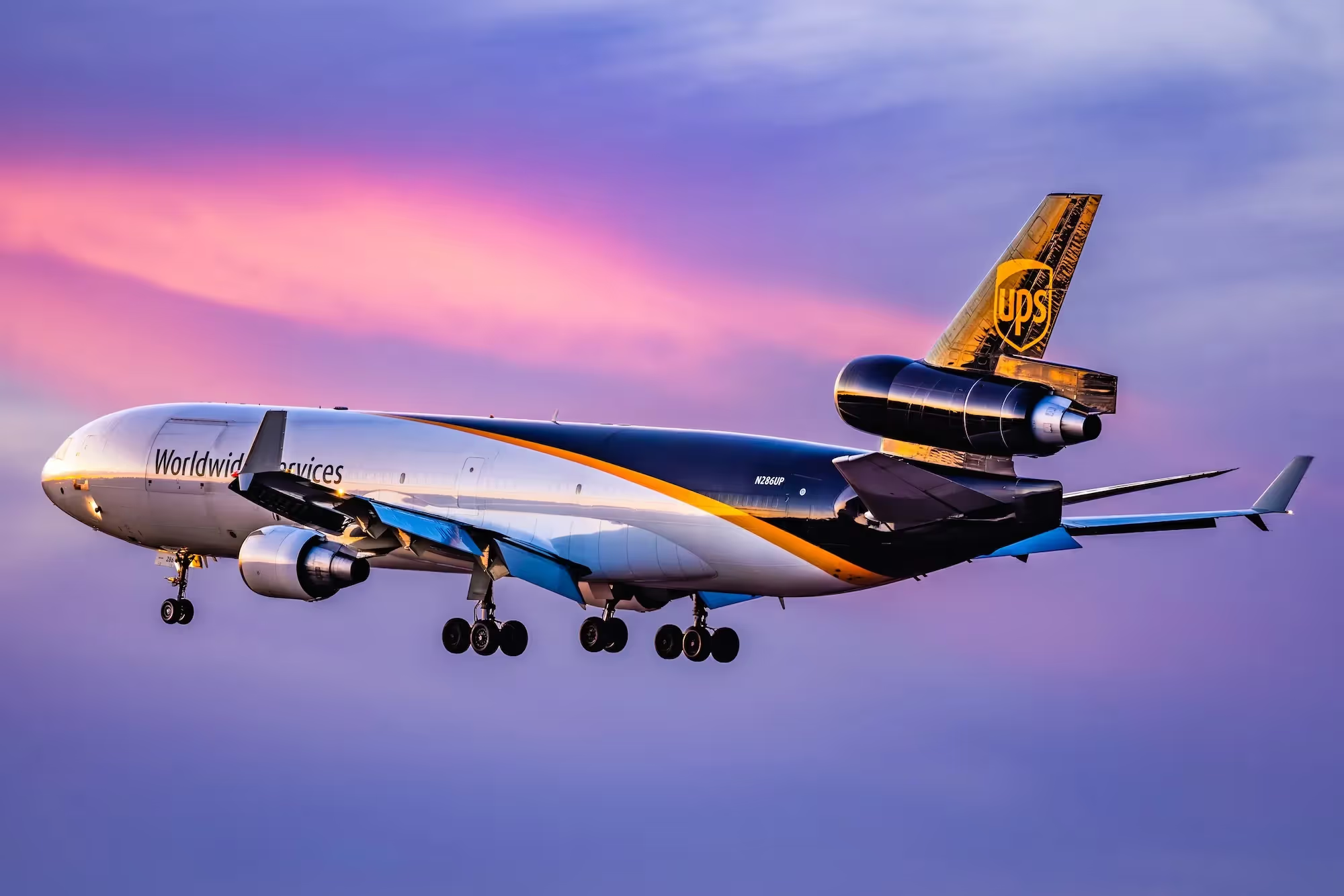
Featured image: Marty Basaria/Airway



.avif)