Airbus Trims 20-Year Aircraft Demand Forecast Amid Geopolitical, Trade Risks


.webp)
TOULOUSE — Airbus has trimmed its 20-year forecast for passenger aircraft deliveries, citing geopolitical instability, trade tensions, and a slower-than-expected post-pandemic recovery in parts of the global air travel market.
The manufacturer now expects airlines and lessors to take delivery of 42,060 passenger aircraft between 2026 and 2045, down about 1% from its previous long-term outlook. The total includes 33,920 single-aisle aircraft and 8,140 widebodies, according to Airbus’s latest Global Market Forecast.
The reduction is modest in percentage terms, but it reflects a more cautious view of airline growth as wars, tariffs, supply-chain constraints, and uneven regional demand continue to shape aircraft-buying decisions.
Asia Still Drives Long-Term Demand
Airbus said Asia remains the main engine of future aircraft demand, accounting for roughly half of projected deliveries over the next two decades.
That growth is expected to come from a combination of expanding middle-class travel, urbanization, and improved connectivity, particularly in markets where flying is still developing from a lower base. Airbus said passenger traffic is still expected to more than double by 2045, despite the lower aircraft-delivery forecast.
India remains one of the standout growth markets. Airbus now expects Indian domestic passenger traffic to grow by about 9.1% annually, according to Reuters, underscoring why manufacturers and airlines continue to view the country as one of the industry’s most important long-term expansion opportunities.
China’s outlook, however, has been revised lower, adding a note of caution to a market that has long been central to aircraft-demand forecasts.
More Replacement, Less Pure Growth
One of the more important changes is the balance between replacement and expansion aircraft.
Airbus now expects 47% of future deliveries to replace older aircraft, up from 45% in the previous forecast. That shift suggests that a larger share of demand will come from fleet renewal rather than airlines simply adding capacity.
For manufacturers, suppliers, and lessors, that matters. Replacement demand is generally more resilient than speculative growth, because airlines still need newer aircraft to lower fuel burn, reduce maintenance costs, and meet environmental or operational targets. But it also suggests a slightly more disciplined market, where capacity growth is being tempered by macroeconomic and geopolitical uncertainty.
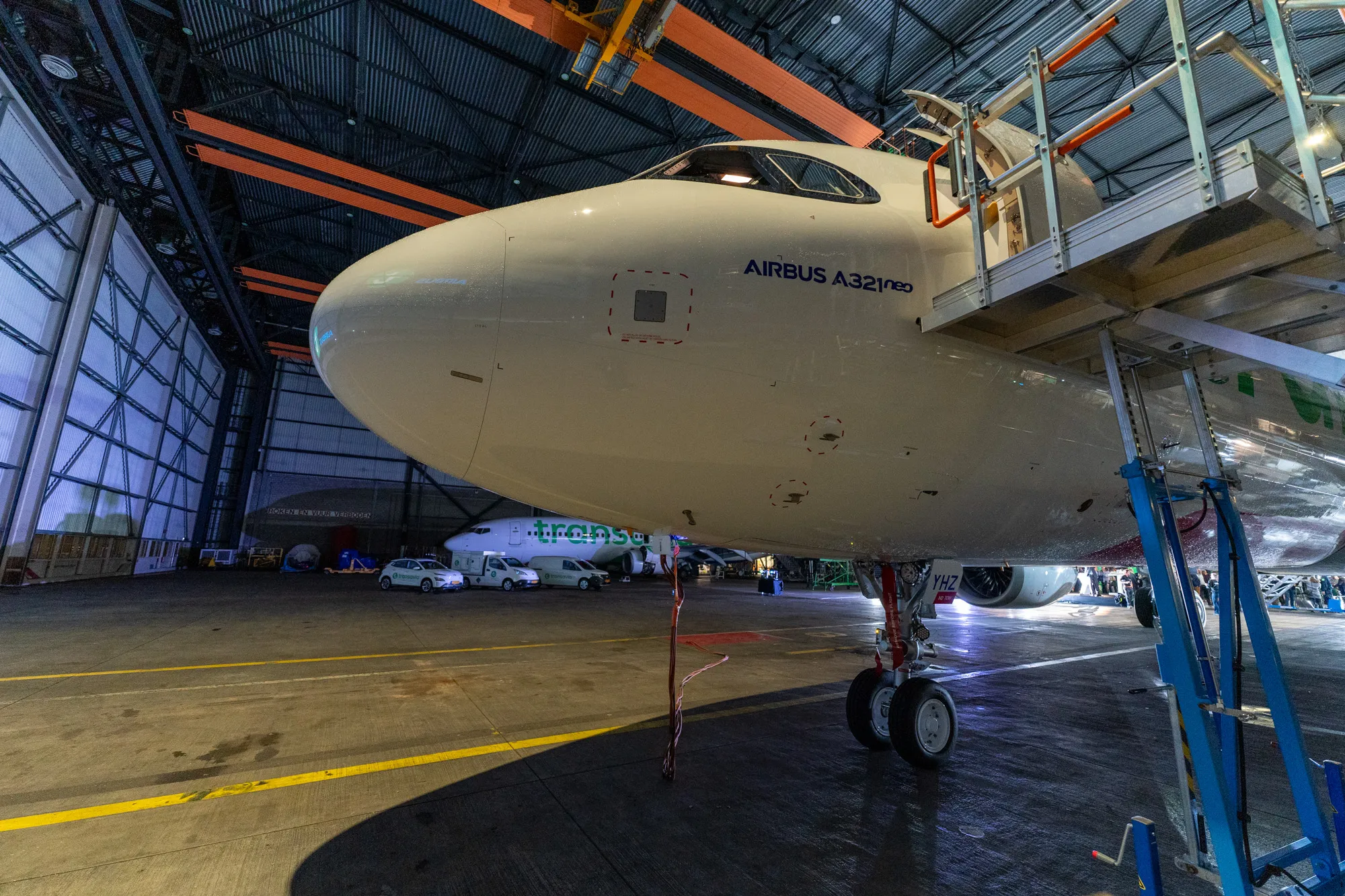
The continued dominance of single-aisle aircraft also remains central to the forecast. Narrowbodies such as the Airbus A320neo family and Boeing 737 MAX will account for more than 80% of projected passenger-aircraft deliveries, reflecting the industry’s focus on short- and medium-haul growth, high-frequency routes, and the development of secondary city pairs.
A More Cautious Outlook, Not a Weak One
The revised forecast does not point to a shrinking aircraft market.
Airbus still expects more than 42,000 passenger jets to be delivered over 20 years, supported by long-term traffic growth and the need to replace older fleets. The company also raised its annual passenger-traffic growth forecast to 3.9%, although Reuters noted that this remains below a previous like-for-like estimate of 4.1%.
The update instead shows how manufacturers are recalibrating expectations after the sharp post-pandemic rebound. Airlines have returned to growth, but not evenly. Some markets face airspace disruption, higher operating costs, aircraft delivery delays, or weaker demand than earlier recovery models assumed.
Airbus’s forecast also lands as production capacity remains one of the industry’s biggest constraints. The manufacturer is still working to increase A320neo-family output toward 70 to 75 aircraft per month by the end of 2027, while supply-chain issues and engine availability continue to affect delivery timing.
For Airbus, Boeing, and the wider supplier base, the message is clear: the long-term aircraft market remains large, but the next phase of growth may be more selective, more replacement-driven, and more exposed to geopolitical and trade risks than the industry expected a year ago.
Airbus' commercial aircraft orders and deliveries for the month of June 2026 have been published on airbus.com and are accessible on the link below.
June 2026 deliveries: 89 deliveries to 49 customers
June 2026 gross orders: 71
2026 deliveries to date: 351 deliveries to 77 customers
Featured image: Nuno Seletti/Airways



.avif)