

.webp)


WASHINGTON, D.C. — Design proposals have been unveiled for a sweeping redevelopment of Washington Dulles International Airport (IAD), as global architecture firms respond to a U.S. Department of Transportation (DOT) request to reimagine the aging hub.
The call for concepts follows renewed political attention on Dulles, with President Donald Trump last month reportedly criticizing the airport’s existing facilities as outdated and poorly designed, prompting a Request for Information (RFI) titled "Revitalizing Washington Dulles International Airport."
Designed by architect Eero Saarinen and completed in 1962, the Main Terminal at IAD is a keystone of mid-century modernism, featuring a dramatic, catenary-curved roof suspended between concrete pylons. It was the first U.S. airport designed specifically for jet aircraft, utilizing a famous "mobile lounge" system to transport passengers to planes.
64 years later, the DOT received 31 total public submissions including 10 with just comments and no proposal attached. Among the firms submitting proposals are Zaha Hadid Architects, Grimshaw, Adjaye Associates, and AECOM.

Zaha Hadid Architects: A New Civic Spine
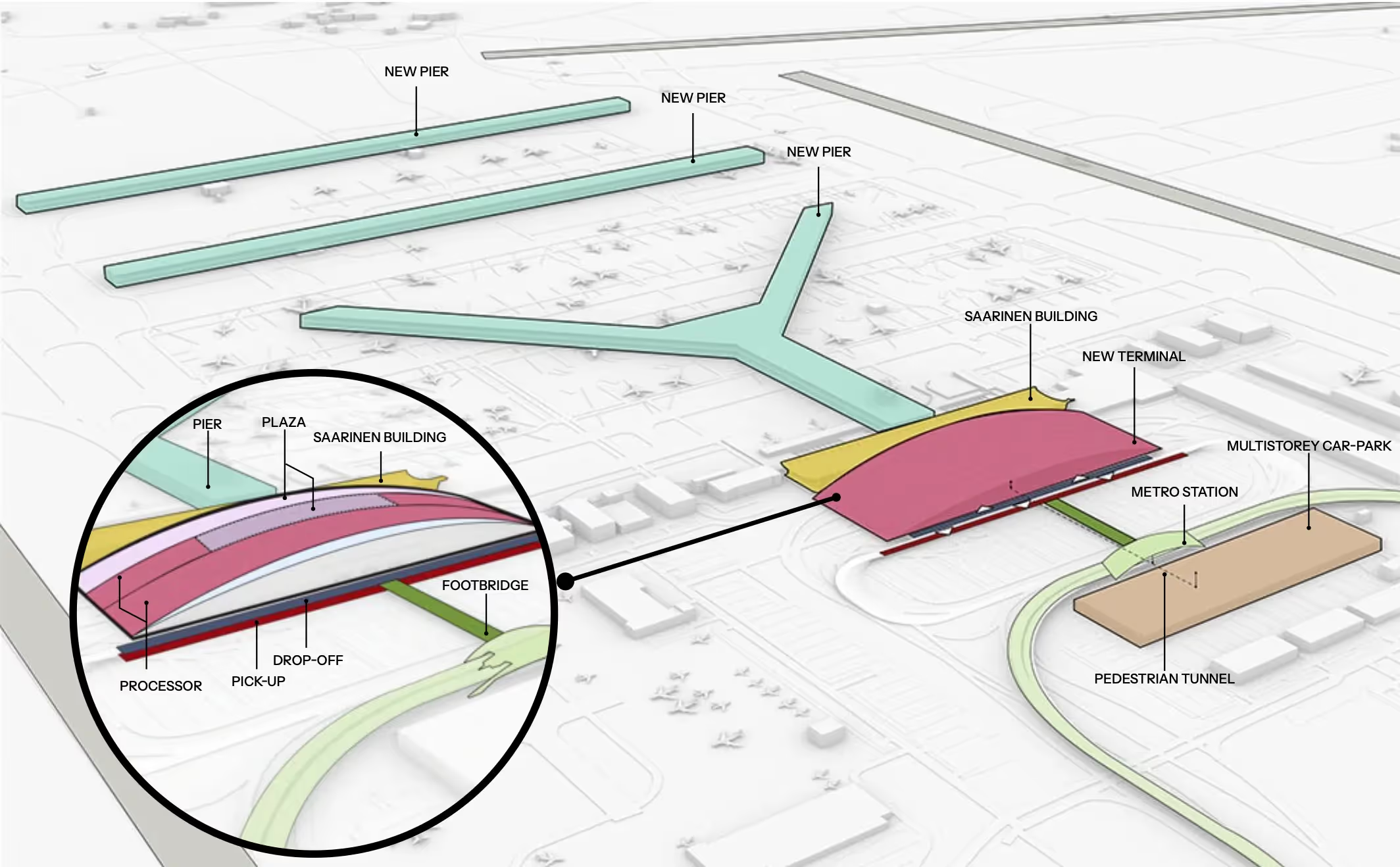
Working alongside Bermello Ajamil & Partners, Zaha Hadid Architects proposed a dramatic arched terminal structure they call the "grand arch" and prominently labeled the “Donald J. Trump Terminal.” The scheme introduces three key elements: a new terminal building, a reimagined “civic spine” that repurposes Eero Saarinen’s iconic main terminal, and a Y-shaped pier to serve aircraft gates.
According to the team, the layout is designed to clarify passenger flows, improve operational efficiency, and reinforce Dulles’ civic identity through daylight, proportion, and legible spatial organization, with particular emphasis on natural light along the civic spine.
Zaha Hadid designed the Beijing Daxing International Airport (PKK) opened six years ago and the upcoming Western Sydney International Airport (WSI), opening this year.
Federal Requirements Regulating Passenger Flow
Under the Immigration and Nationality Act, "arriving international passengers at Dulles International Airport are required to be separated from domestic passengers until undergoing processing by U.S. Customs and Border Protection to enter the United States. Passengers with destinations terminating at Dulles are processed at the International Arrivals Building, which is accessed via a sterile corridor through the use of mobile lounges and plane mates."
The DOT states that "a sterile corridor at an airport is a secure pathway for passengers, post-security screening, leading from the security checkpoints to the gates, or for international arrivals, a dedicated controlled route to customs/immigration, keeping cleared passengers separate from the public and preventing contraband entry. It ensures people boarding planes or connecting flights remain "sterile" (with no access to anyone outside the secured area) and are managed in a highly secure zone, which is crucial for flight safety and immigration control."
Exit lanes from the secure area must meet these TSA access control requirements.
Grimshaw: Heritage Retained, Expanded Northward
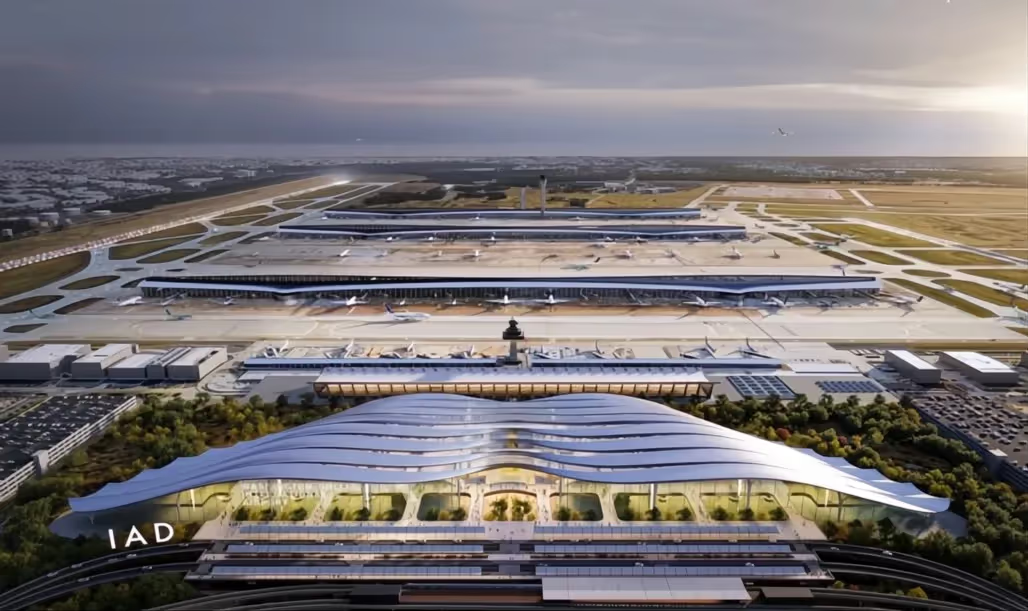
A competing submission from Grimshaw and Ferrovial describes a “bold and visionary” approach that retains the Saarinen terminal as an airside concessions destination, while constructing a new terminal building to the north.
The team says the new architecture is intended to be both highly functional and visually complementary, allowing the Saarinen structure to be sensitively adapted and preserved as the symbolic heart of the airport.
Adjaye Associates and AECOM: Vision Without Renderings
Adjaye Associates, working with RCGA+DM, submitted a proposal without public renderings, describing a design philosophy focused on restoring Dulles as a “dignified and inspiring national gateway.” Their concept emphasizes clarity, material quality, light, and spatial generosity, with the Saarinen terminal integrated as a civic anchor within a contemporary framework.
AECOM also responded without visuals, outlining a phased and cost-conscious strategy. The firm envisions a modern terminal that preserves the Saarinen building by repurposing it for revenue-generating uses, rather than forcing it into roles it was never designed to serve.
A Pivotal Moment For Dulles
Together, the proposals highlight a pivotal moment for Dulles, balancing the preservation of one of modern aviation’s most celebrated terminals with the operational and capacity demands of a 21st-century global hub.
While no design has yet been selected, the submissions show us the scale of ambition now being considered for Washington’s primary international gateway.
Featured image: Bermello Ajamil & Partners LLC



.webp)