In Photos: Boeing Opens Fourth 737 MAX Line at Everett Factory


.webp)
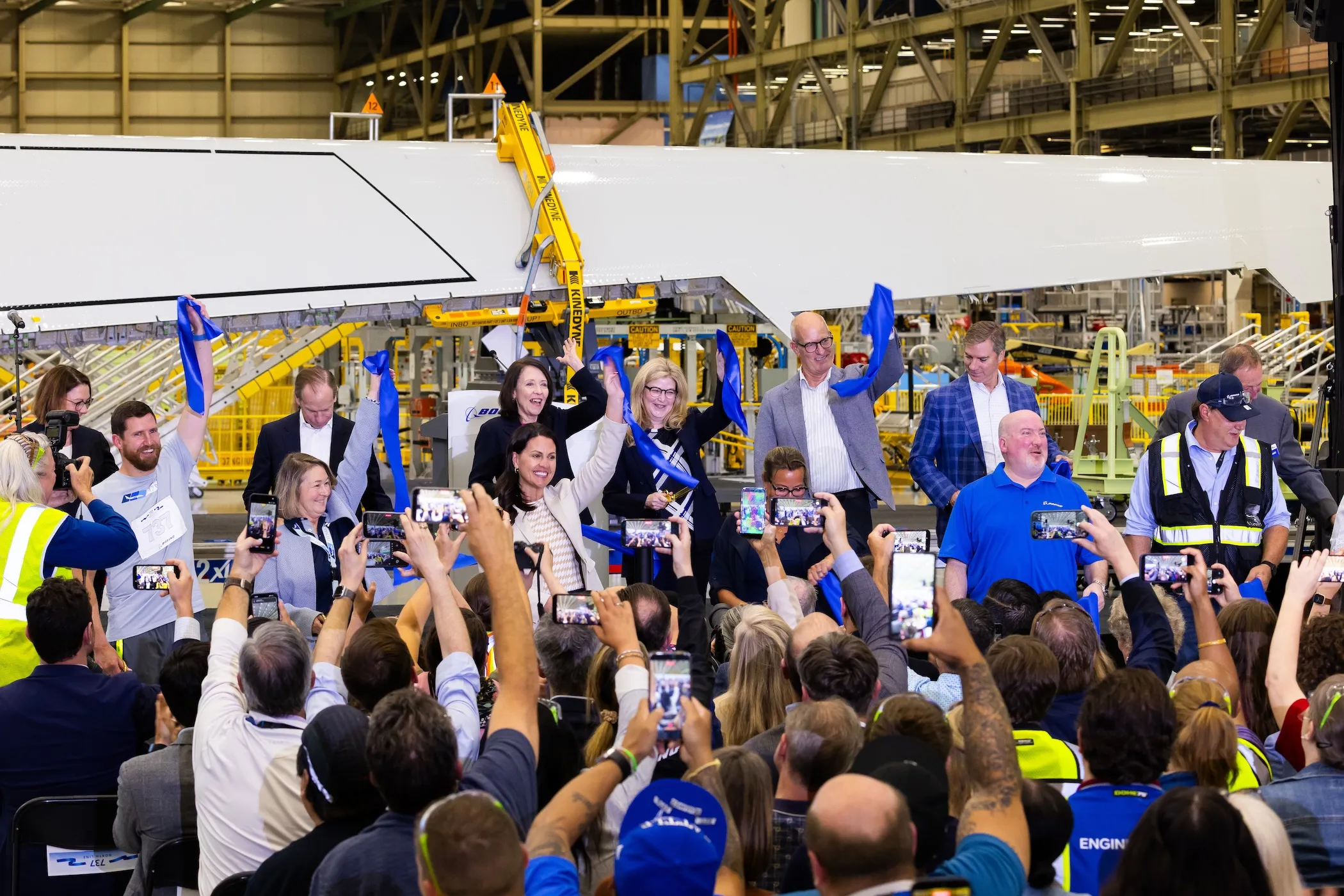
EVERETT — Boeing is opening a new 737 MAX production line inside its Everett, Washington factory, creating a fourth final-assembly line for the company’s best-selling single-aisle aircraft family.
The new “North Line” is designed to expand Boeing’s 737 MAX production capacity beyond the program’s longtime Renton site as the manufacturer works through a backlog of more than 4,300 aircraft and ramps output toward higher monthly rates.
According to Boeing material provided to Airways ahead of the opening, the Everett line will replicate the build process and tooling used on the three existing 737 production lines in Renton. The line will initially focus on the 737-8, 737-9, and 737-10 variants.
The Airways team is on site at the Everett factory for the opening event.
A Second 737 MAX Final-Assembly Site
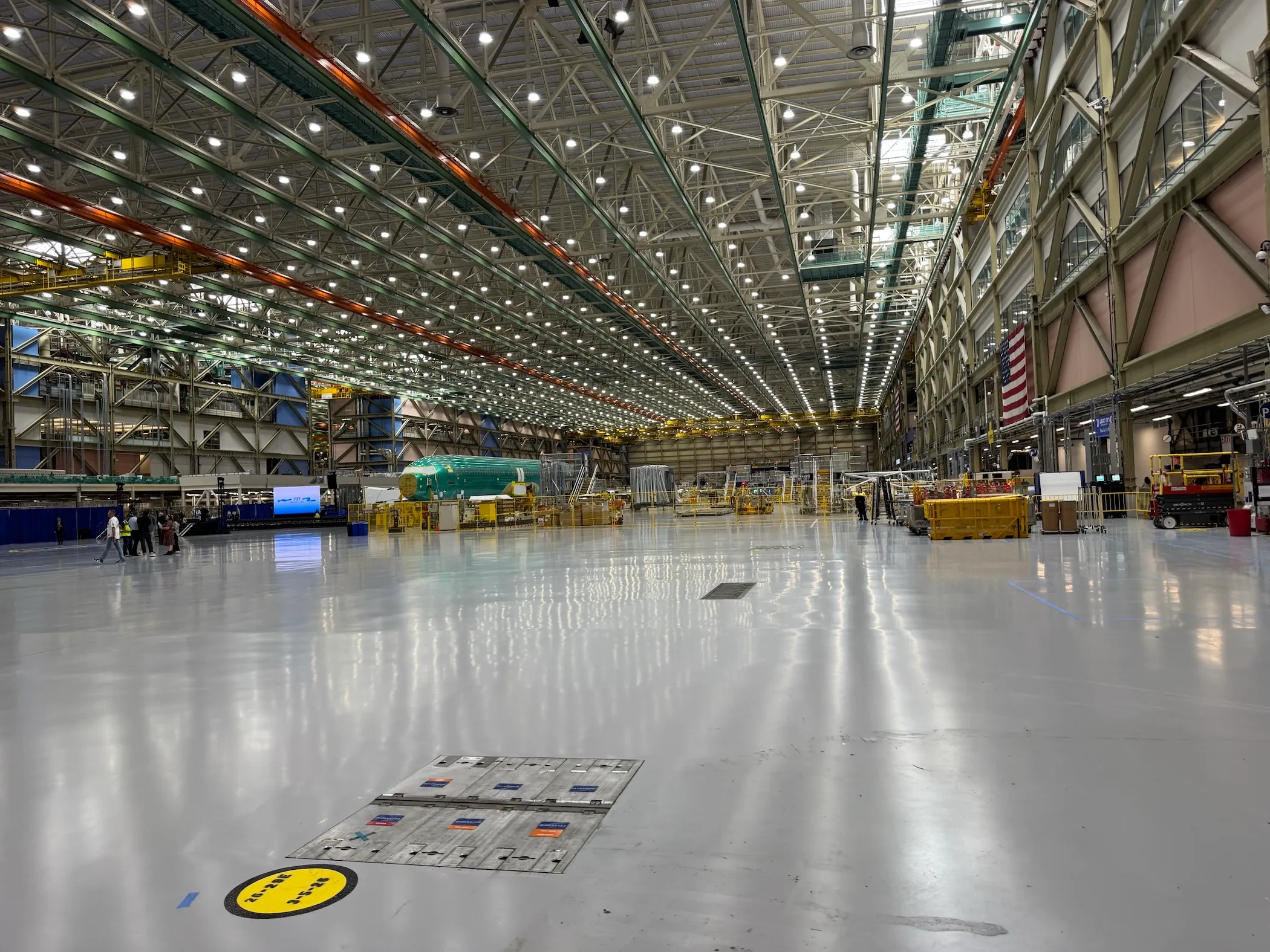
The new North Line is located inside the Boeing Everett Factory, the world’s largest building by volume and home to the 777, 777X, 767, and KC-46A Pegasus programs.
Until now, 737 final assembly has been centered in Renton. Boeing’s decision to add 737 MAX production at Everett gives the program additional factory capacity while using open space created by previous widebody production changes.
Boeing says the North Line will begin at a low-rate initial production pace to validate conformity in the build process before contributing to higher output. After that initial phase, the line is expected to help the 737 MAX program reach 52 aircraft per month. The program is currently ramping toward 47 aircraft per month.
Reuters reported earlier this week that the new Everett line will not immediately change Boeing’s production rate, but is intended to support the company’s planned climb to 52 aircraft per month by early 2027.
How the Everett Line Will Work
The Everett operation will mirror the Renton production process, but with one major difference: wing production will still begin in Renton.
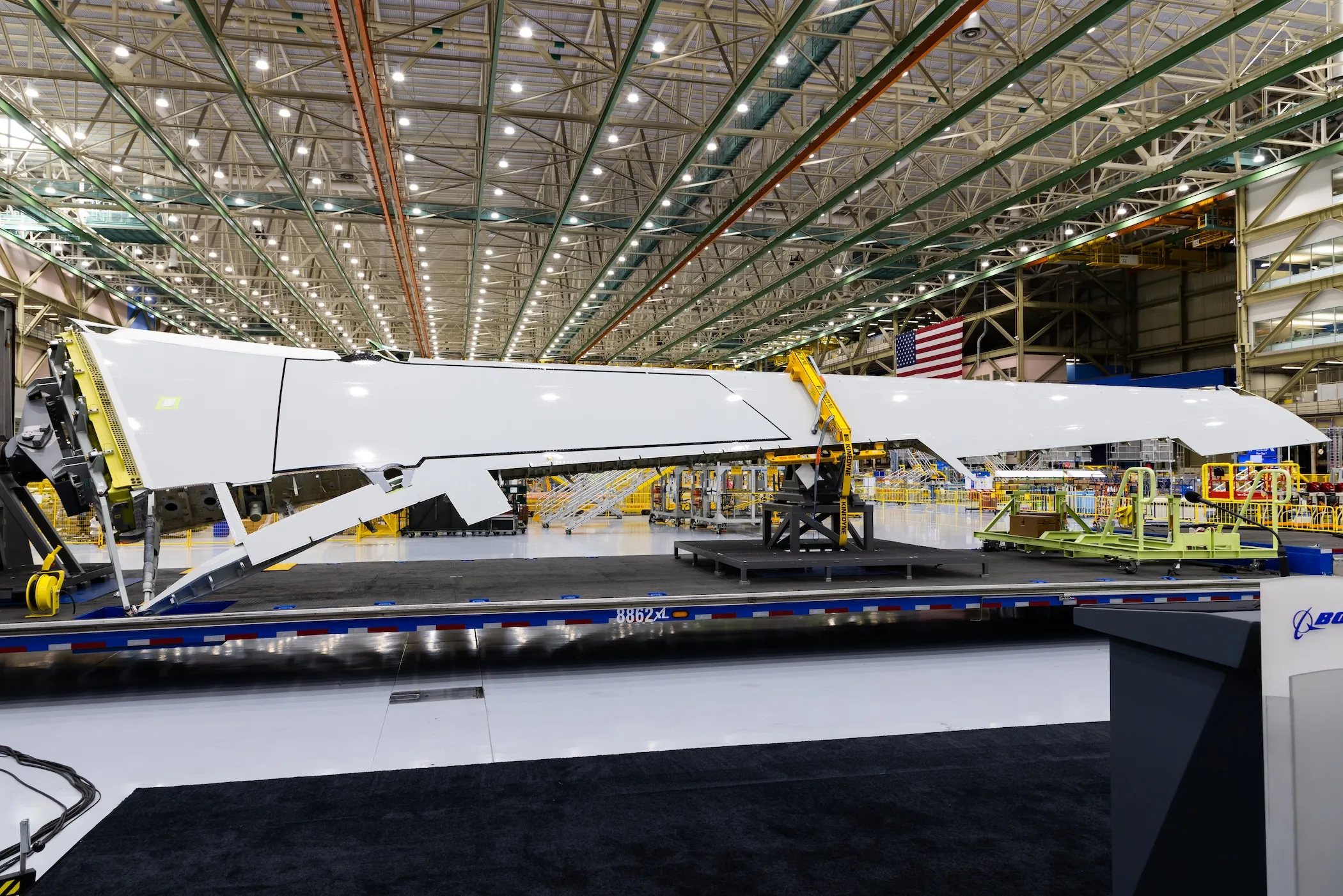
Boeing says 737 wings for the North Line will be structurally built, sealed, and painted in Renton, then transported to Everett on purpose-designed trailers. Once at Everett, the wings will move through wing systems installation before being joined to the fuselage on the fourth flow day of final assembly.
The company’s overview describes a 10-flow-day final-assembly process. Fuselages are inspected and prepared on the first flow day, wiring and systems are installed on subsequent days, wings and landing gear are added on flow day four, interiors and systems are completed through the middle of the flow, and engines are installed on flow day nine before final inspections and remaining work on flow day 10.
Boeing’s diagram of the line shows the main 10-day flow, a dedicated wing-systems installation area, and additional slant positions for aircraft needing extra work beyond the standard production rhythm.
Built-In Space for Complex Aircraft
The North Line will also include additional factory positions for aircraft that require more time outside the standard production flow.
Boeing specifically notes that these “extended-flow” positions can be used for aircraft with complex customer interiors, including lie-flat seats. That is relevant because some 737 MAX customers configure aircraft for longer routes and premium cabins, requiring more time-consuming interior work than standard high-density short-haul layouts.
The line’s ability to absorb those aircraft without disrupting the main flow could become important as Boeing builds a wider mix of 737-8, 737-9, and 737-10 aircraft for airlines with different cabin requirements.
A Test to Scale the MAX Production
The Everett opening comes at a critical point for Boeing’s commercial-airplane recovery.
The 737 MAX remains the company’s most important volume aircraft, with more than 2,300 delivered and an outstanding backlog of more than 4,351 aircraft as of the end of May 2026, according to Boeing’s overview. The manufacturer says the MAX family reduces fuel use by 20% compared with previous-generation aircraft and cuts noise footprint near airports by 50%.
But the production ramp is also under close scrutiny after years of quality, certification, and delivery challenges. Boeing’s ability to raise output while maintaining quality controls will be closely watched by airlines, regulators, suppliers, investors, and lessors.
That makes the North Line more than a capacity project. It is a test of whether Boeing can add scale to the 737 MAX program without repeating the production-pressure problems that have shadowed the company in recent years.
If successful, Everett gives Boeing another tool to reduce delivery delays and support airline fleet plans. If the ramp proves uneven, the new line will become another focal point in the industry’s debate over how quickly Boeing can safely rebuild narrowbody output.
Featured image: Daniel Gorun/Airways



.avif)