In Photos: De Havilland Canada Breaks Ground on brand New Airfield

.webp)
.webp)
WHEATLAND COUNTY — Shovels were finally in the ground Friday as construction officially began on De Havilland Canada’s new home: De Havilland Field.
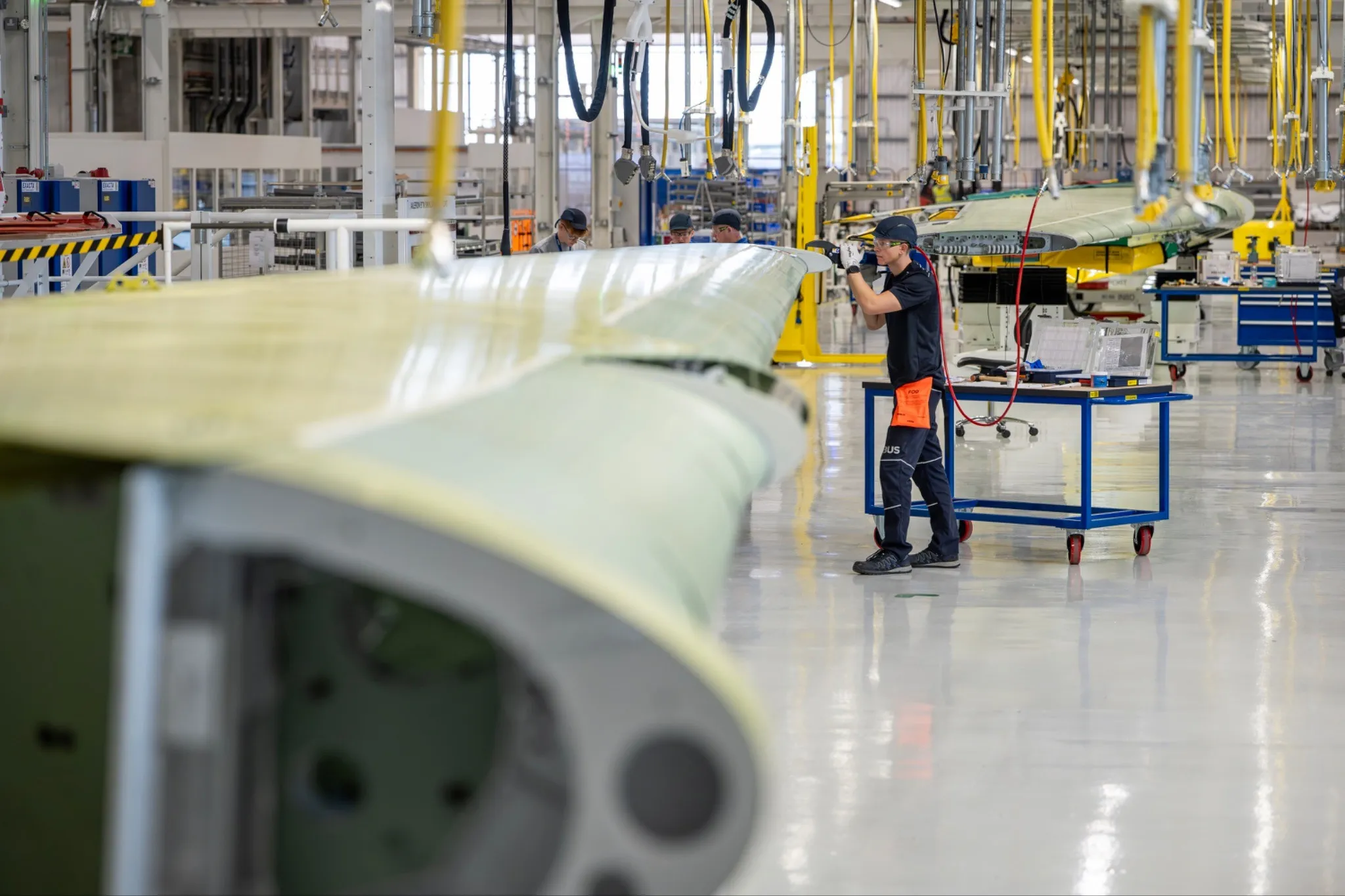
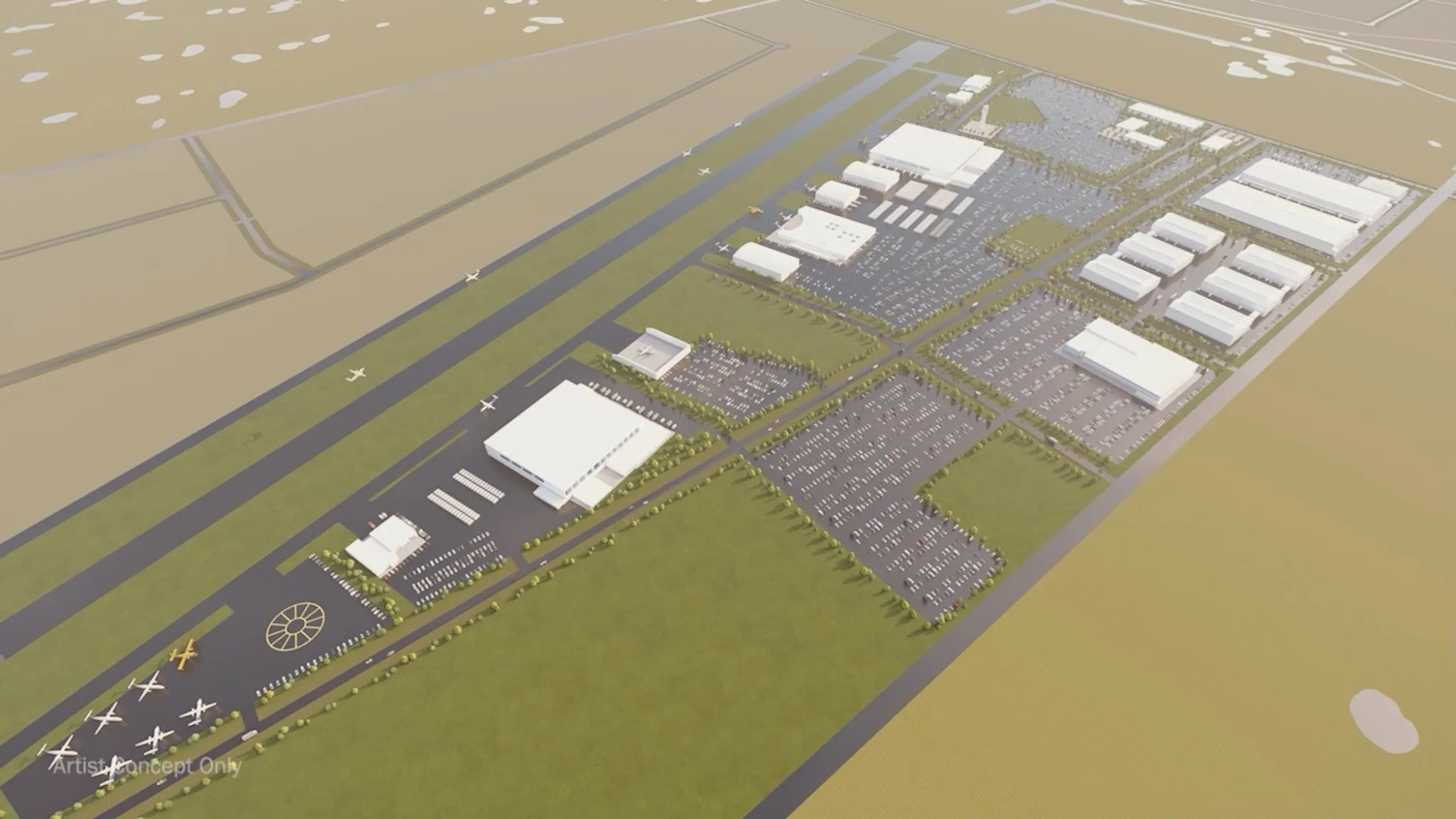
The new airfield will host the final assembly lines for the DHC-515 water bomber, DHC-6 Twin Otter, and DHC-8-400, as well as facilities for maintenance and overhaul, parts manufacturing, a delivery center, schools, offices, a museum, and more.
The airfield will aptly be assigned the ICAO code CDHF by the owner of Longview Aviation, Sherry Brydson, a notable departure from the Canadian tradition of prefixing codes with CY or CZ.
“Today’s groundbreaking is about far more than a new facility — it is about building sovereign capability in Canadian aerospace, manufacturing, service support, and training,” said De Havilland Canada CEO Brian Chafe. “The potential of De Havilland Field is massive. We are 100% Canadian owned, with an 80% Canadian-based supply chain. If the government follows through on its commitments to buy Canadian and to support and build sovereign capabilities, the possibilities of De Havilland Field are unparalleled. De Havilland is truly Canada’s aerospace company, and we are proud to be building in Alberta, with a company and supply chain across the country that will support a world-class aerospace hub for generations to come.”
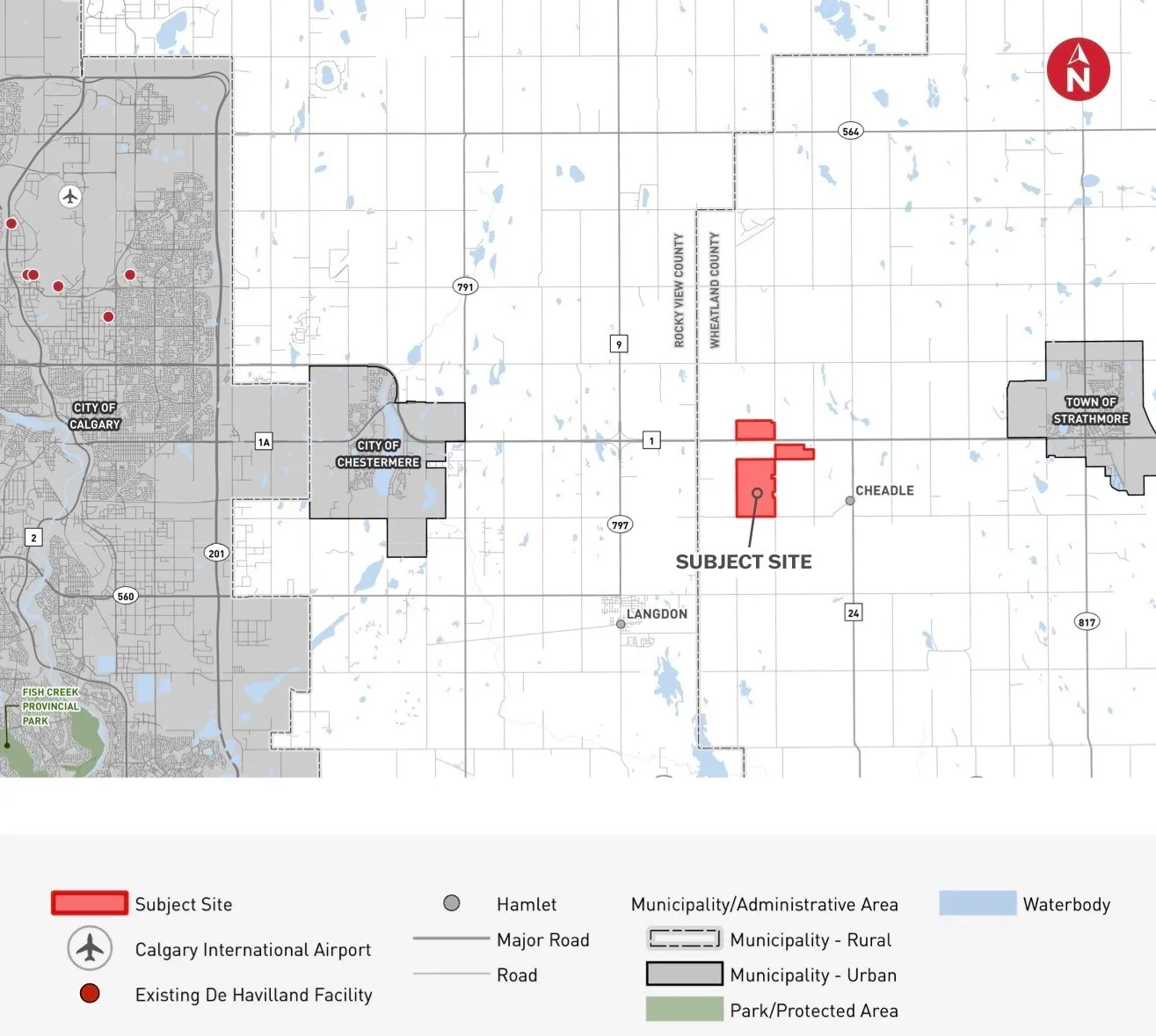
The field will be located along the Trans-Canada Highway east of Calgary, between the towns of Chestermere and Strathmore, and adjacent to the hamlet of Cheadle. The plan, once manufacturing picks up at the airfield, is to build a community around the area to house those working at De Havilland and their families.
The day’s festivities
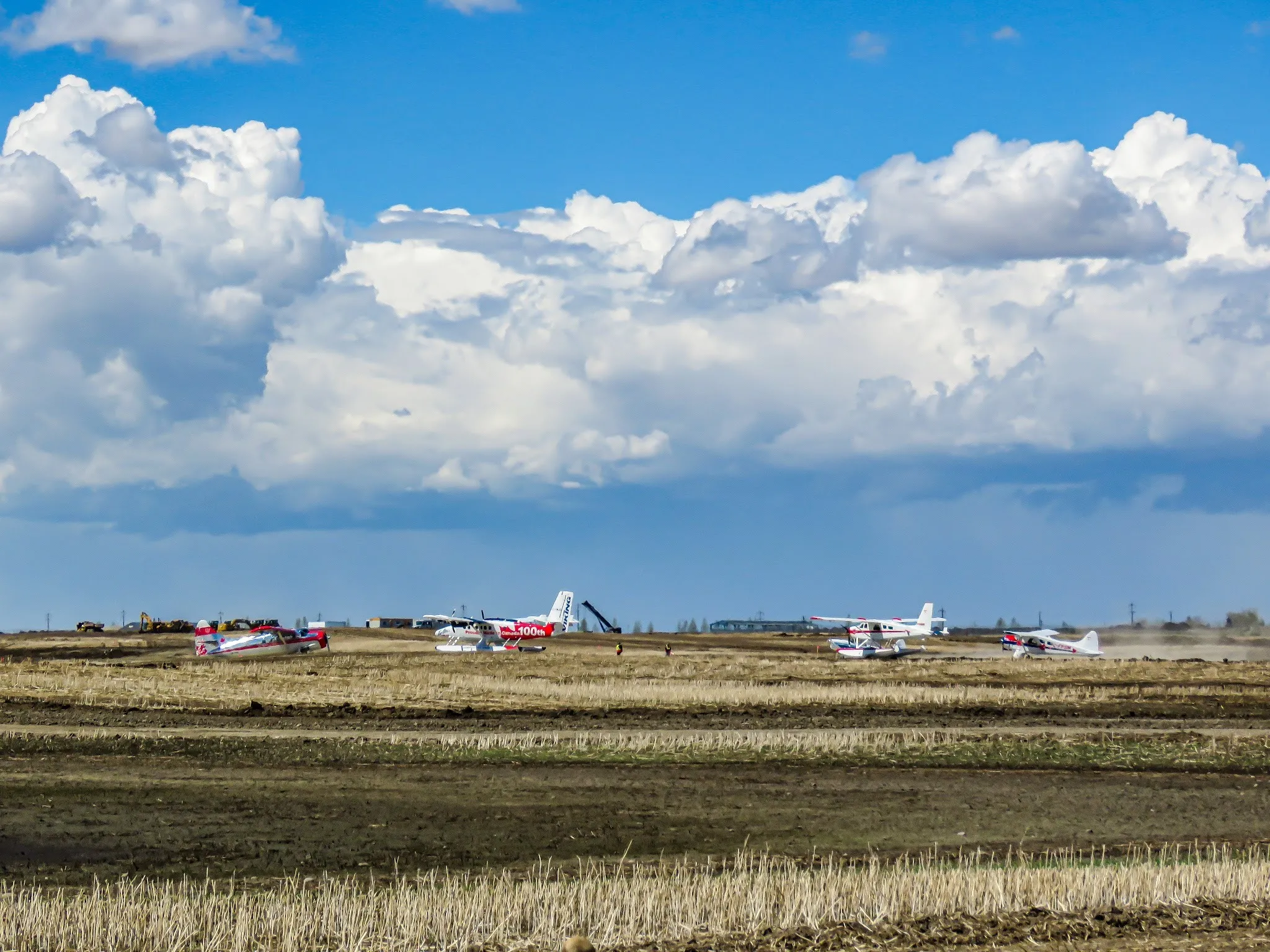
The De Havilland team put on quite a show featuring some of its most historic and iconic aircraft.
Hundreds of De Havilland employees packed into stands to witness the event, along with representatives from the company and local governments.
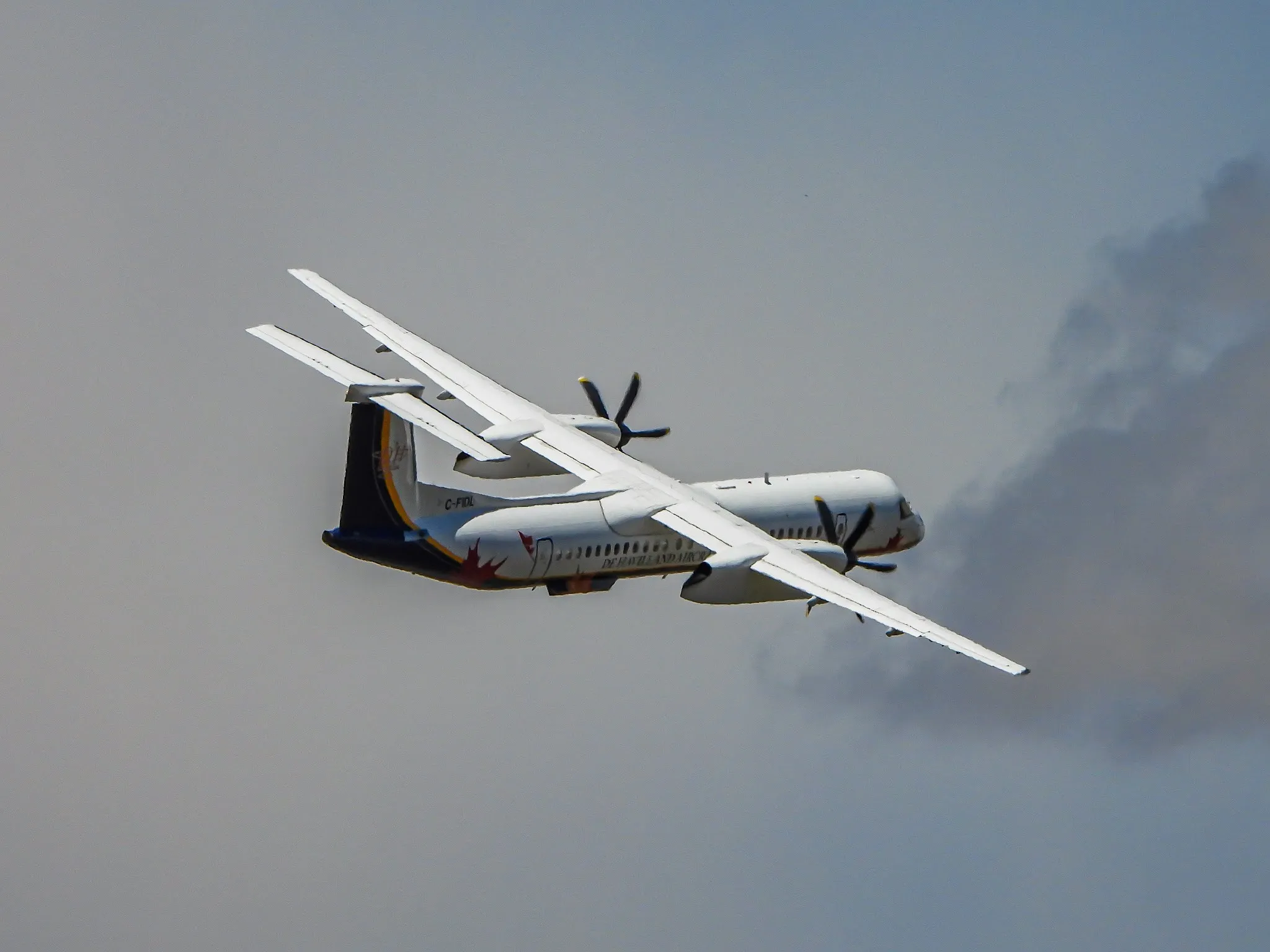
Things got started with a low flyby of the Dash 8-400 C-FIDL. The 17-year-old aircraft formerly flew for the U.S. Department of Justice until 2023, when De Havilland bought it and turned it into a showcase aircraft with several maple leaf stickers affixed to the fuselage. It’s happily nicknamed “Justine” by her crews.
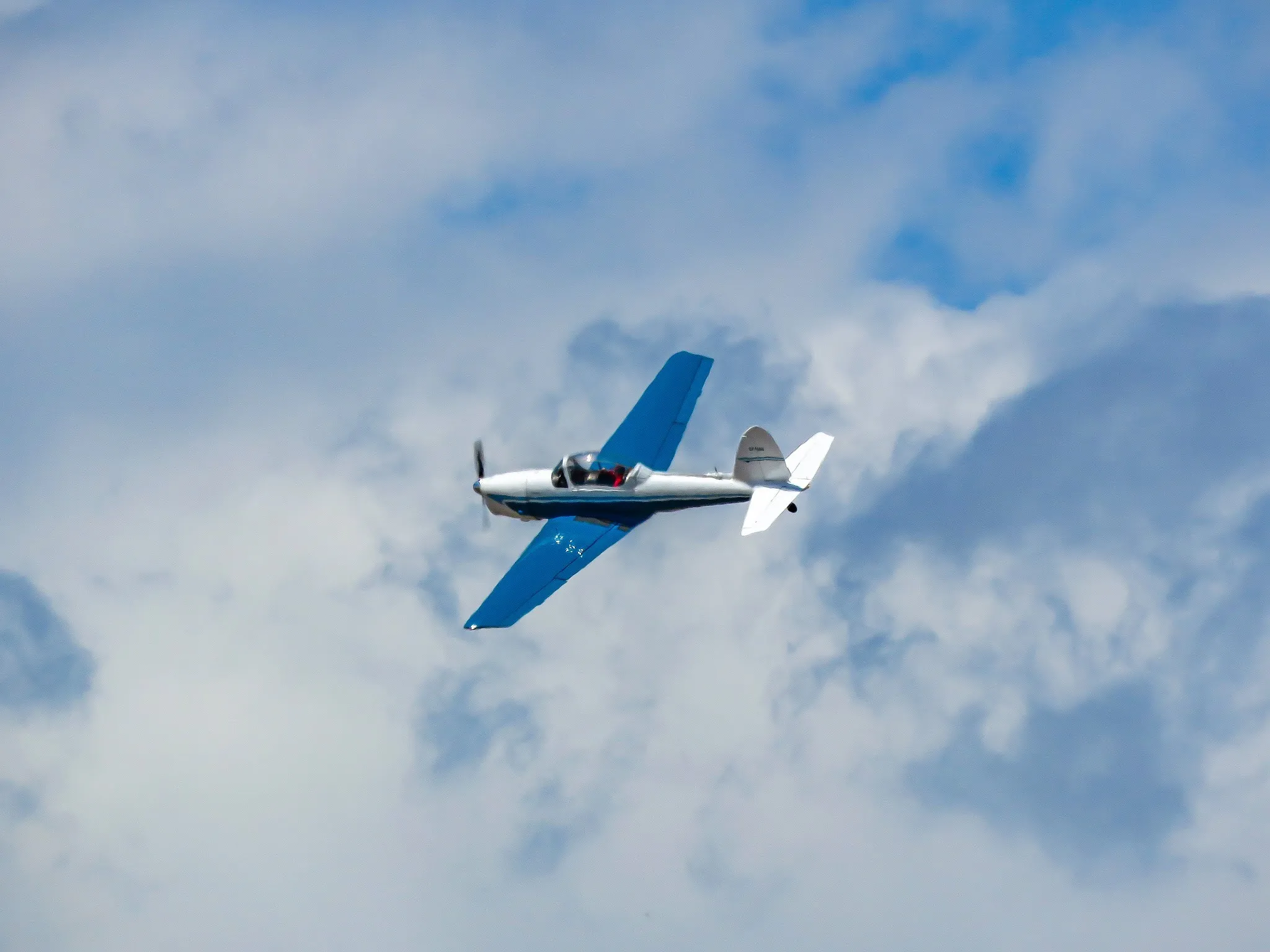
Next up was the DHC-1 Chipmunk, a post-World War II military training platform that served with nearly two dozen air forces worldwide, especially the Royal Air Force and the Royal Canadian Air Force. After a low pass and a circuit, this Chipmunk, CF-JAG, became the first aircraft of the day to land at De Havilland Field. (Not quite the first, as DHC-3 CF-PEM had conducted trial landings in the week leading up to the event. More on that in a second.)
On board the Chipmunk was Sherry Brydson, billionaire owner of Longview Aviation Capital, which had previously manufactured the DHC-6 Twin Otter; Viking Air, a subsidiary of Longview Aviation Capital, was the company that manufactured the DHC-6 Twin Otter. Longview, Viking, and Pacific Sky Training consolidated under the De Havilland brand in 2022.
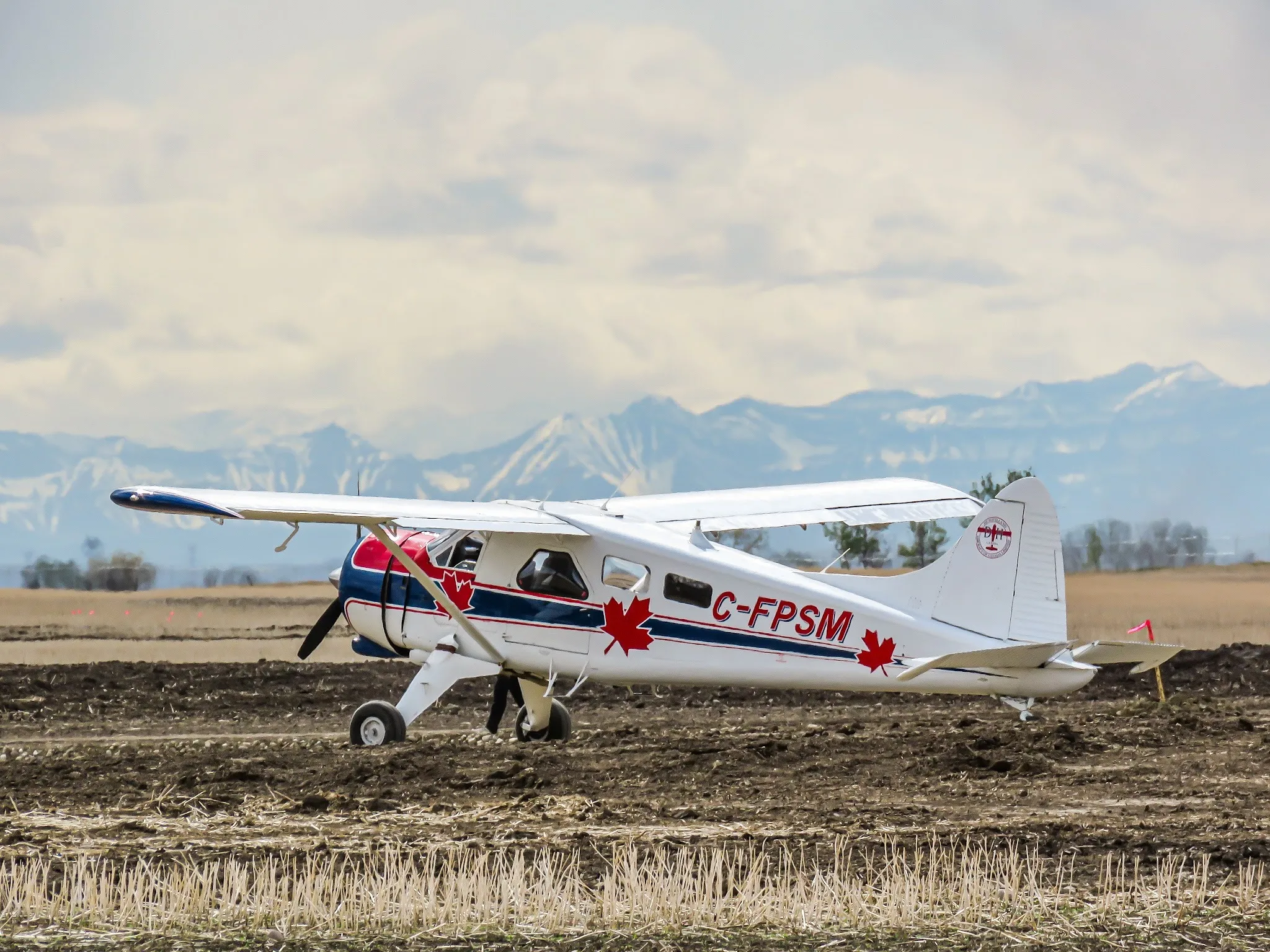
Next up was DHC-2 Beaver C-FPSM. Delivered to the U.S. Air Force in 1954, it would later bounce among a few operators, eventually ending up with companies in British Columbia on floats, including Harbor Air, before landing with Viking Air in 2015 and later with De Havilland. The Beaver was named one of the top 10 Canadian engineering achievements of the 20th century in 1987 and is arguably the most iconic Canadian aircraft ever.
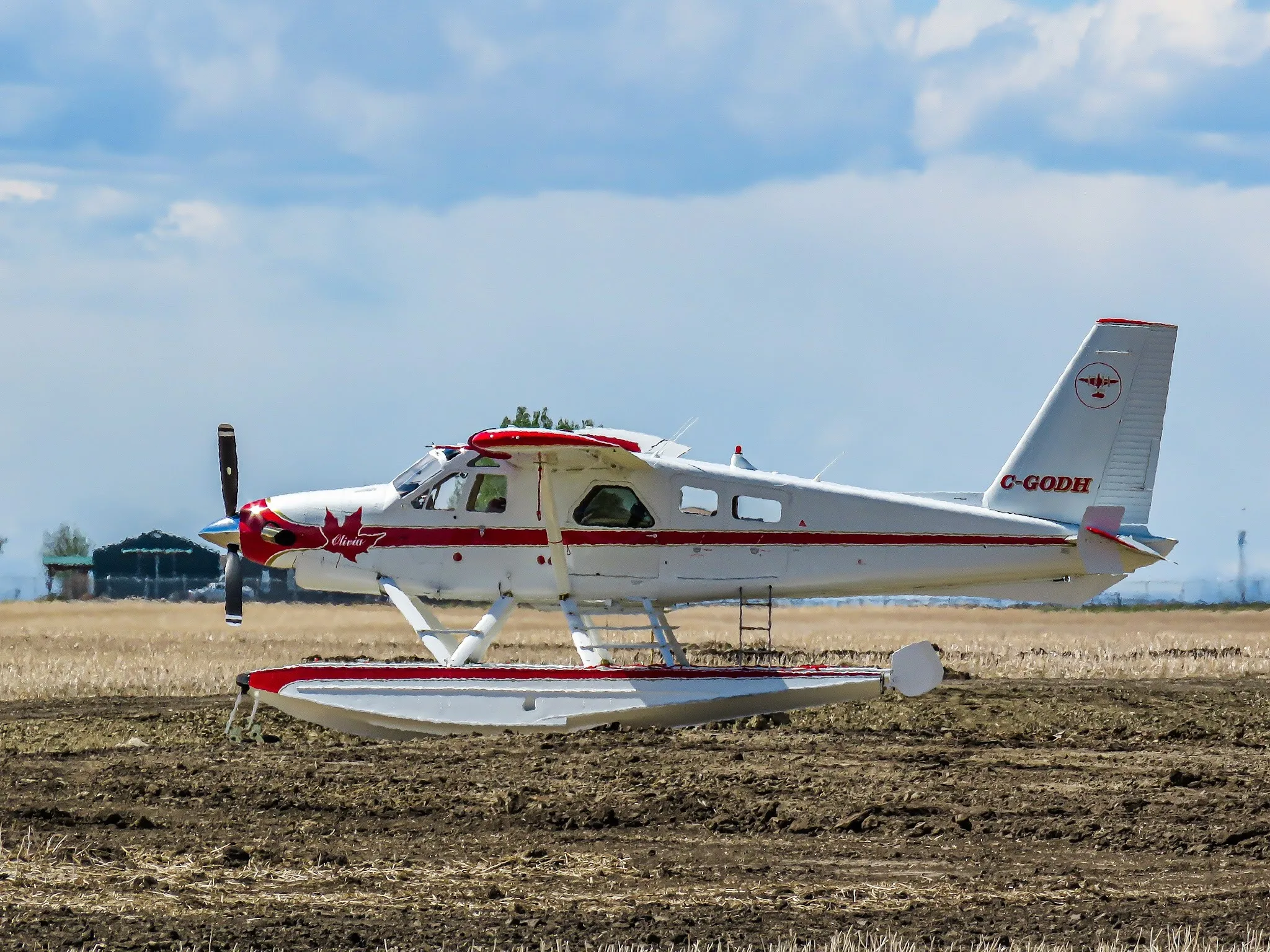
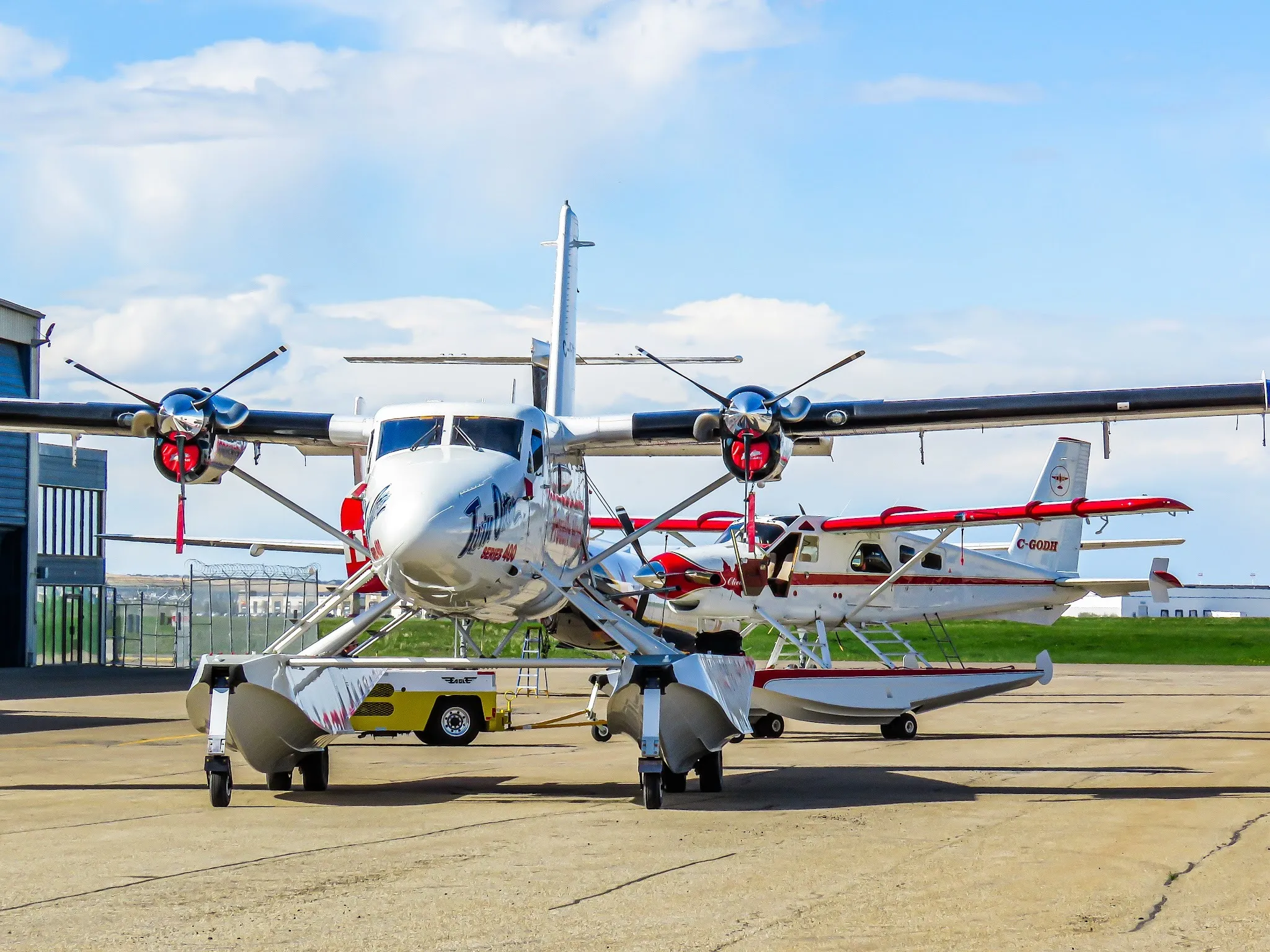
The second Beaver, “Olivia,” was a turbo conversion on floats and the subject of the 2008 film “The Immortal Beaver”, starring Harrison Ford. The airframe flew for the US Army and the Texas Department of Agriculture, retiring to the Pima Air and Space Museum in 1984. Olivia was later restored to flying condition in the film with a PT-6 turbine engine, floats, and new empennage, and has flown for De Havilland since. It is named for actress Olivia de Havilland, a cousin of De Havilland Aircraft Company founder Sir Geoffrey de Havilland.
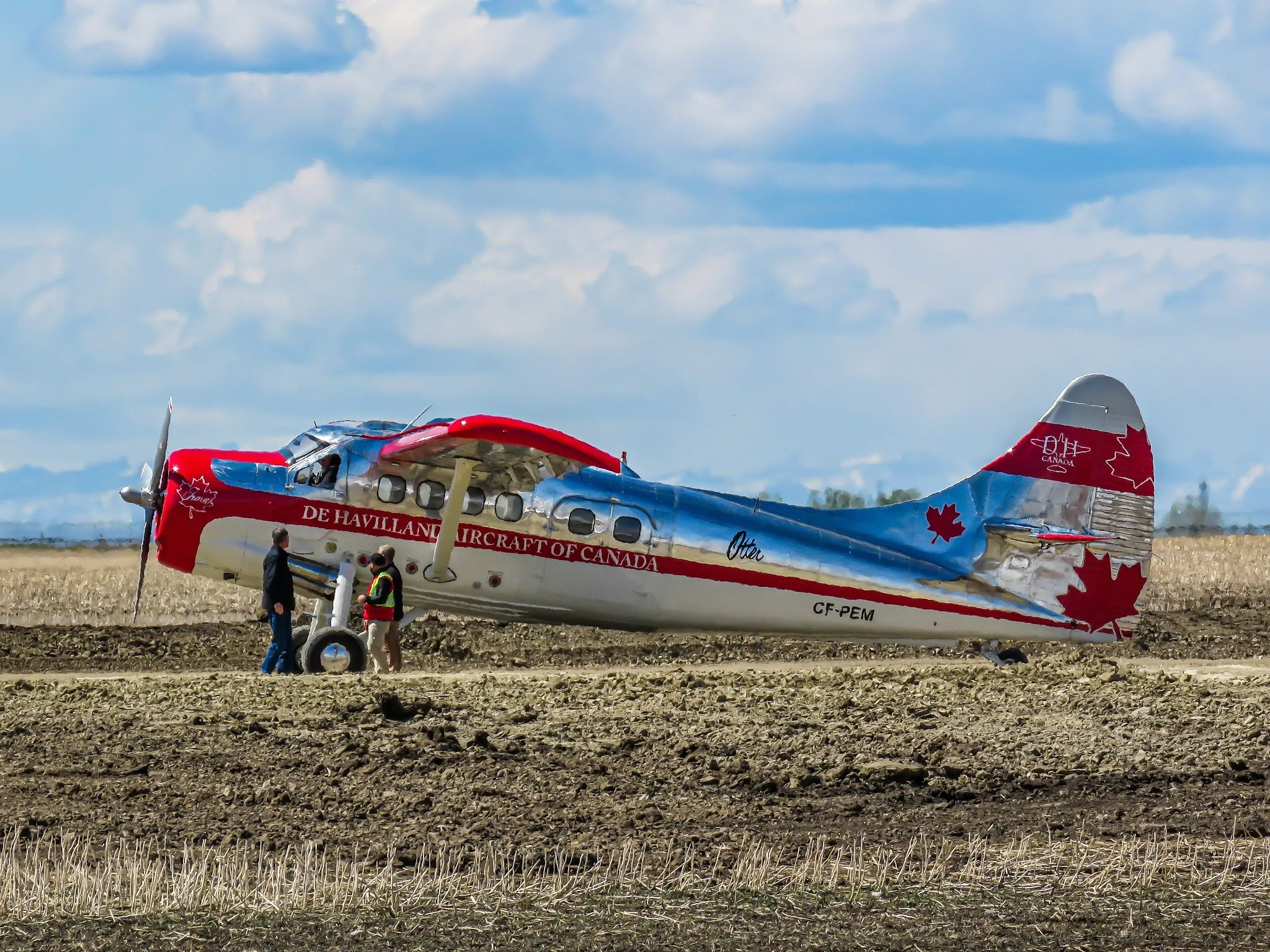
The DHC-3 Otter was up next, a freshly repainted example that spent its whole life in Canada. It was acquired by De Havilland in 2023 and named Irma, likely after Sherry Brydson’s mother, Irma Thompson, and has recently received a beautiful red-and-chrome livery. That Wasp radial engine sounds stunning at takeoff power.
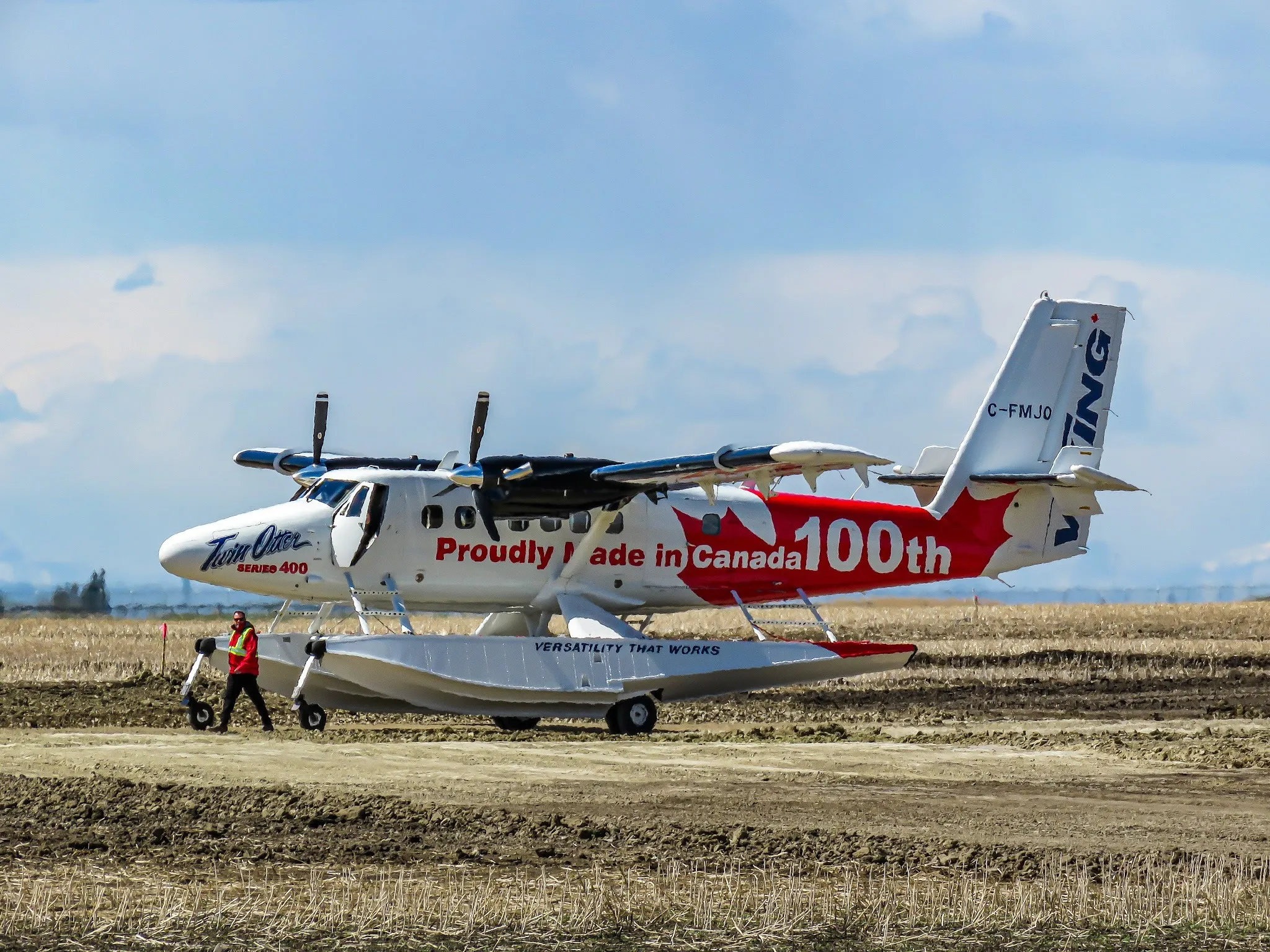
Finally, there was the Twin Otter, the 100th series 400 model built bearing line number 944. Built in 2016, it has served as Viking Air’s primary sales aircraft and still wears the Viking logo on its rudder. The Twin Otter program recently surpassed the 1,000th unit mark, with the delivery of the 1,000th aircraft to Satena (9R) last week.
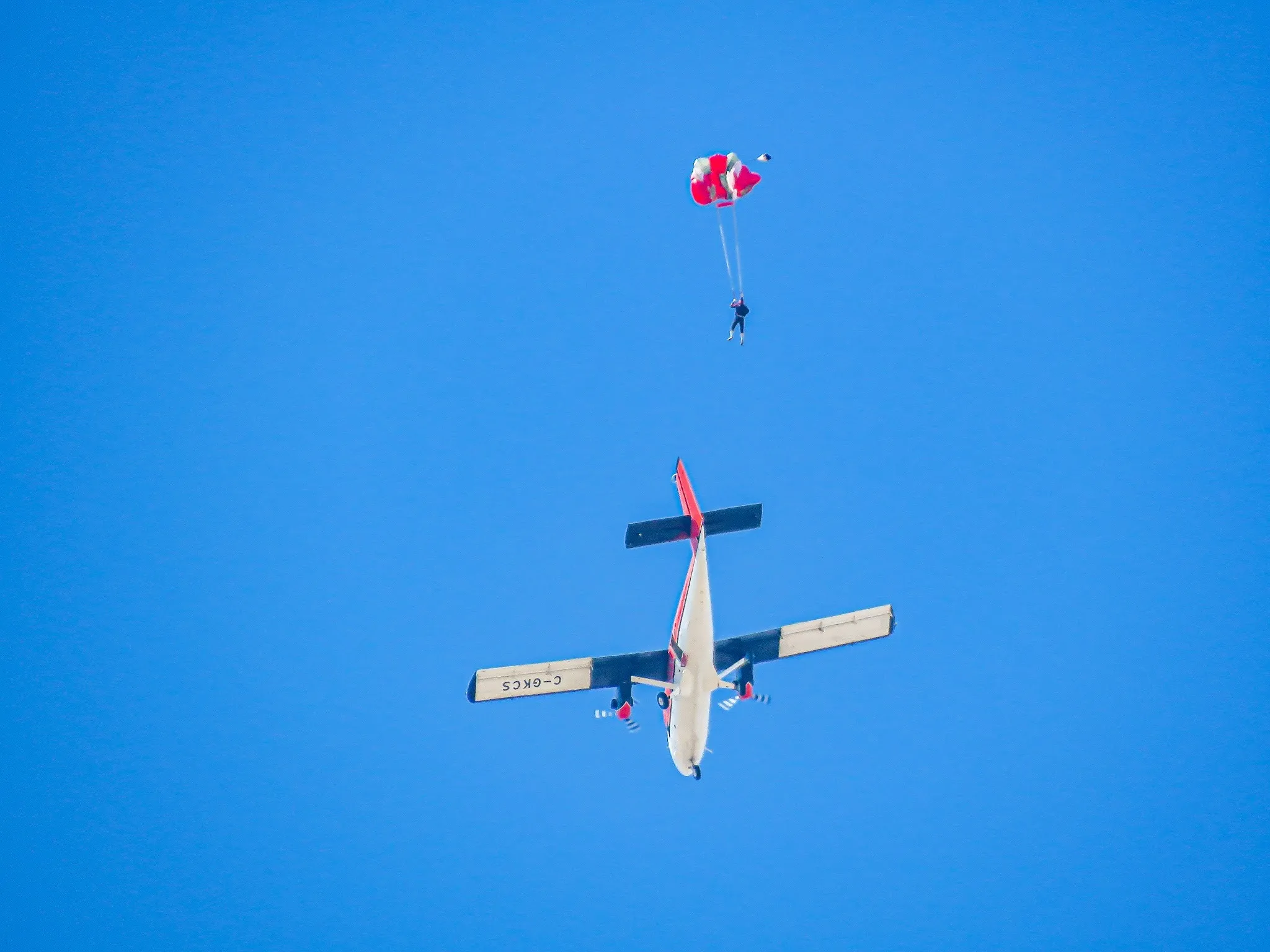
Once all 5 aircraft were on the ground, a Kenn Borek Air (4K) Twin Otter flew overhead and released a trio of skydivers, one of whom was donning a flag with the De Havilland logo.
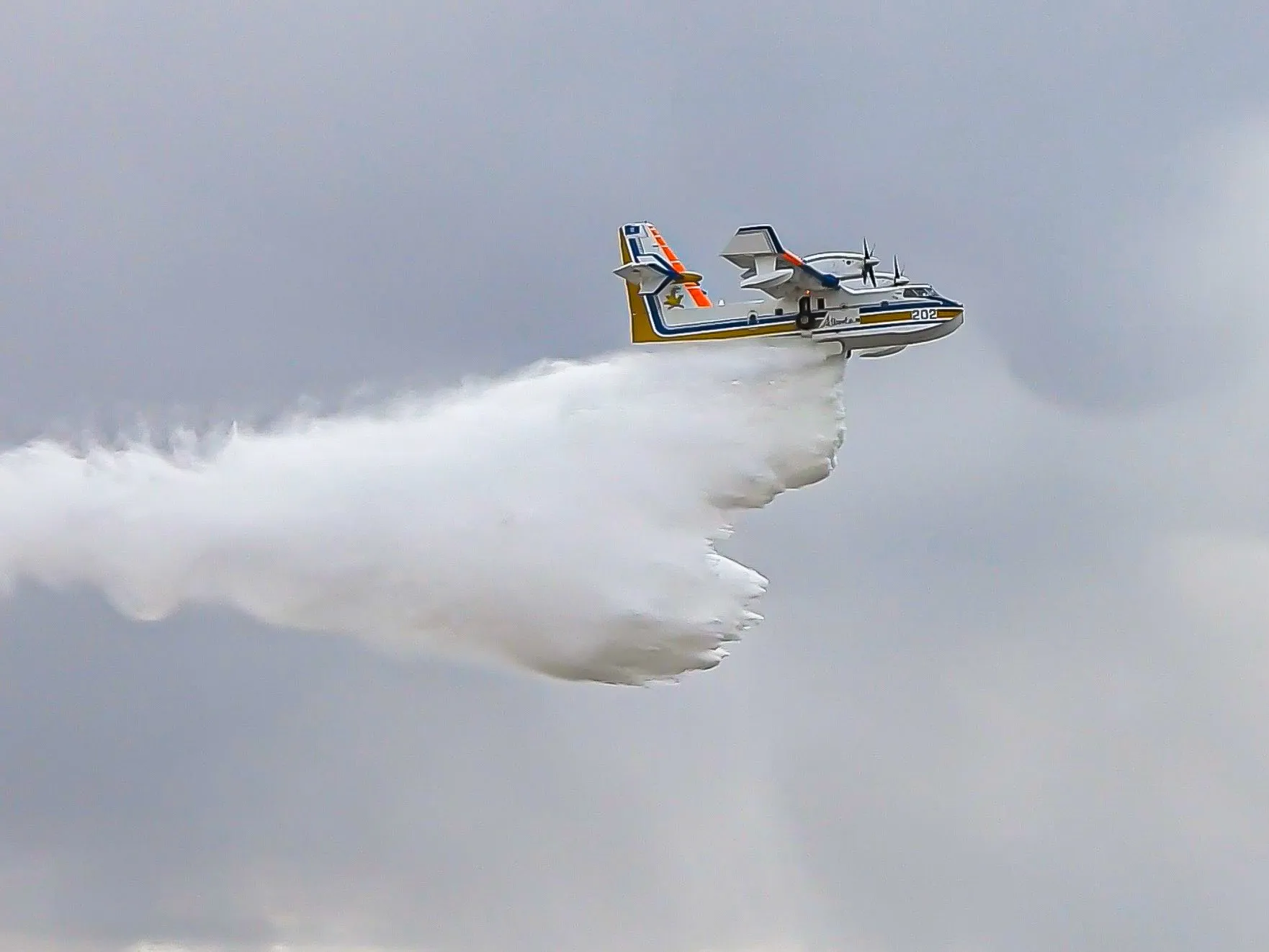
The event featured speeches from De Havilland VP of Corporate Affairs Neil Sweeney, Canadian Minister of International Trade Maninder Sidhu, Alberta’s Minister of Jobs, Economy, Trade and Immigration Joseph Schow, Reeve of Wheatland County Scott Klassen, De Havilland CEO Brian Chafe, Sherry Brydson and her husband Rob McDonald. When after all was said, the new airfield was christened by a pair of Air Spray CL-215s from Red Deer (YQF), each dropping a load of water across the future runway.
Spades ceremoniously met the dirt not long afterward, officially marking the beginning of the construction of De Havilland Field. At the same time, all 5 aircraft started their engines again and, one by one, made their departures, likely to return one day when something resembling a paved runway starts to take shape.
The airfield itself
The 1,500-acre De Havilland field site consists of 3 sections. The first is the airfield itself and all associated buildings, facilities, and infrastructure southwest of the Trans Canada Highway and Range Road 264 intersection, alongside two other plots of land northwest and southeast of the intersection designated for “industrial and commercial.”
It was mentioned during Friday’s events that a new town would be built in the area around the airfield to house De Havilland employees near their workplaces. The aforementioned intersection between the highway and the unpaved road will become a partially cloverleaf-style interchange.
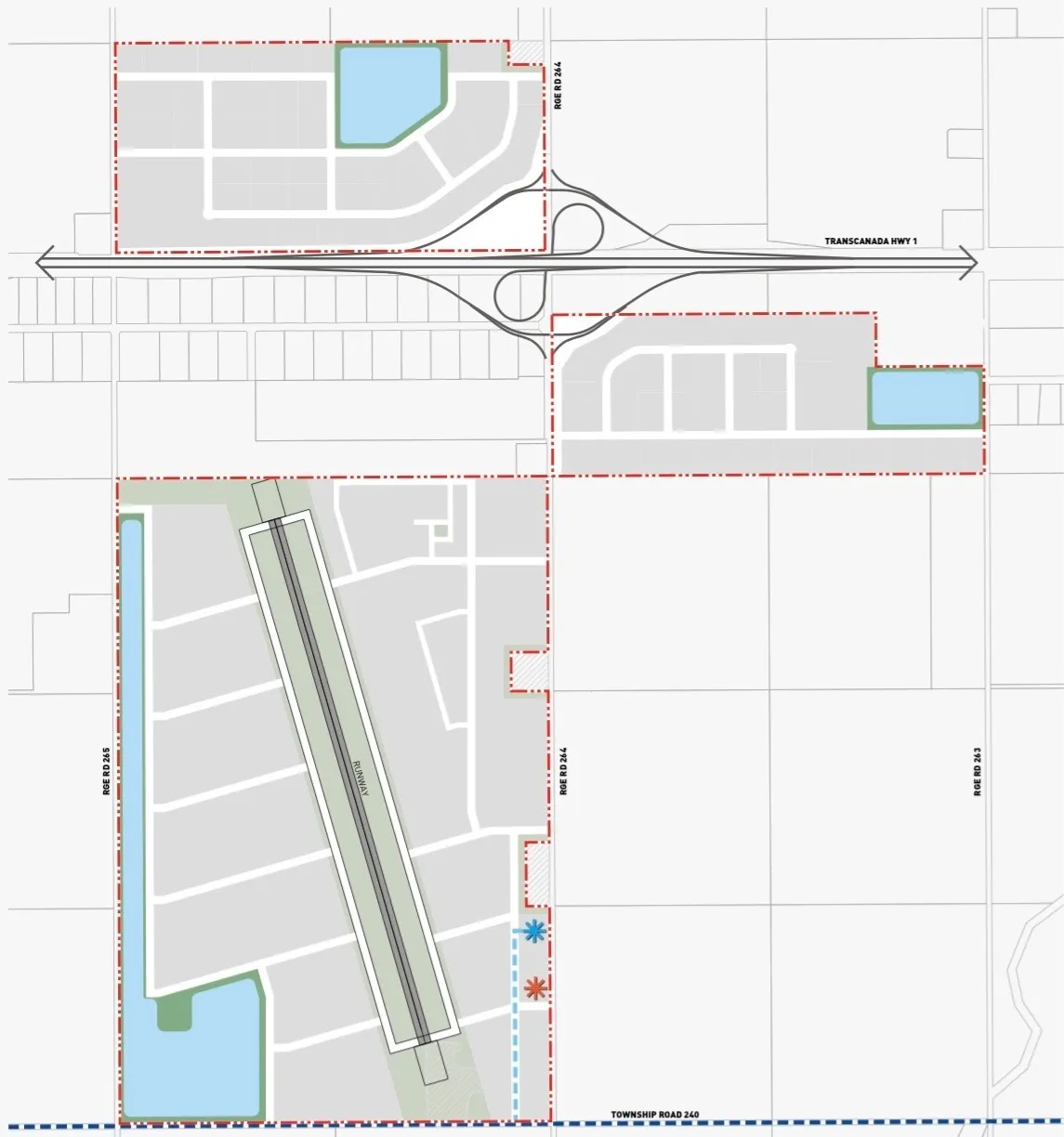
According to a June 2023 plan filing, De Havilland Field will feature:
- A single 6,700-foot asphalt runway running north-northwest to south-southeast with a true heading of roughly 15°. This angle would give the strip numbers 03/21, as of the time of writing.
- Adjacent taxiways on each side running parallel along the entire length of the runway.
- Aircraft assembly building
- Maintenance, repair, and overhaul facilities
- Delivery centre
- De Havilland fleet museum
- Combined compass pad and run-up area
- Fueling facilities
- Configuration facilities
- Air traffic control tower
- Emergency service base
- Southern Alberta Institute of Technology educational facility
- Design and innovation training academy
- Ground test building
- Potential research facility
- Offices
- Customer support services
- Distribution and logistics facilities
- Parts manufacturing facilities
- Electrical facility
- Services and tooling facility
- Additive manufacturing facility
- Composite facility
The airport design will accommodate Aircraft Group Number (AGN) IV aircraft, meaning any aircraft with a wingspan between 36 and 52.11 meters. This configuration allows for aircraft with a wingspan roughly the size of a Boeing 767 with winglets.
The airfield construction will come in phases over the planned 10-15-year span. “You’re standing here where our main factory is going to be, and the first thing that’s going to be here … is the parts manufacturing and the warehouse and distribution center,” said Sherry Brydson at the event.
You could feel the sense of pride that day. It was clear that these people were proud of the work they do and the products they help produce, outstanding in their fields both in their technical skills and in a literal sense on Friday afternoon. It’s difficult not to be optimistic about the future of the aerospace industry in Alberta and Canada.
Featured/All images: Jaedyn White/Airways



.avif)