easyJet Extends Deadline for Apollo, Castlelake Takeover Bids



.webp)
.webp)

.webp)
.webp)
LONDON — easyJet (U2) has given US investment groups Apollo Global Management and Castlelake until August 7 to formalize competing takeover proposals or withdraw, aligning the timetable for a potential bidding contest over the British low-cost airline.
The carrier's board requested the change, and the UK Panel on Takeovers and Mergers consented to extend Castlelake's deadline from August 3 to 5 p.m. London time on Friday, August 7. Apollo was already working toward the same August 7 deadline.
Both groups must now announce a firm intention to make an offer under Rule 2.7 of the UK Takeover Code or say that they do not intend to bid. easyJet emphasized that neither outcome is certain and advised shareholders to take no action.
That distinction is important: Apollo and Castlelake have presented possible offers whose headline financial terms have been discussed with easyJet, but neither proposal was a firm offer at the time of the extension announcement. The deadline does not represent a sale date, a shareholder vote, or a transaction closing.
Apollo Holds the Higher Proposal
Apollo moved ahead in the contest on July 10, when it and easyJet agreed in principle on the key financial terms of a possible £7.15-per-share cash offer. The proposal values easyJet's fully diluted ordinary share capital at approximately £5.7 billion.
Castlelake's latest proposal is £6.90 per share. That means Apollo's indicated cash price is 25 pence per share, or about 3.6%, higher.
easyJet's board said it would be minded to recommend Apollo's financial terms if the group announces a firm offer on those terms, all other conditions and transaction documents are agreed, and the board's other stated requirements are met. The board simultaneously withdrew its previous willingness to recommend Castlelake's lower proposal.
Apollo's possible offer also contemplates an unlisted equity alternative for eligible shareholders who want to retain exposure to easyJet under private ownership. The detailed terms remain subject to agreement. Apollo said the cash component was expected to be funded through committed equity from its funds and debt facilities, with Barclays indicating confidence that it could arrange the required debt financing.
The July 10 statement subjected Apollo's move to several preconditions, including satisfactory due diligence, definitive documentation, a unanimous board recommendation, and undertakings from directors who own easyJet shares. Apollo and Castlelake have both received due-diligence access from the airline.
What a Firm-Offer Announcement Would Change
The August 7 cutoff is a “put up or shut up” deadline under Rule 2.6 of the Takeover Code. A Rule 2.7 announcement would move a bidder beyond an exploratory or conditional proposal by requiring it to state a firm intention to proceed and publish the offer's terms and conditions.
It would still not complete the takeover. A transaction would remain subject to the process specified in the firm announcement, which could include shareholder approval, regulatory clearances, satisfaction of conditions, and a later closing.
If a suitor instead announces that it does not intend to bid, that statement would generally bring Rule 2.8 restrictions into effect. The precise consequences and any exceptions would depend on the announcement and the Takeover Code.
Aligning the deadlines removes the four-day gap that would otherwise have required Castlelake to decide before Apollo. The extension gives easyJet and its shareholders a common point at which to compare any firm terms that emerge. The airline said its August 3 announcement was made without either suitor's consent.
Why easyJet Draws Investment Interest
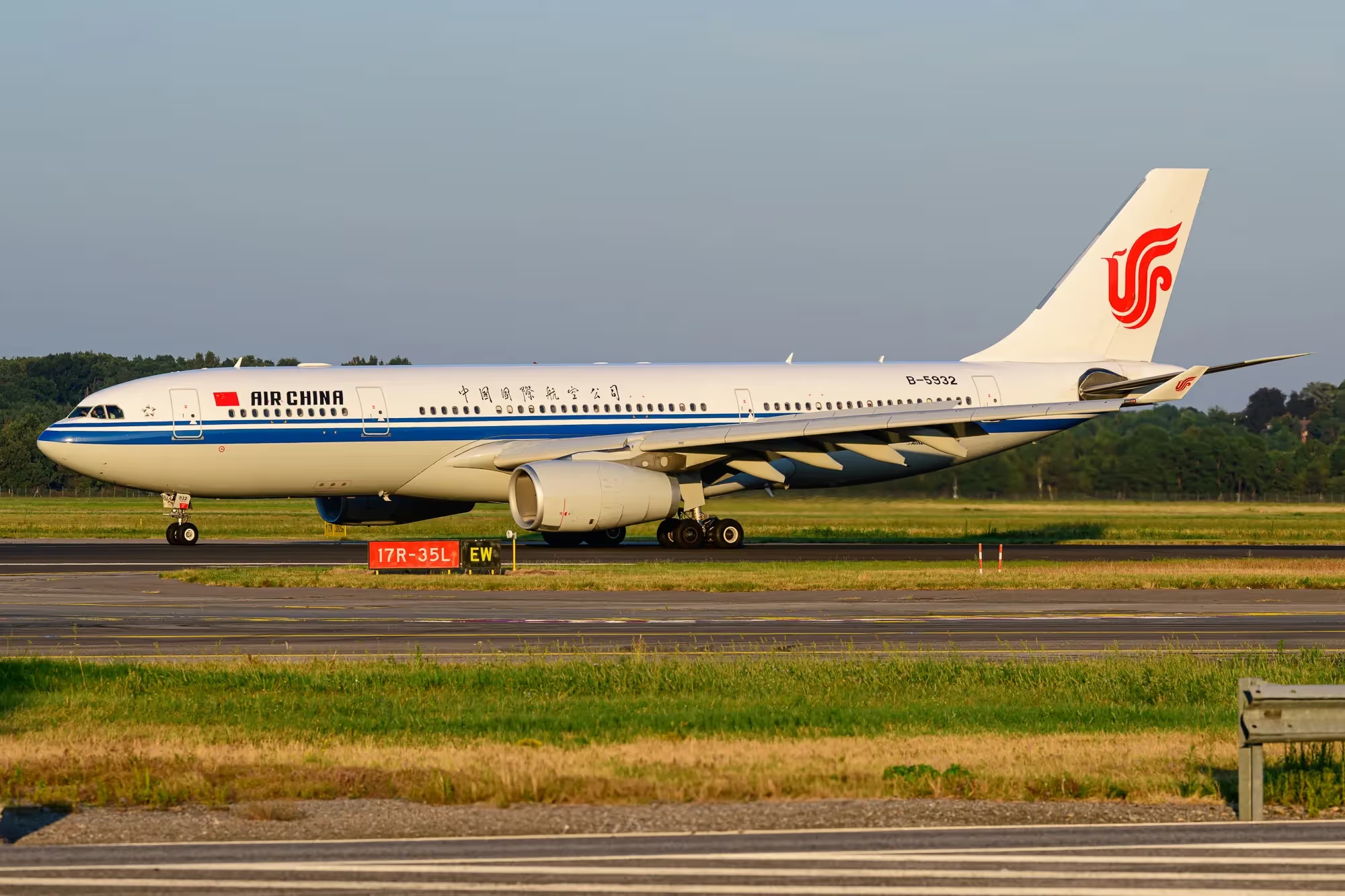
The bids target a carrier with a large network and a significant portfolio of positions at primary and capacity-constrained European airports. easyJet reported a fleet of 356 aircraft serving 1,273 routes and 165 airports in 37 countries as of March 31, 2026.
Its fleet comprised 79 Airbus A319s, 180 A320s, 75 A320neos, and 22 A321neos on that date. The airline is pursuing a fleet-renewal and upgauging program, including the planned retirement of all A319s by the end of its 2029 financial year.
easyJet also combines its airline with a growing package-holiday business. In its results for the six months ended March 31, the group reported £4.7 billion of liquidity, £434 million of net cash, and £5 billion in book value of owned assets. It nevertheless recorded a seasonally typical first-half headline loss before tax of £552 million, widened by disruption and cost pressure related to the Middle East conflict.
Apollo said it sees scope to accelerate easyJet's existing plans through fleet upgauging, ancillary and loyalty development, and further growth at easyJet holidays. Those statements describe Apollo's rationale for the possible transaction; they are not yet binding operational commitments.
Ownership Rules Add a Regulatory Test
Any firm offer would also need to address aviation ownership and control requirements. easyJet holds operating licences in several jurisdictions, and EU rules require airlines with EU operating licences to remain majority owned and controlled by qualifying European nationals.
easyJet currently uses an ownership contingency plan that can suspend voting rights attached to certain non-EU holdings. The company says its permitted maximum for non-EU ownership is 49.5% and retains mechanisms intended to protect compliance.
Apollo stated in July that it would take all necessary steps, insofar as they relate to easyJet, to obtain merger-control and EU Foreign Subsidies Regulation clearances, alongside a best-endeavours commitment for other regulatory conditions. The final ownership and control structure, and any remedies regulators could require, remain unknown unless and until a firm bid is published.
For passengers, the deadline extension changes nothing immediately. easyJet's flights, schedules, bookings, fleet plans, and holidays operation continue as before. The next confirmed milestone is August 7, when each investment group must either convert its interest into a firm offer or step away from the process.
Featured image: Daniel Sanders/Airways




.avif)