

.webp)
.webp)

.webp)
DALLAS — Today, in 1998, the Boeing 717 took to the skies for the first time from Long Beach, California.
The 717-200 lifted off from Long Beach Municipal Airport at 12:35 with Captains Ralph Luczak and Tom Melody at the controls. They flew west over Santa Catalina Island, turned southeast, and landed at Boeing's flight test center in Yuma, Arizona, after 4hrs 7mins spent testing the engines, control surfaces, and systems.
The type began life as the McDonnell Douglas MD-95, a short-fuselage development of the Douglas DC-9 aimed at the 100-seat, short-haul, high-frequency market. McDonnell Douglas showed the 105-seat design at the 1991 Paris Air Show, then spent four years looking for a buyer.
Initial Orders
The program launched in October 1995, when Atlanta low-cost carrier ValuJet ordered 50 aircraft and took options on 50 more. ValuJet's quarterly filing with US securities regulators put the contract at about US$1.0bn, with deliveries running from 1999 to 2002. Further orders were slow to emerge.
Boeing's own accounts credit that launch order to AirTran rather than ValuJet. The same filing explains the discrepancy: ValuJet's parent bought Airways Corporation, owner of AirTran Airways, and on completion renamed ValuJet Airlines as AirTran Airlines in 1997.
When Boeing and McDonnell Douglas merged in August 1997, many in the industry believed it would spell the end of the type. Boeing pressed ahead, and on January 8, 1998 it introduced and renamed the aircraft as the Boeing 717-200, retiring the MD-95 designation with the first three airframes already in final assembly at Long Beach.
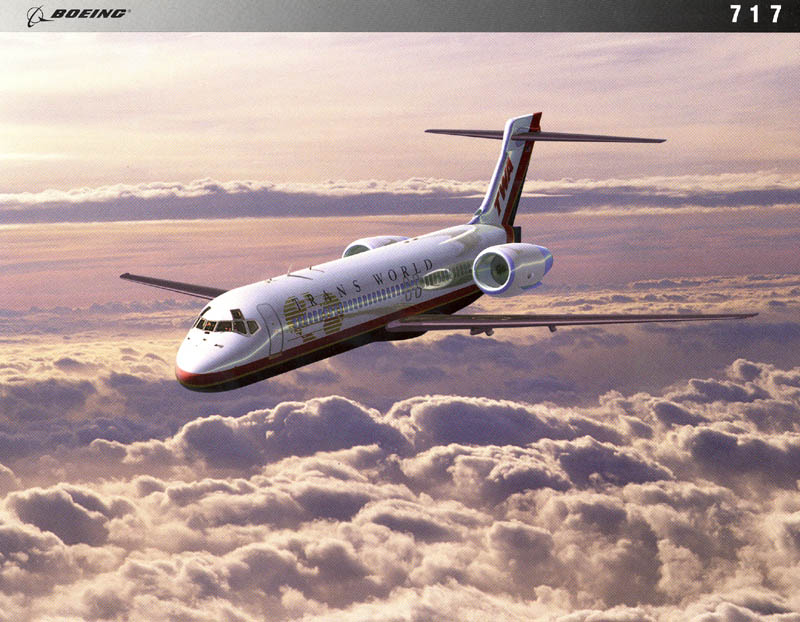
A second major customer followed that December, when Trans World Airlines agreed to acquire 50 717-200s with purchase rights for a further 50, with deliveries due to begin in February 2000.
The type stayed in production for just eight years. Boeing handed over the last two aircraft to AirTran Airways and Midwest Airlines on May 23, 2006, ending commercial airplane production in Southern California, which had begun in the 1920s with the Douglas Aircraft Company. In total, 156 were built.
In Airline Service
The airlines that flew the 717 rated it well above its sales record. Hawaiian Airlines (HA) CEO Mark Dunkerley told Business Insider in 2017 that "for what we do here in Hawaii, there's no better aircraft built today or even on the drawing board."
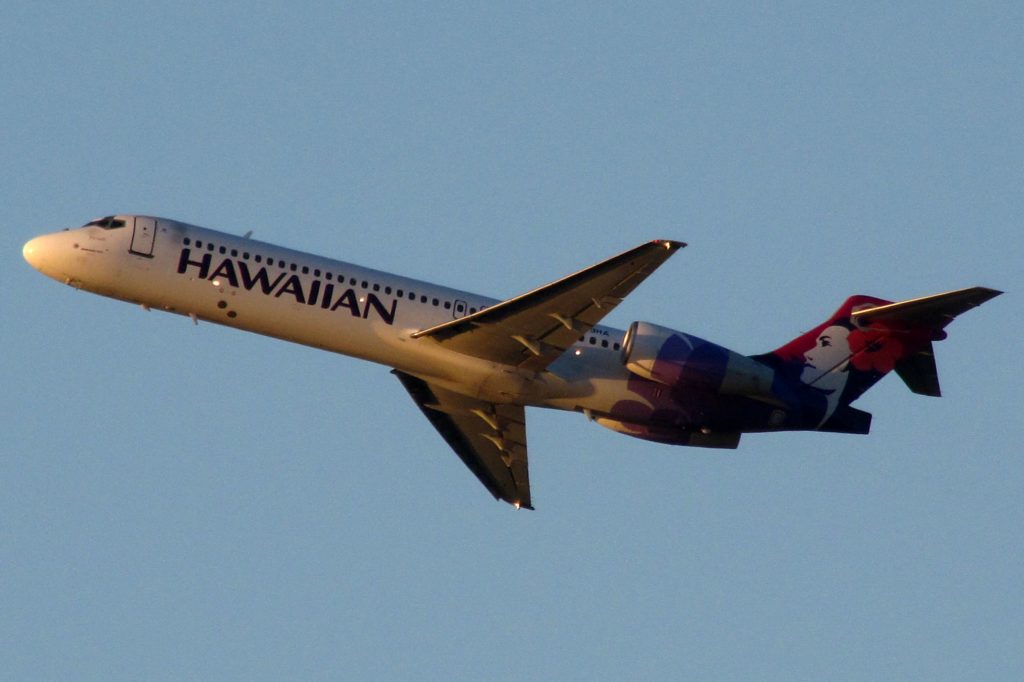
Delta Air Lines (DL) became the largest operator of a type it never ordered. Southwest Airlines (WN) inherited AirTran's fleet in their merger and had no use for it, and in 2012 the two carriers and Boeing Capital agreed to lease or sublease all 88 of AirTran's 717s to Delta at about three aircraft a month. The first, N935AT, flew Atlanta (ATL) to Newark (EWR) on October 25, 2013 and seated 110 passengers, the configuration the fleet still carries across the Delta First, Delta Comfort, and Delta Main cabins.
The Last Operators
Europe lost the type first. Volotea (V7) flew the continent's last 717 revenue services on January 10, 2021, sending its remaining aircraft to storage. In Australia, where National Jet Systems operated the 717 under the QantasLink brand, the final scheduled service ran from Sydney to Canberra on October 26, 2024, and the last aircraft was retired that December.
That leaves Delta and Hawaiian. Alaska Air Group, which acquired Hawaiian in 2024, chose Boeing 737-800s for the Neighbor Island network in July 2026, with that transition due to begin in 2028. Delta lists 80 of the type in its fleet, where reporting in June 2026 identified six of the oldest airframes as leaving nearly four years ahead of expectations.
Featured image: Michael Rodeback/Airways



.avif)
.jpg)