

LOS ANGELES — This report covers my experience aboard Qantas (QF) flight 12 from Los Angeles International Airport (LAX) to Sydney Kingsford Smith Airport (SYD) on the night of June 23, arriving on the morning of June 25 local time after a 14-hour-49-minute flight.
QF12 is one of the longest regularly operated transpacific services in Qantas's network, operated by the Airbus A380 VH-OQB.
Gate and pre-departure
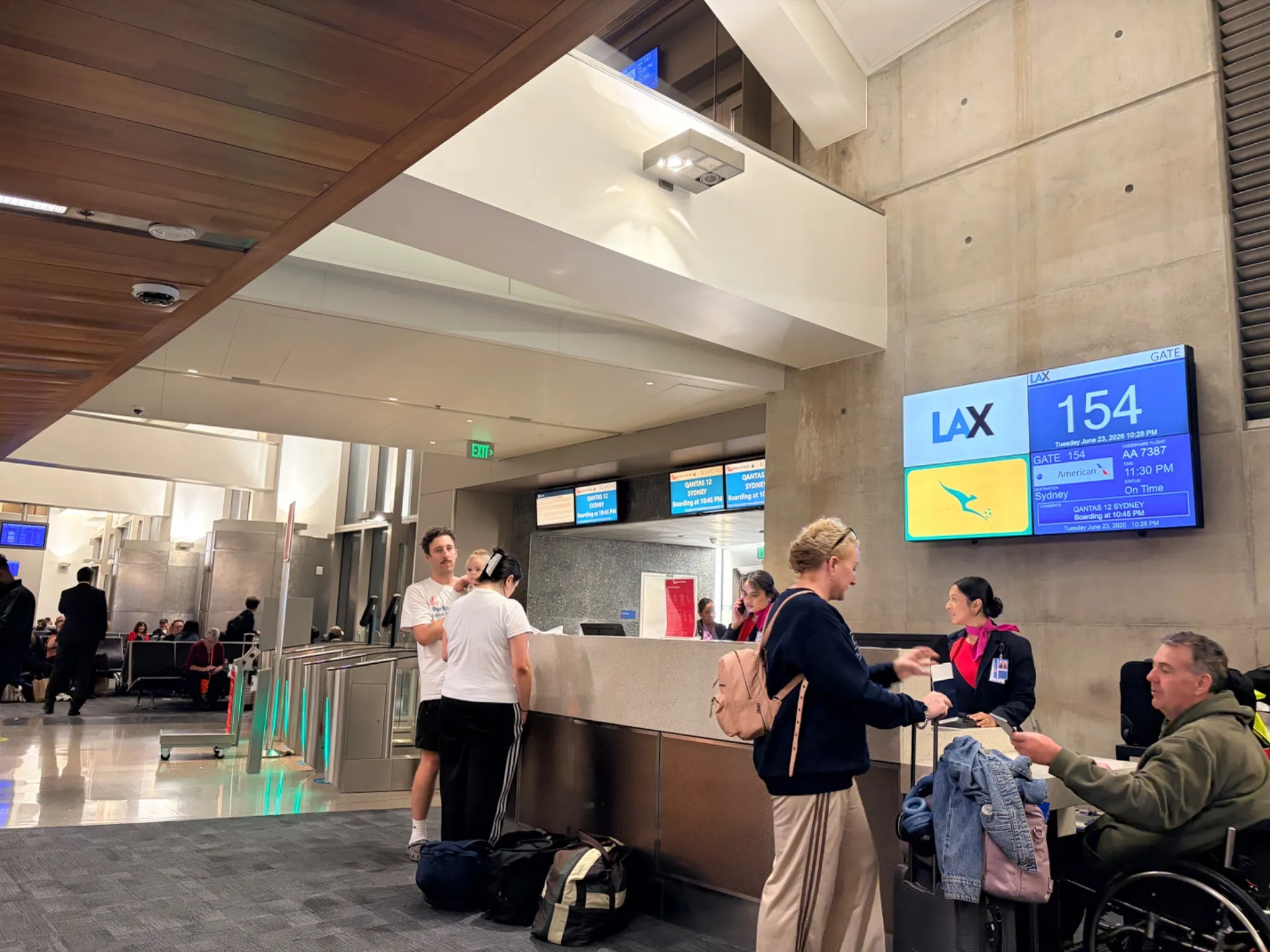
Qantas operates from gate B154 at LAX's Tom Bradley International Terminal. The departure was scheduled for 23:45, making this a late-night push across the Pacific. Boarding was efficient and well-managed for an aircraft of the A380's size, with the process moving smoothly through the groups without the congestion that widebody night departures can sometimes produce.
The departure was delayed by 15 minutes, though not due to any operational issue on Qantas's side. Taxi was quick, and we departed efficiently from runway 24L at LAX.
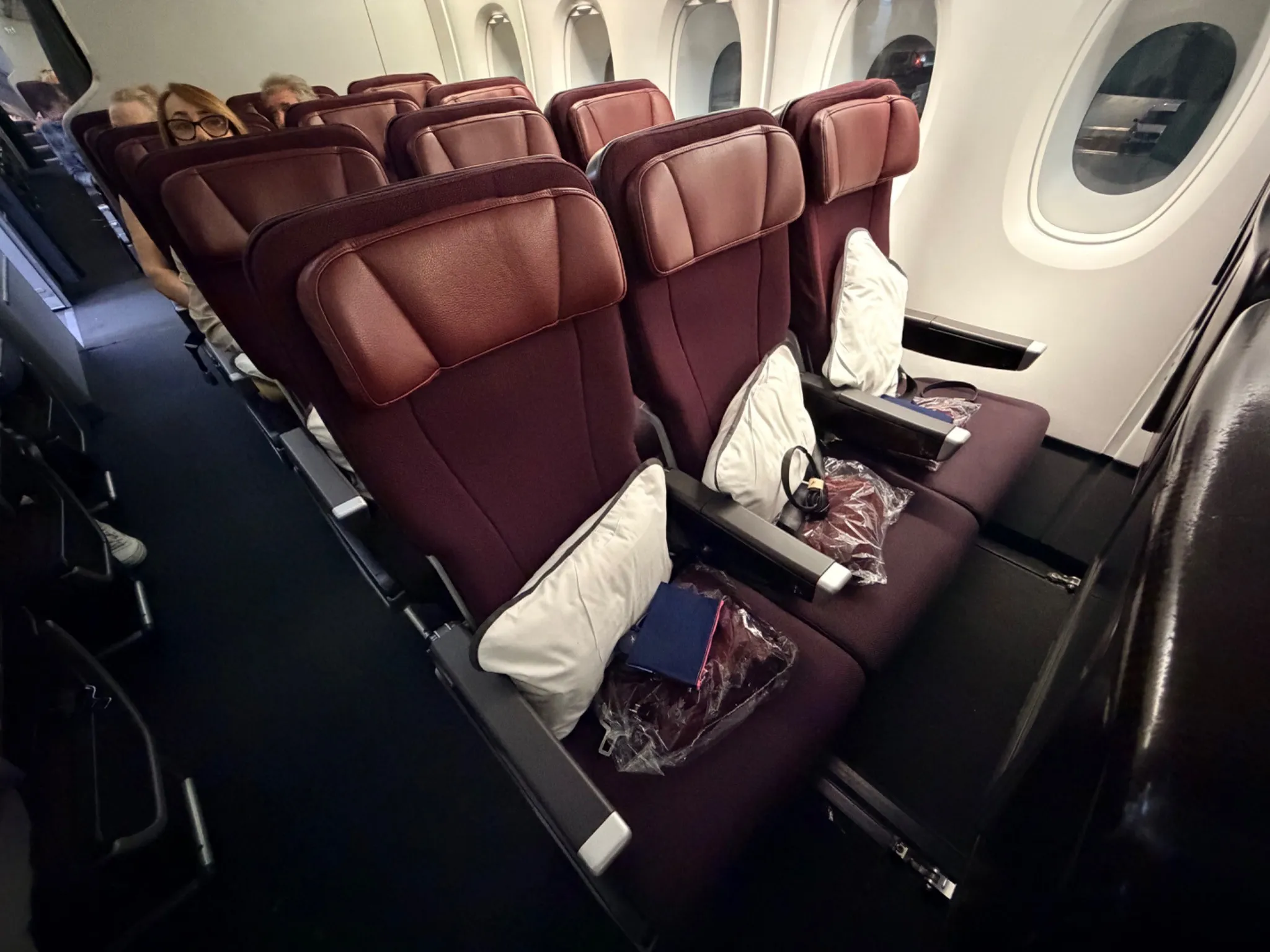
The aircraft and cabin
The A380 configured for QF 12 placed economy passengers on the lower main deck in a 3-4-3 arrangement, which is a dense configuration for the type but standard on Qantas's transpacific A380 operations. Seat 74A is a window on the left side toward the rear of the lower deck. The middle seat next to me remained empty, which on a nearly 15-hour overnight crossing makes a considerable practical difference.
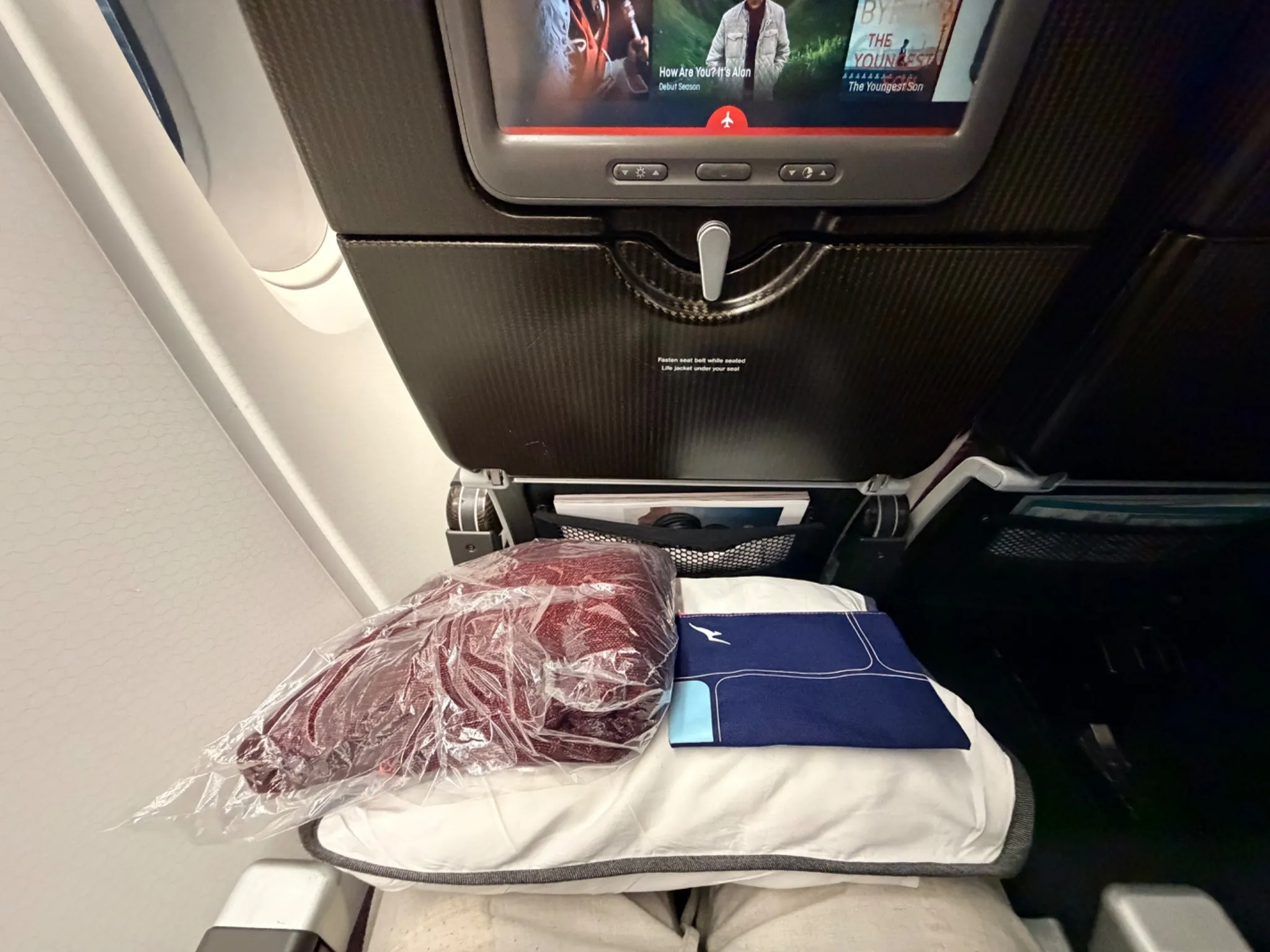
The IFE system was the cabin's most notable weakness. The screens were dated, and the touchscreen response was sluggish and unreliable. On a flight of this length, a functional entertainment system matters more than on shorter sectors, and Qantas's A380 interior is beginning to show its age in ways that newer competitor products do not.
That said, my intention was to sleep, so the IFE limitations were less consequential on this particular crossing than they might otherwise have been.
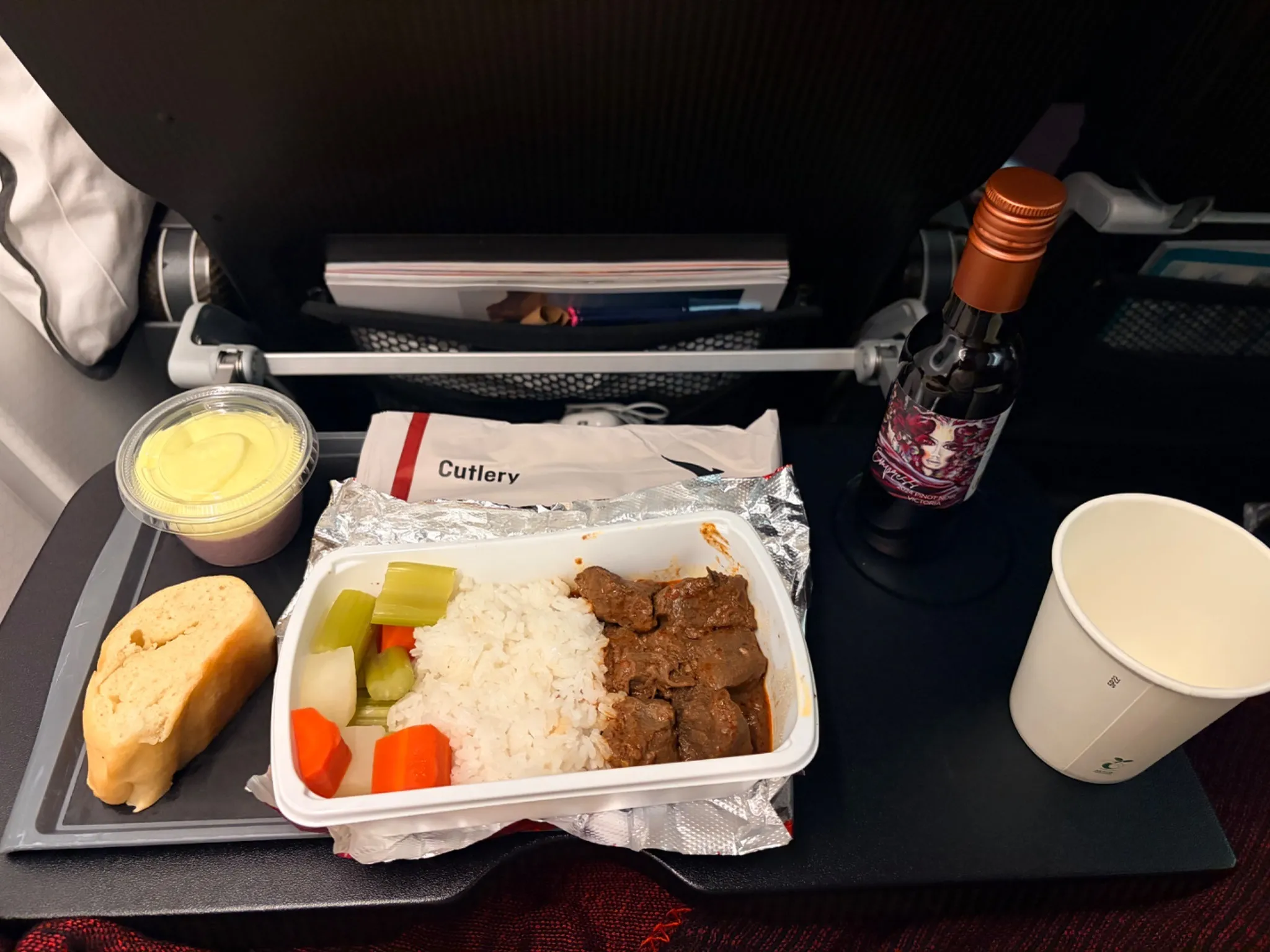
Dinner service
Dinner was served shortly after departure. The main was a beef dish with rice and vegetables, accompanied by bread. It was serviceable without being memorable, which is a reasonable description of economy catering on most carriers at this distance.
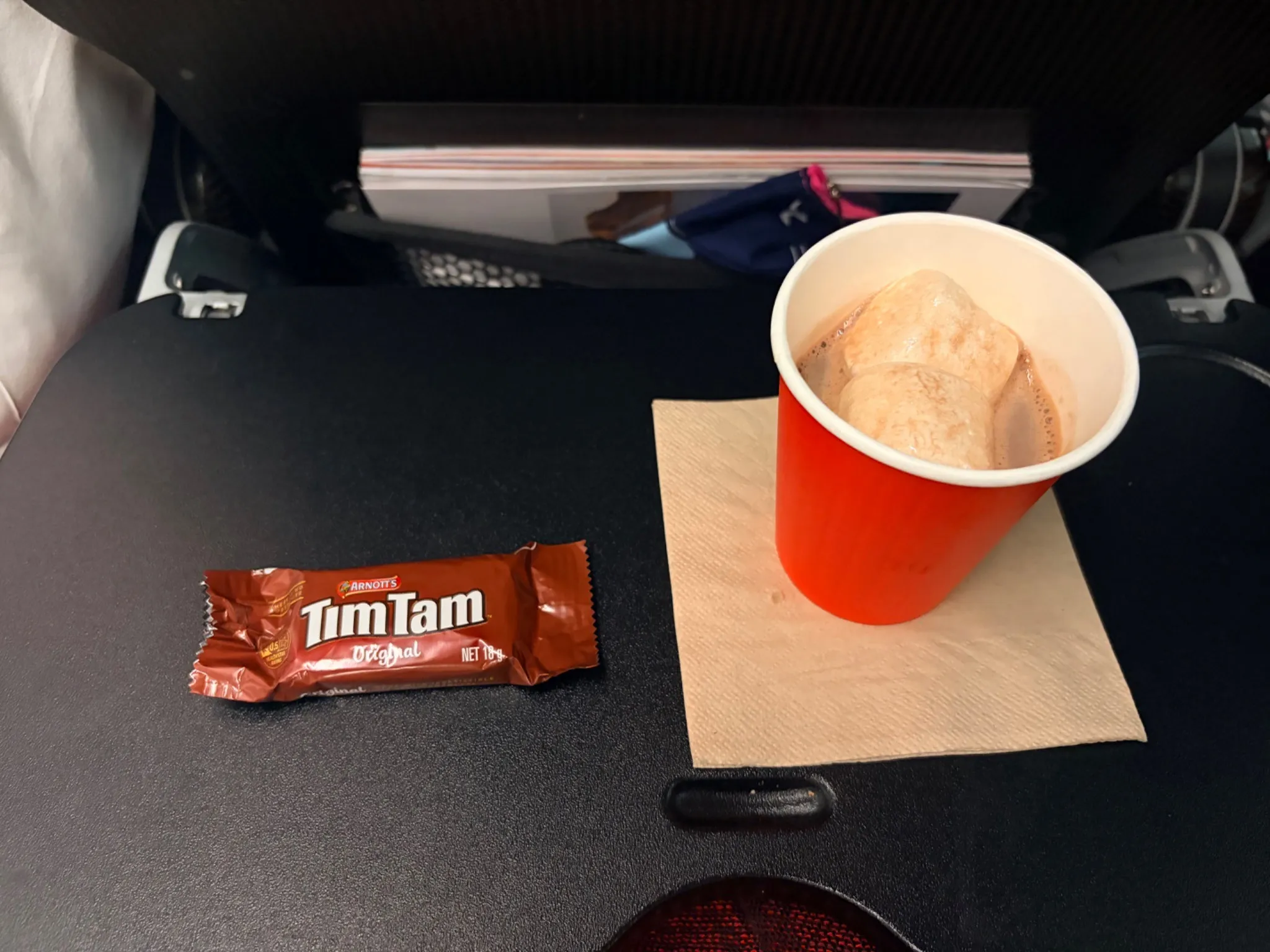
The highlight came afterward: the crew distributed hot chocolate alongside a Tim Tam, the Australian chocolate biscuit that has attained something close to national icon status. It was a small, well-judged touch that landed better than the main course.
Flight
I slept for the majority of the crossing. The A380's four-engine configuration produces a notably smooth and quiet ride, and the sheer size of the aircraft buffers turbulence in a way that smaller widebodies do not.
The Pacific at night offers little to see from a window seat regardless, and I made no attempt to stay awake for it. The cabin stayed dark and settled throughout.
Breakfast service
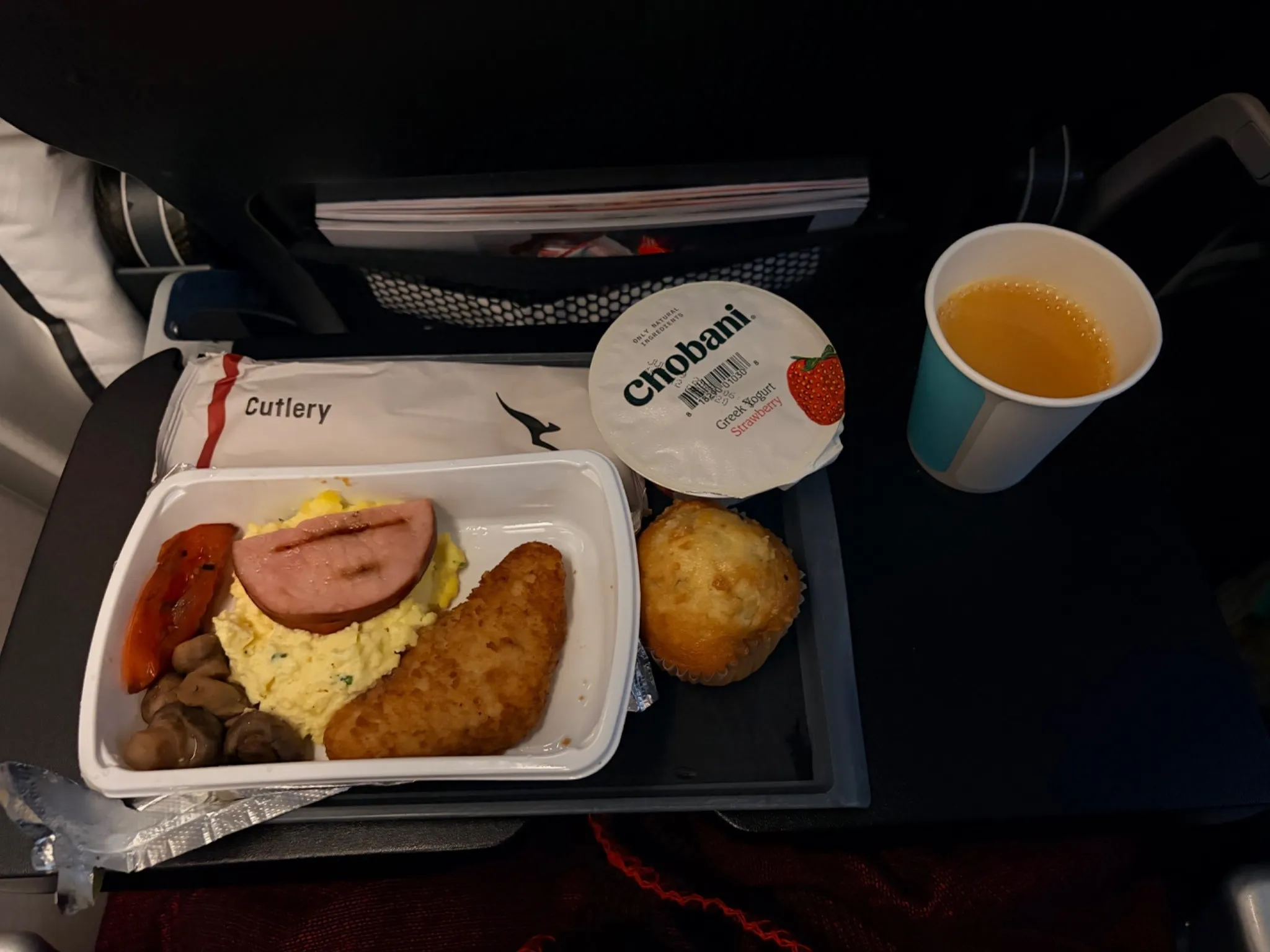
The crew woke the cabin as SYD approached. Breakfast was a cooked plate of hash browns, eggs, ham, mushroom and tomato, alongside a strawberry Chobani yogurt, a muffin, and orange juice. It was a full and well-portioned spread for economy class.
Worth noting for context: I had received a near-identical meal on an Air New Zealand service earlier in my travels, and its execution of the same components was noticeably better. The Qantas version was adequate but left room for improvement.
Arrival in Sydney
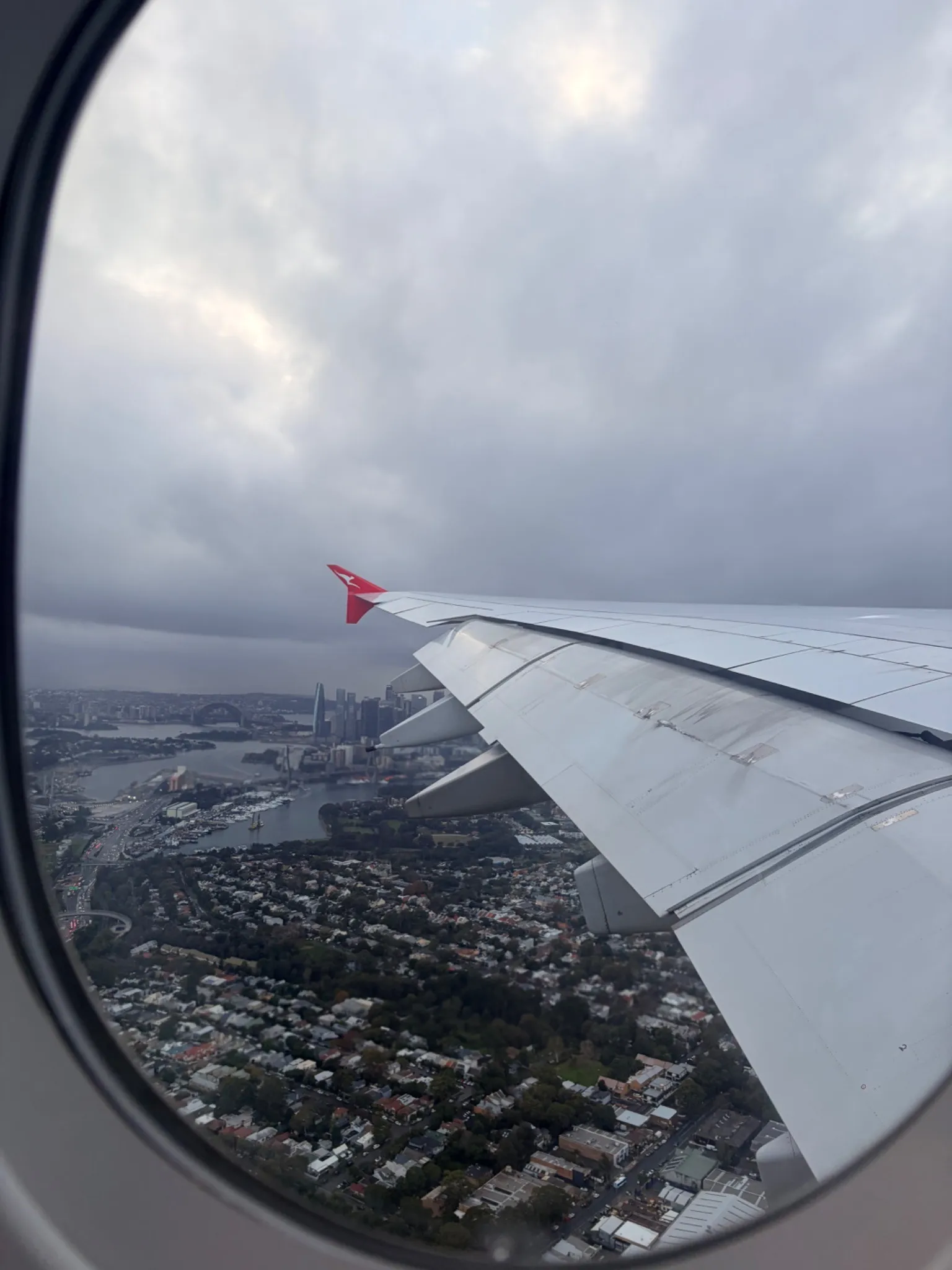
QF 12 touched down at SYD at 07:34 on the morning of June 25, four minutes behind the published schedule. Sydney in late June is midwinter, and the arrival reflected this: overcast skies and rain greeted the aircraft on approach. It was a bleak first impression of the city for anyone aboard who had not experienced an Australian winter before.
We waited on an inactive runway for roughly 30 minutes due to a Singapore A380 that failed to move in time for our arrival, but even with the delay, we arrived only four minutes behind schedule.
Border control and arrival cards
Australian border control at SYD processed arrivals efficiently. One detail worth flagging for inbound travelers: Australia continues to require passengers to complete a paper arrival card on the flight, a practice that most comparable destinations have phased out in favor of digital declarations.
A pen is an essential item to have accessible in your carry-on before landing. The oversight catches more travelers than it should, and the announcement reminding passengers to complete the card before landing is easy to miss on a night service when most of the cabin has been asleep.
Conclusion
QF 12 is a well-operated if aging product. The A380 is a magnificent aircraft for a crossing of this length, and Qantas runs a competent service with attentive crew and a sensible catering sequence.
The IFE system is the most pressing area for improvement, and the 3-4-3 economy configuration is not generous on a 15-hour sector. The Tim Tam with hot chocolate remains the standout detail. For travelers prioritizing rest over entertainment on the transpacific crossing, QF 12 serves its purpose well.
Featured image: Andrew Henderson/Airways


.avif)