SAS CEO Anko van der Werff Emerges as Air Canada CEO Frontrunner: Report


.webp)
.webp)

MONTREAL — SAS (SK) Chief Executive Anko van der Werff has emerged as a leading candidate to become Air Canada’s (AC) next CEO, according to Bloomberg, as the Canadian carrier continues its search for a successor to Michael Rousseau.
Bloomberg, citing people familiar with the matter, reported that van der Werff is a front-runner for the role. Air Canada, SAS, and van der Werff had not publicly commented on the report as of publication.
Rousseau announced in March that he plans to retire by the end of the third quarter of 2026 after nearly two decades with Air Canada. The carrier has not announced a replacement or indicated when its board expects to complete the search.
A turnaround executive with global experience
Van der Werff has led SAS since July 2021, overseeing one of the most consequential periods in the Scandinavian carrier’s history.
During his tenure, SAS completed a U.S. Chapter 11 restructuring in 2024, reduced debt, reshaped its ownership structure, left Star Alliance for SkyTeam, and began rebuilding its long-haul and regional network. The carrier has since moved into a new phase of fleet and network investment, including its recently announced plan for up to 40 Airbus widebody aircraft.
SAS said the investment, announced June 30, is intended to strengthen Copenhagen (CPH) as a long-haul hub and expand connections between Scandinavia and global markets. Van der Werff described the program as the largest investment in the airline’s history.
Before joining SAS, van der Werff served as CEO of Avianca from 2019 to 2021. He previously held commercial and leadership roles at Aeroméxico, Qatar Airways, Air France-KLM, and KLM.
That résumé gives him experience across European, Latin American, Middle Eastern, and North American-linked airline markets — and, notably, experience leading carriers through difficult transformations.
A different scale of challenge at Air Canada
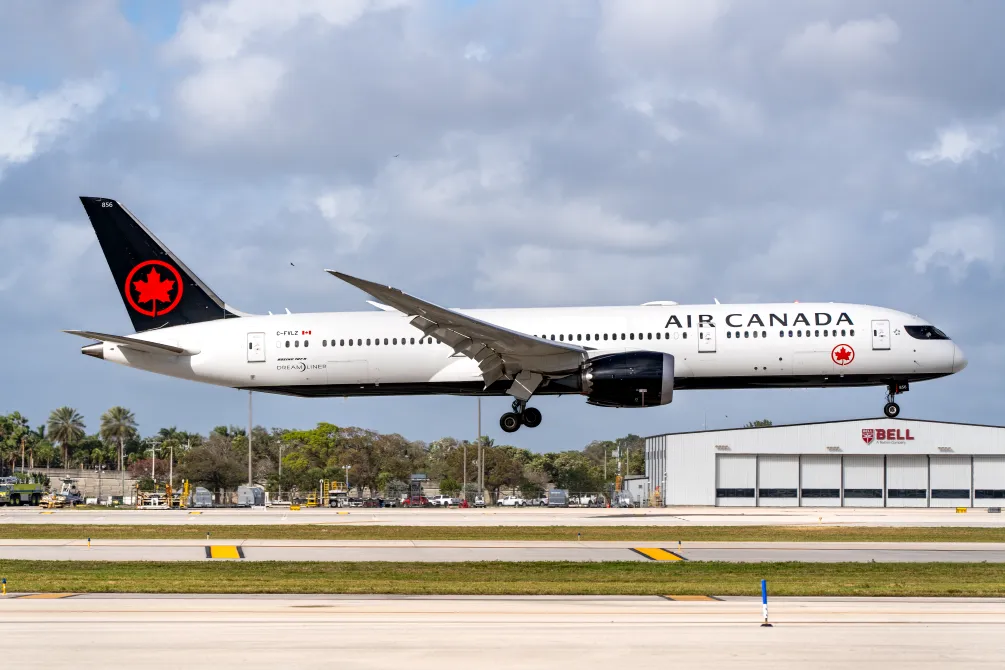
Air Canada is a substantially larger airline than SAS, with a global network spanning North America, Europe, Asia-Pacific, and other international markets. Its next CEO will inherit a carrier with a strong international position but a complex set of operational, labor, customer-service, and competitive priorities.
The succession also carries particular sensitivity in Canada. Air Canada is a federally regulated company with bilingual obligations and a uniquely prominent role in the country’s transport system, making leadership communication and public accountability important factors alongside commercial and operational credentials.
Van der Werff speaks Dutch, English, and Spanish, and SAS lists him as having a basic understanding of French and Swedish. That background could draw attention in a process where French-language capability and Canadian public-facing leadership are likely to be closely scrutinized.
What it could mean for SAS
A departure by van der Werff would create its own leadership question at SAS just as the carrier accelerates a major post-restructuring expansion plan.
SAS is preparing for deeper integration with Air France-KLM, which announced plans last year to increase its stake in the Scandinavian carrier to a majority position, subject to regulatory approvals. The airline is also expanding its Copenhagen hub, adding long-haul capacity, and continuing its transition into SkyTeam.
For now, however, there is no indication that van der Werff has accepted an offer or that Air Canada’s board has made a final decision.
The report is nonetheless a notable sign of where the succession process may be heading. If appointed, van der Werff would bring a record shaped by airline restructuring and network rebuilding to one of North America’s most strategically important flag carriers.
Featured image: Mateo Skinner/Airways



.avif)