

FARNBOROUGH — The Friday before the Farnborough Airshow is always filled with rumors of commercial orders, the unveiling of new aircraft types, upgrades to existing products, and much more. While some rumors and reports seem more credible than others, the upcoming edition of the Farnborough Airshow should act as an alarm bell. The reasons are always the same: supply chain disruptions, record-breaking backlogs, engine issues and more. These recurring topics have dominated the past seven major international airshows since the COVID-19 pandemic.
And while relevant, these topics do not provide a factually accurate picture of the decade of civil aviation: OEMs are, rightfully so, milking their existing lineups and products like never before in aviation history. A320neo, Boeing 737 MAX, E2S: all narrowbodies have recorded some of their best sales performance to date in recent months.
Relying on a consolidated, well-oiled product is a winning strategy in the field: OEMs sell a trustworthy platform, and airlines improve and optimize their strategy, saving on fuel costs and minimizing training, operational, and maintenance costs. With backlogs stretching into the 2030s, the big three OEMs can rely on a guaranteed revenue stream to develop the next generation of clean-sheet airliner, the one that will further close the gap to net-zero.
Without delving into the topic in much detail, ongoing action on decarbonization remains inevitably almost negligible, even when decarbonization and profit maximization go hand in hand. For airlines, employing next-generation technology is the most effective way to cut fuel consumption, no doubt about it. Other operational factors can be improved, such as climbing strategy, weight distribution, route calculation: countless variables continue to regulate the industry on a daily basis.
The issue with the industry is the lack of a clear, clean-sheet lineup for the next decade and the technological advancements expected to accompany it. The feeling is that the exponential growth in technological advancement and product development that followed WW2 has reached its asymptote, and the current concepts have already been fully exploited.
While the MAX, neo, and E2 generations mostly rely on propulsive (and partially aerodynamic and material) innovation, most of the fuel savings come from the engines’ increased efficiency, a trend that has been increasing steadily over the past decades, drastically cutting fuel consumption, emissions, and costs since the first Boeing 747 was rolled out in Everett.
Right now, the industry is too focused on its razor-thin margins, geopolitical uncertainty, and the lack of engines, materials, and expertise to properly focus on what will happen next. A breeze of fresh air comes from the UAM industry, which is, however, not immune to all of the above.
As in many other fields, slowdowns keep occurring between policymakers and industry. Just that the slowdowns in aviation will echo for decades. The lack of understanding and flexibility between airlines, airports, OEMs, and local politics has erupted to the point where senior executives are no longer afraid of openly pointing the finger at companies and institutions, and I can’t recall how many times I was surprised to hear such direct answers from CEOs in the industry who were clearly disappointed in procedures that were once taken for granted.
Aviation’s footprint will increase; there is no doubt about it. In absolute terms, despite far lower emissions per seat, worldwide fleet renewal, and higher load factors, emissions per seat will go up, regardless of whether airlines pack 232 seats on an A321neo. More countries will develop key infrastructure, more people will travel, and the world will be more connected, no matter how isolationist and nationalist politics prevail.
To offset this trend and start tackling the technology problem, which is inevitably intertwined with the emissions problem, the whole industry must act as one while safeguarding independent product development and healthy competition. Agreeing on a technological advance, whether that be hydrogen, ramping up SAF, blended-wing-body, or otherwise, can only be achieved if the three largest OEMs agree to focus their resources on the same problem. And that is the only way forward if the industry wants to return to the levels of innovation seen in past decades.
A development war that pushes in multiple directions will never take place, and ultimately, airlines will be forced to fly a revised version of a revised aircraft with negligible technological and scientific innovation.
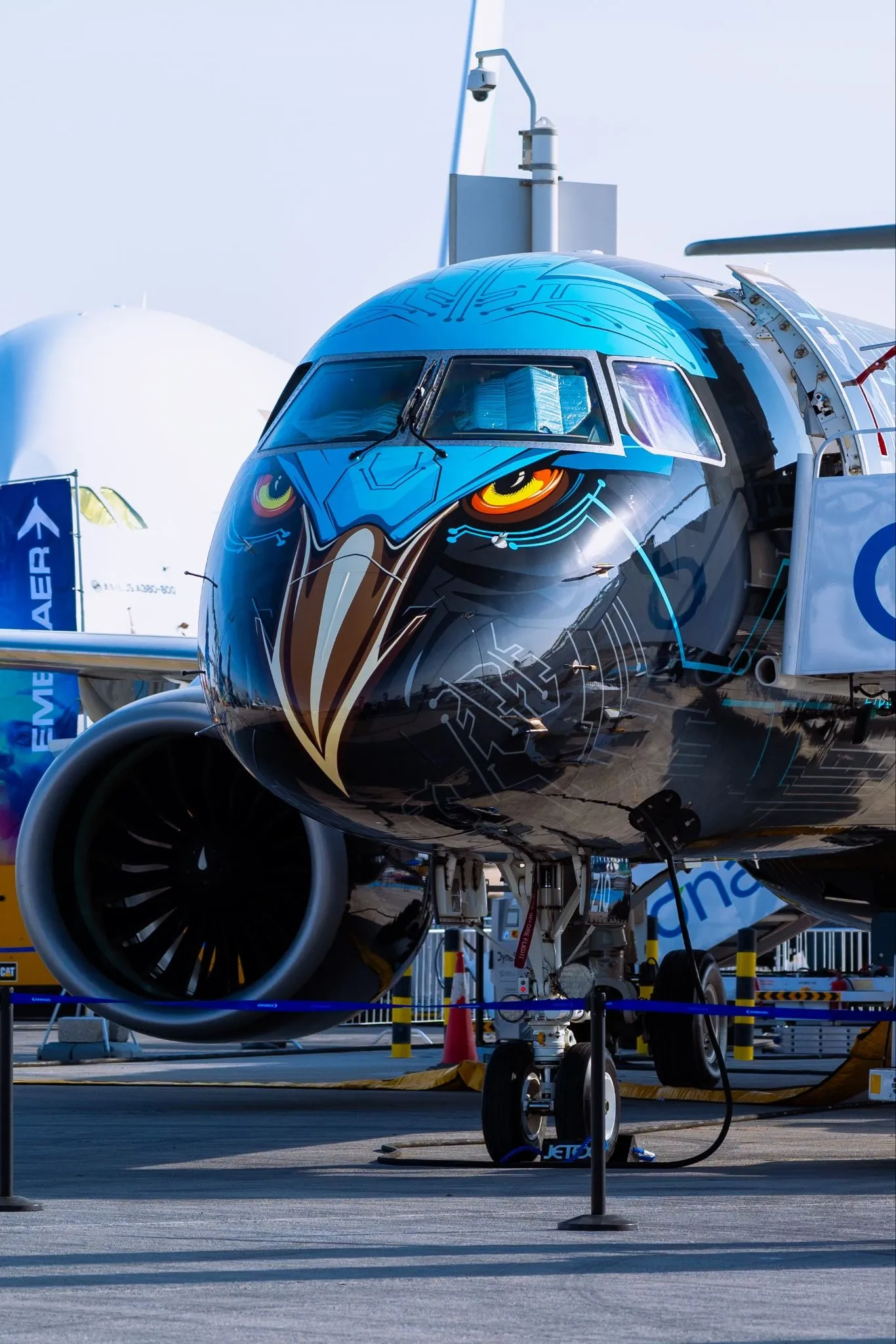
The actual last clean-sheet aircraft, Embraer’s E2, is finally capitalizing on its advances over the E1 generation and has now surpassed 500 orders. Any new technology is likely to be rolled out first in the regional/medium narrowbody segment, so the pressure is on the Brazilian OEM to be the first to bring the necessary powerplant innovation with its next-generation lineup.
Nevertheless, upscaling technology will inevitably take decades, during which the A350/B787 lineups will continue to represent the pinnacle of technological innovation. And for now, the only talk of new airline concerns stretched versions of existing products. The A220-500 and A350-2000 are under close examination at Airbus, while the Boeing 777-10 is in high demand from the program’s largest customer, Emirates.
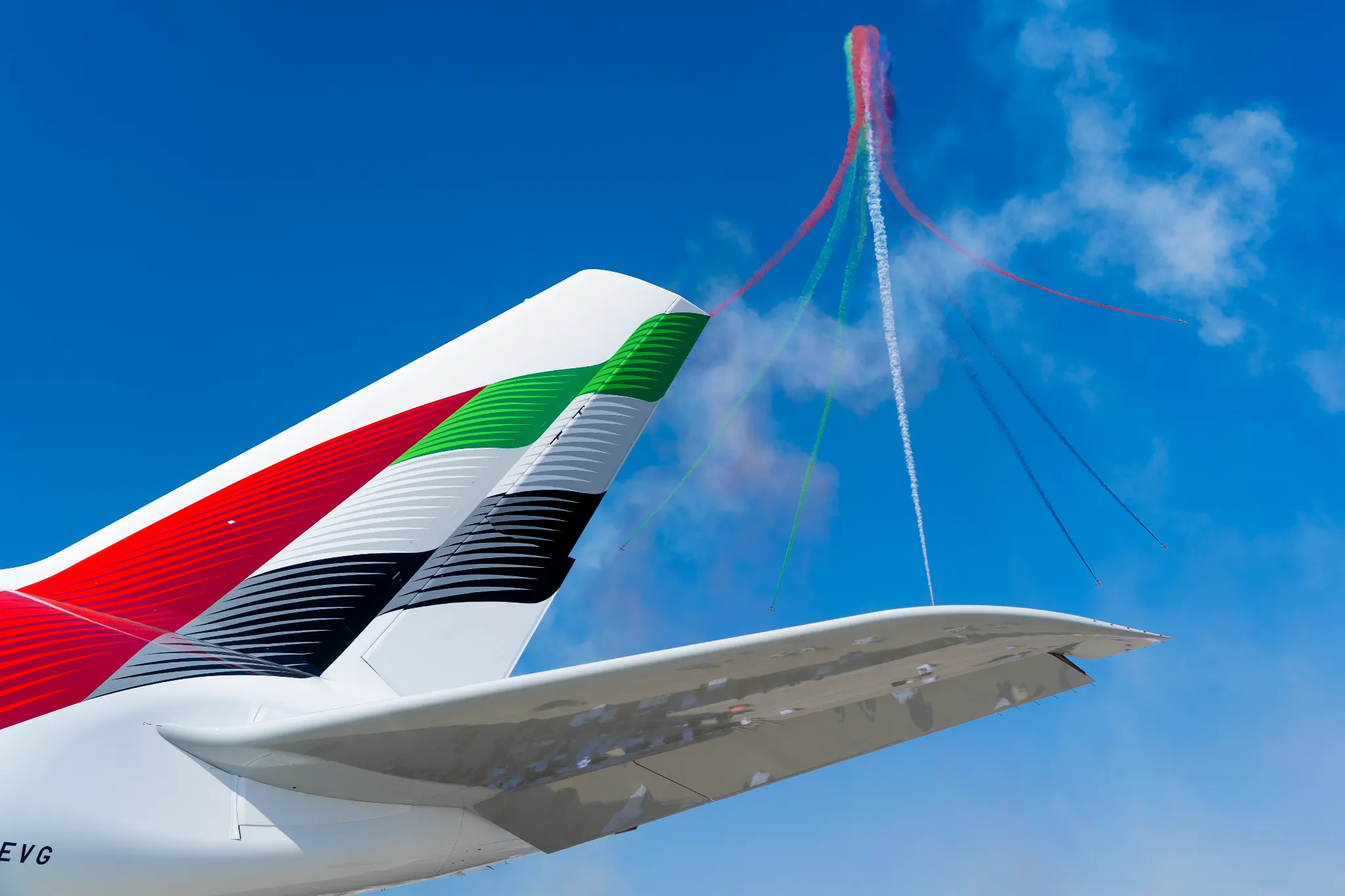
Ahead of the Paris Airshow, the prevailing view was that the aviation industry was growing tired. Tired of endless circles between policymakers, airlines, and OEMs. One year later, the feeling has turned into a dangerous certainty: the industry needs a proper shake-up, leaving behind years of - surely difficult - harvesting to focus on the big picture, one that has been missing for more than a decade.
This is unlikely to come to Farnborough 2026, Paris 2027, or Dubai 2027, but it is one that the industry desperately needs to avoid more decades of stagnation.
Featured image: Simone Chellini/Airways



.avif)