A Soviet-Era Antonov Into The Amazon: San José Del Guaviare To Mitú


.webp)
.webp)
.webp)
.webp)
SAN JOSÉ DEL GUAVIARE, Colombia — Deep in Colombia's southeastern Amazon, the department of Vaupés lies almost entirely beyond the country's road network. It is Colombia's least populous department, with about 44,000 residents, nearly three-quarters of whom live in the departmental capital, Mitú.
From there, Bogotá and the rest of Colombia feel distant not just geographically but logistically. No road links Mitú to Colombia's major population centers. Nearly everything and nearly everyone arrives by aircraft or riverboat.
A visit to Puvirnituq earlier this year first drew me into these connections. Back home, that interest turned into a fixation on the aircraft and operators that keep remote Indigenous communities supplied and connected. Eventually, a Facebook tangent led me to a Spanish-language trip report about Soviet-built airliners flying into settlements across the Colombian Amazon.
A few weeks later, I found myself in San José del Guaviare, a gateway town at the edge of Colombia's Amazon basin, preparing to fly south toward Mitú on an Antonov An-26, one of the aging, utilitarian aircraft that still links this remote corner of the Amazon to the rest of the country.
Amazon Air is a relatively new outfitter based in San José del Guaviare, launched in 2022 as part of the AerCaribe group. Its fleet includes at least three Soviet-built Antonov An-26 twin-engine turboprops that arrived in Colombia after long service careers elsewhere before joining the airline. From Jorge Enrique González Torres Airport (SJE/SKSJ), the airline links the town with Mitú (MVP/SKMU) and Miraflores (MFS), carrying a mix of passengers, household goods and essential cargo into communities otherwise accessible primarily by air or river.
Little information about Amazon Air's operation is available: tickets are not sold online, schedules are loosely defined, and even the airline's public footprint is minimal. Through some digging, we learned that passengers were expected to arrive at the company's office early on Saturday morning and purchase tickets in person.
On the morning of our departure, we arrived shortly before 6 a.m. and found a line already forming outside the office. The passengers ahead of us were traveling heavy: some bringing appliances and televisions, others hauling boxes of supplies, large quantities of groceries and alcohol for their hometowns.
The distinction between passenger service and freight operation was not especially meaningful here — the Antonov would carry whatever people needed to get home. After purchasing our tickets, we were told there was no specific departure time; the flight would leave once it was full, and we should wait in the terminal until we were called.
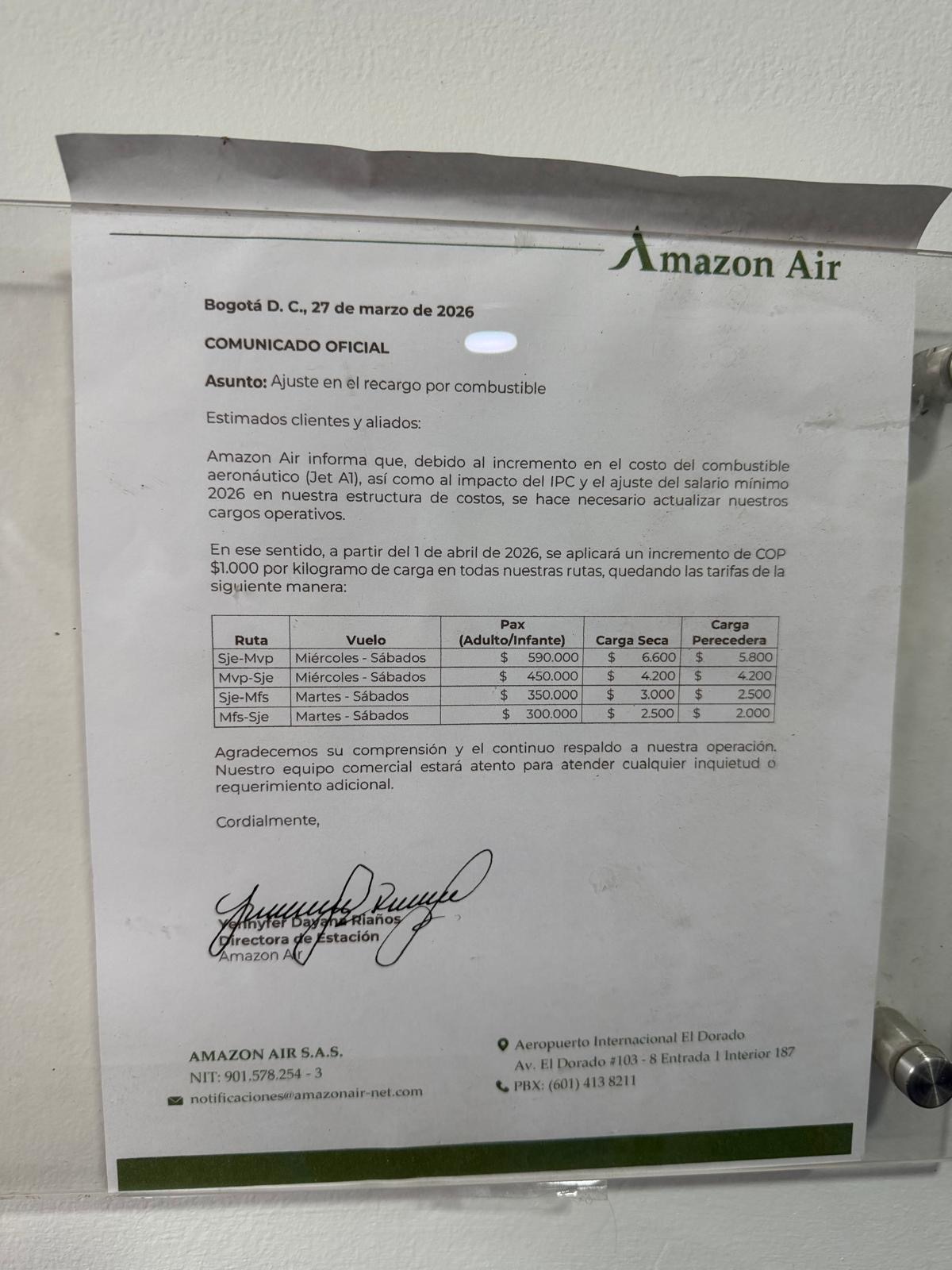
Amazon Air's scheduled operations appear relatively limited, based on information gathered locally:
- San José del Guaviare (SJE) – Mitú (MVP): up to three departures on Wednesdays and Saturdays
- San José del Guaviare (SJE) – Miraflores (MFS): one departure on Tuesdays and Saturdays
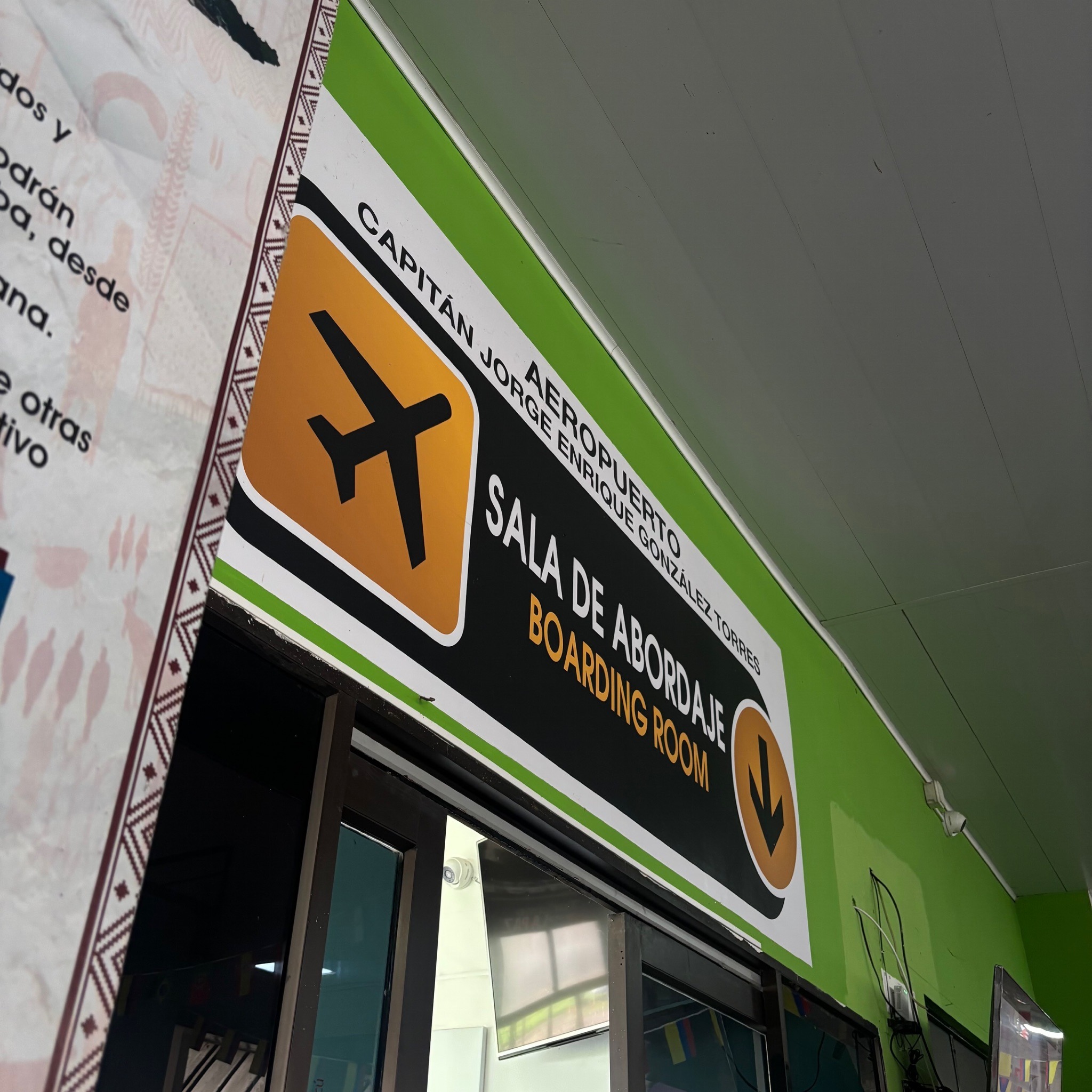
Jorge Enrique González Torres Airport is otherwise unremarkable by Colombian standards. Clic Air and the state-owned SATENA each operate several weekly flights to Bogotá, while Amazon Air's Antonovs handle the heavier, less predictable operations deeper into the Amazon. Inside the terminal, there was no departure board and no public-announcement system to follow.
We simply waited among the other passengers until shortly after 9:15 a.m., when an employee called our group to board. There were eight other passengers traveling to Mitú that morning. Once everyone had gathered in the boarding area, we walked across the ramp toward the aircraft, which sat on the stand with its cargo already being loaded.
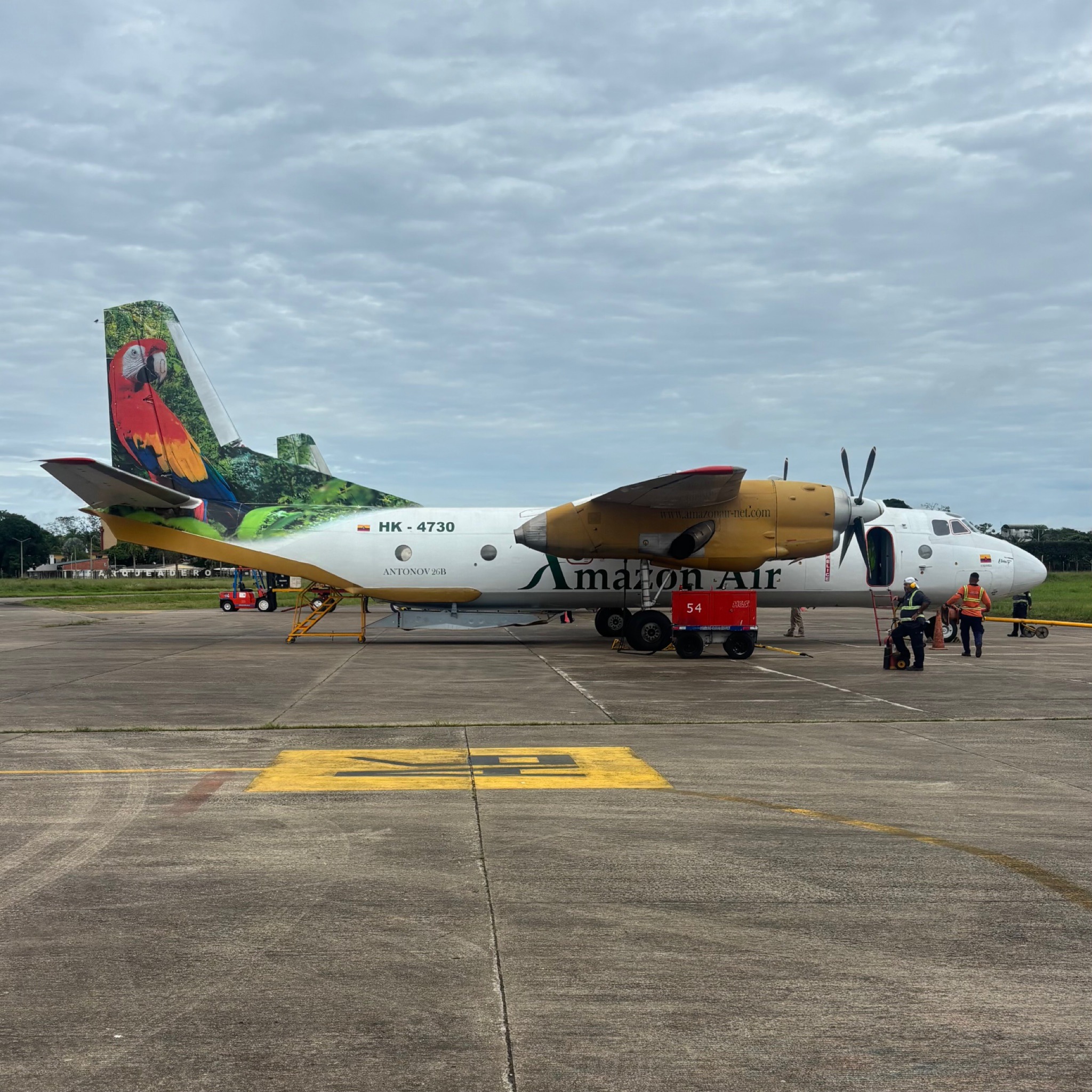
Our aircraft for the one-hour flight was HK-4730, a Soviet-built Antonov An-26B that flew for cargo operators across Europe before arriving in Colombia with AerCaribe and eventually joining Amazon Air's fleet. The same airframe, we later learned, had already survived one mishap at this very airport — a nose-gear incident at San José del Guaviare in August 2014 that was repaired rather than written off.
More than a decade on, it looked unremarkable on the ramp. The cabin was configured primarily for cargo, with narrow fold-down bench seats lining the sides of the fuselage which, depending on the day's load, could be lowered for passengers or folded away to make room for freight. There were no assigned seats; passengers simply sat as they boarded.
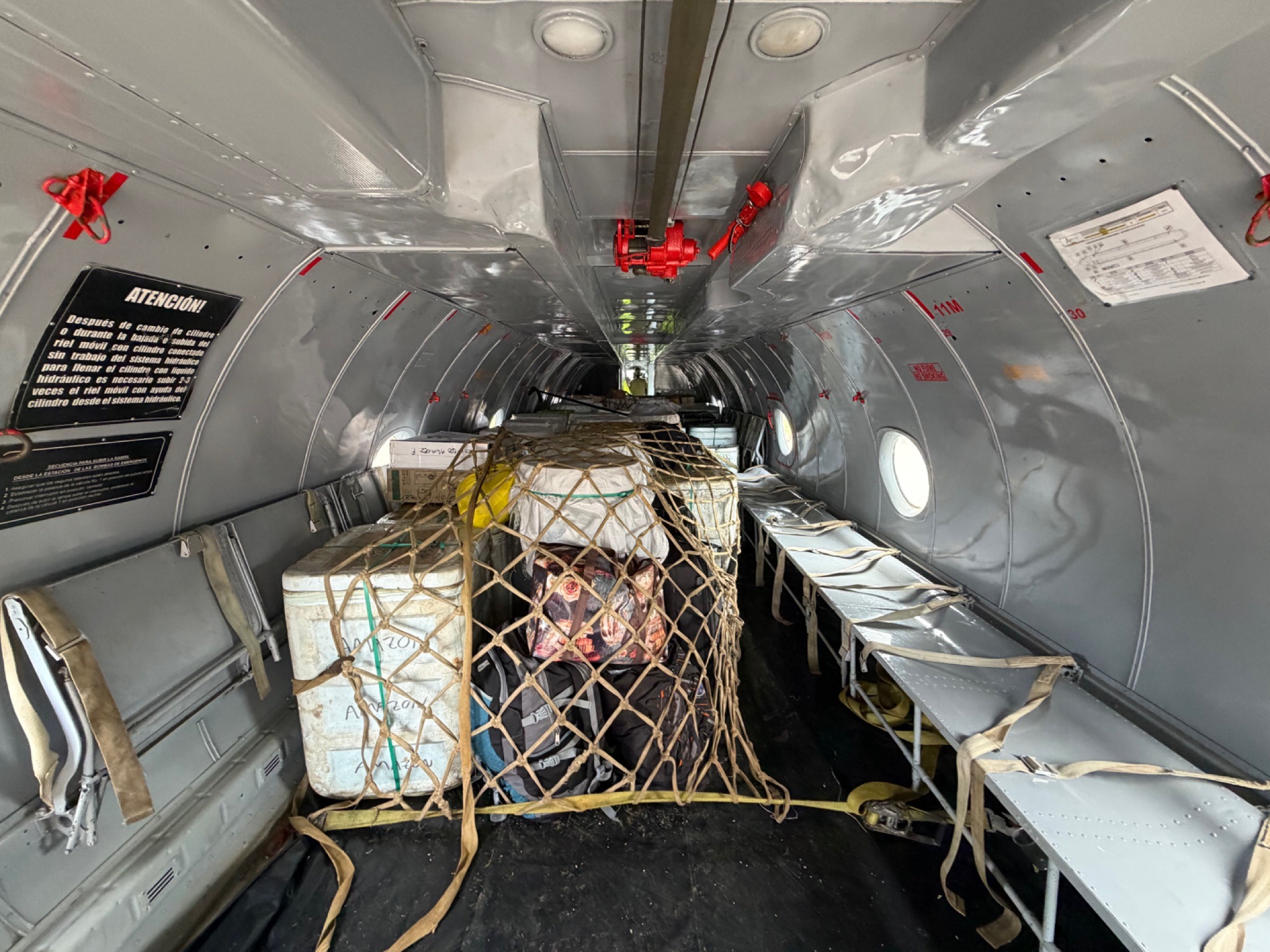
About 15 minutes later, the rear cargo ramp closed, the engines started, and we taxied toward the runway. That day's flight was packed with cargo, and the combination of the added weight and the An-26's modest takeoff performance meant the aircraft used nearly every inch of runway to get airborne, before climbing away from San José del Guaviare and turning south over the forest.
We leveled off at 11,000 feet, cruising above an almost unbroken canopy of green on the way to Mitú. Unfortunately, the Antonov was one of the few aircraft left in the world that hasn't been equipped with Starlink, which meant there was no inflight entertainment to report on. The flight instead offered something better suited to the route: a clear view of the Amazon stretching to the horizon, interrupted only occasionally by rivers cutting through the forest below.
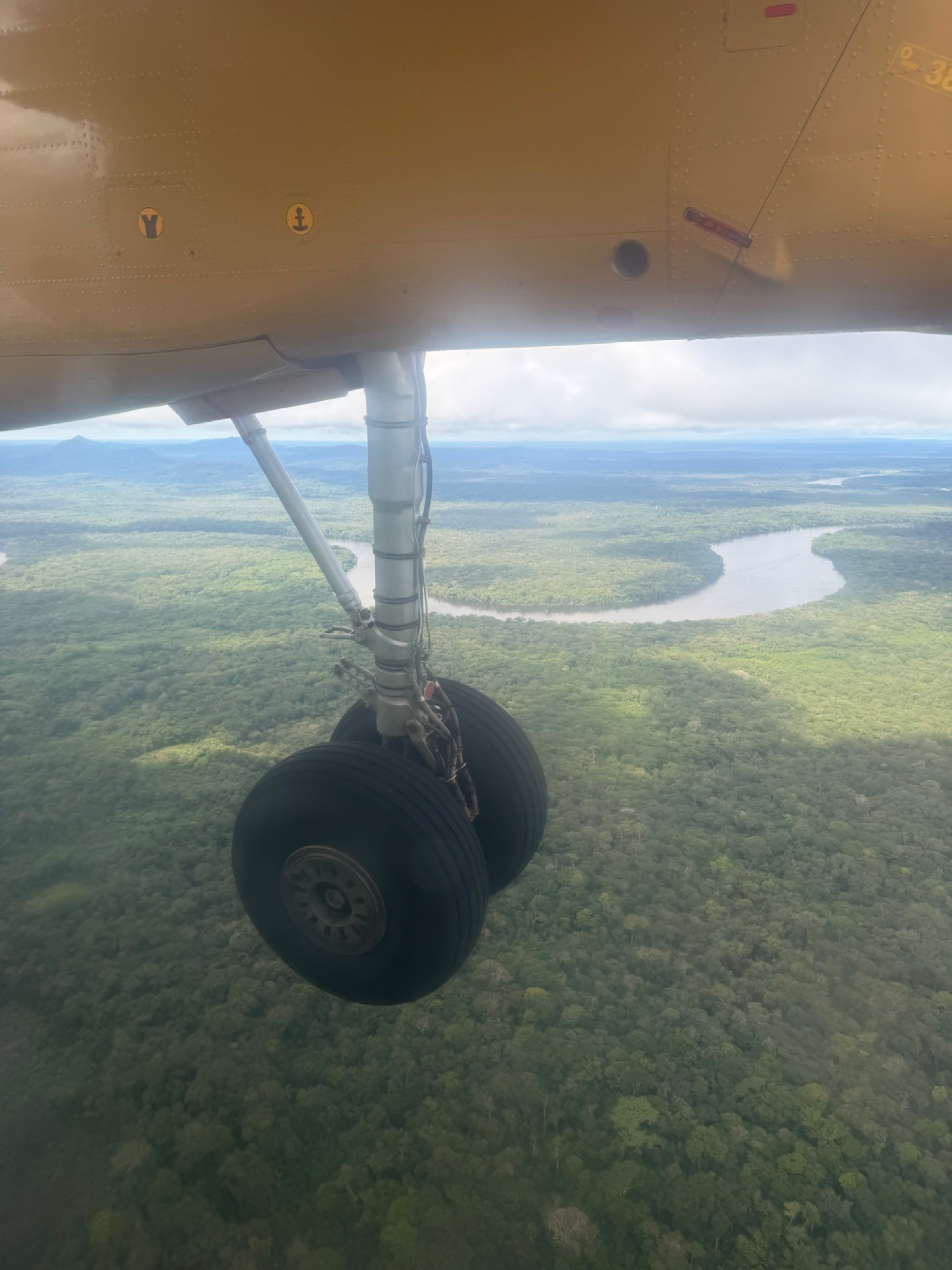
Much of the flight was spent talking with the other passengers. Their reasons for traveling were practical and familiar: medical treatment in San José del Guaviare, visits with relatives, and shopping trips for appliances or supplies that were difficult or impossible to obtain in Mitú. For them, the aging Antonov was not an avgeek's once-in-a-lifetime experience — it was simply Saturday transportation.
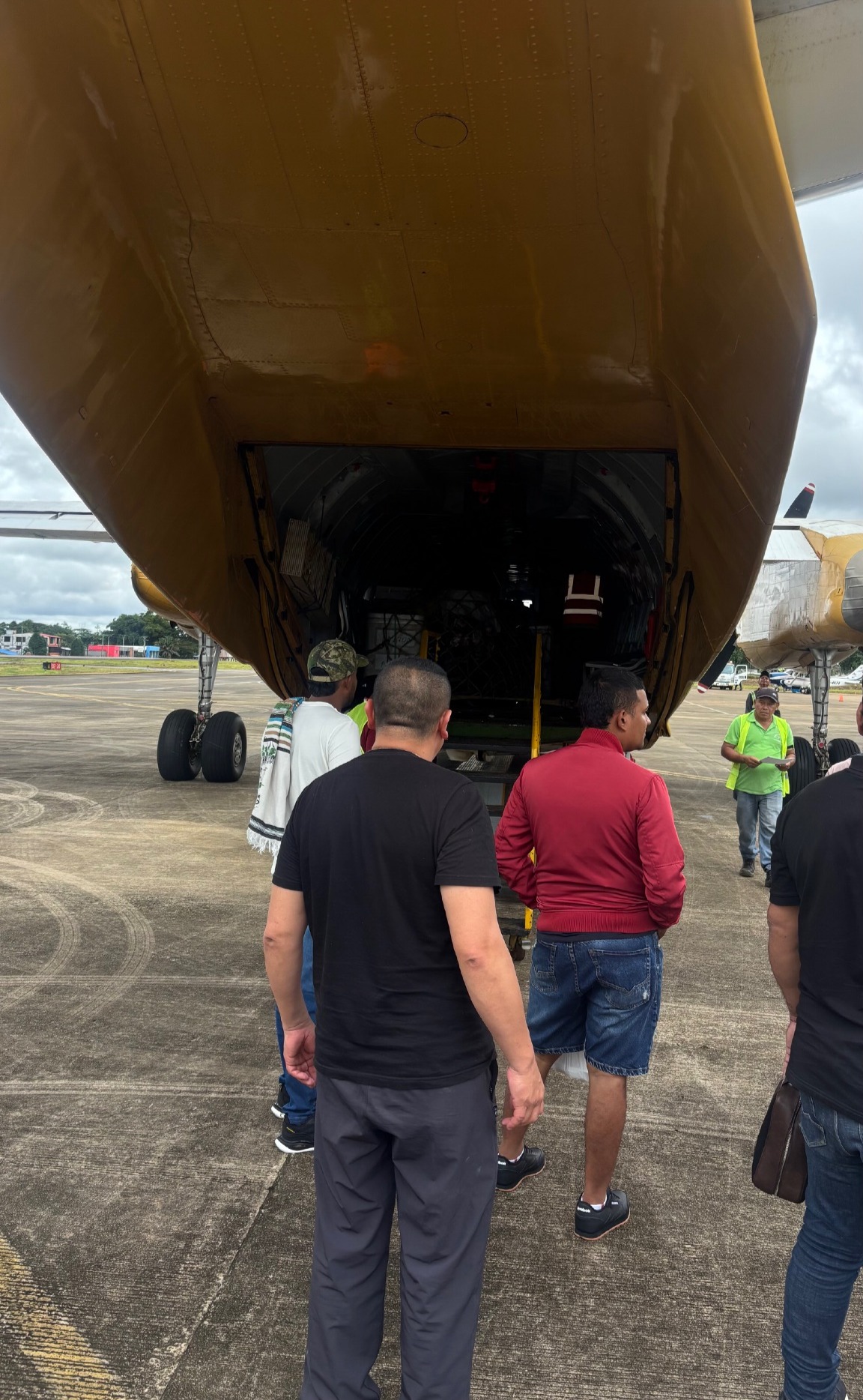
Just before 10:30 a.m. local time, we touched down in Mitú, ending the short but memorable flight. The Antonov typically returns to San José del Guaviare with far less onboard than it had brought in, while we continued onward to Bogotá on a SATENA flight.
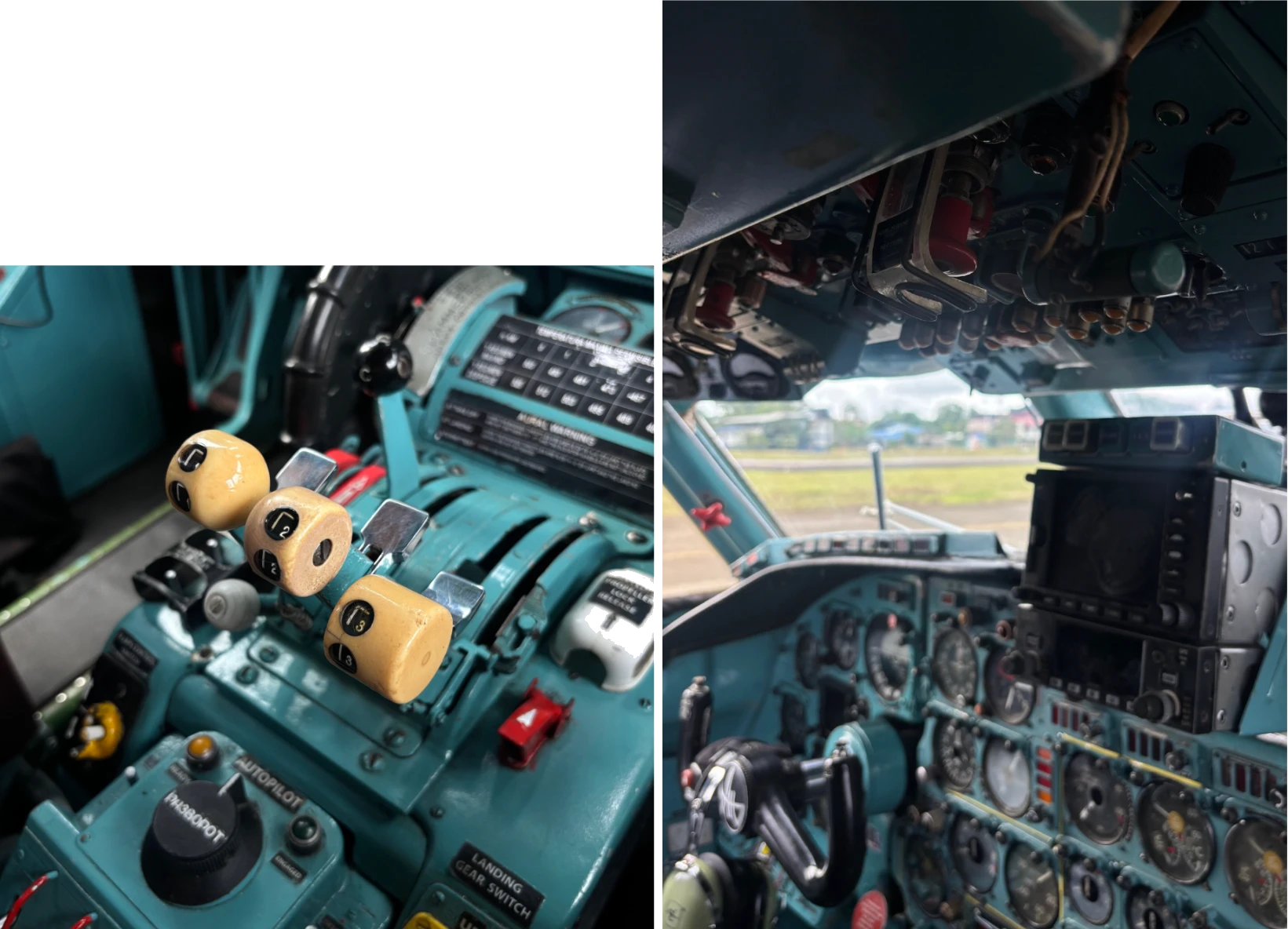
Before leaving the ramp, we said our final goodbyes to the flight crew, who invited us forward for one final look at the aircraft — a Soviet-era transport that remains very much at work in one of the world's most isolated regions.
A Different Kind Of Airline
In much of the world, an airline ticket represents one option among many. In places like Vaupés, it can represent access to medical care, family, food, building materials and the wider Colombian economy. Amazon Air's An-26s show every one of their decades in service, and none of it has dulled their usefulness.
For the passengers seated alongside cargo and household goods, the aging Antonov offered no nostalgia — only an essential connection, one that continues to hold a remote part of the Amazon within reach of the rest of the world.
Featured image: Roham Ramalingam/Airways



.avif)