

DUBAI — Emirates Group reported a 66% fall in half-year net profit to US$1.0bn (AED3.6bn) for April–September 2026. The group attributed the decline to regional disruption and higher fuel prices, while continuing investment in aircraft and cabin upgrades.
The November 5 results cover the first six months of its 2026–27 financial year. Profit before tax was US$1.1bn (AED4.1bn), and revenue fell 12% to US$18.0bn (AED66.2bn). Group earnings before interest, taxes, depreciation and amortization fell 41% to US$3.4bn (AED12.5bn).
The group figures include Emirates (EK) and airport services provider dnata. Emirates airline's pre-tax profit fell 68% to US$1.0bn (AED3.7bn), while dnata's fell 51% to US$112m (AED410m).
The half-year contraction follows the group's record annual pre-tax profit for 2025–26.
Fewer Passengers and Lower Seat Occupancy
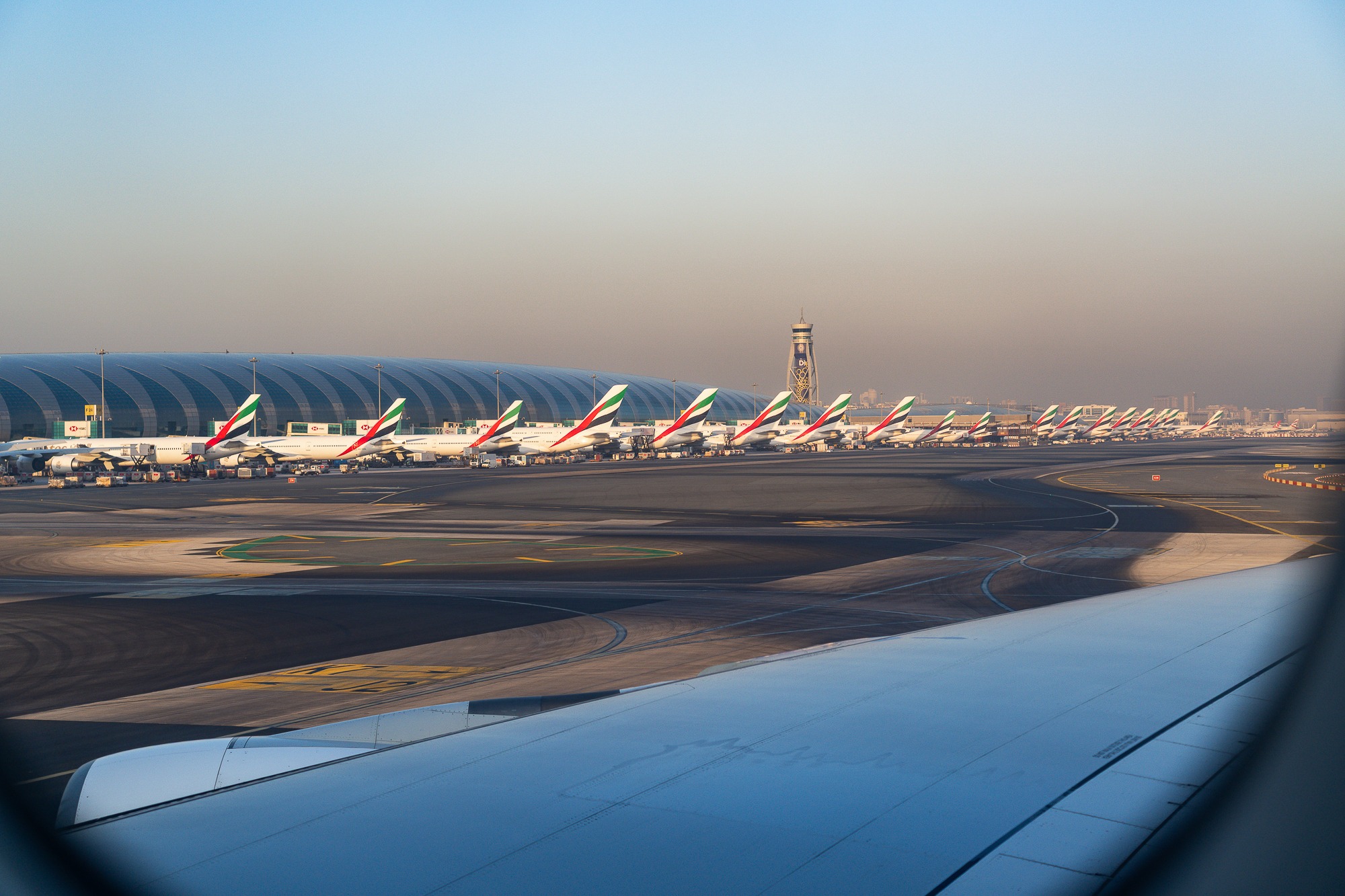
Emirates carried 21.8 million passengers between April 1 and September 30, down 22% from the same period in 2025. Passenger capacity, measured in available seat kilometers, fell 17%, while traffic measured in revenue passenger kilometers fell 25%.
The larger fall in traffic than capacity left more seats unfilled: passenger load factor dropped to 72.0% from 79.5%. The group said intermittent regional airspace restrictions and closures, alongside travel advisories, affected the airline's network and travel flows.
Fuel remained a substantial cost pressure despite the smaller flying program. Emirates said its fuel costs before hedging gains rose 60%, even though the volume of fuel uplifted fell 12%. Gains of AED7.1bn from its fuel-price risk management reduced the net fuel-cost increase to 13%.
Aircraft and Cabin Investment Continues
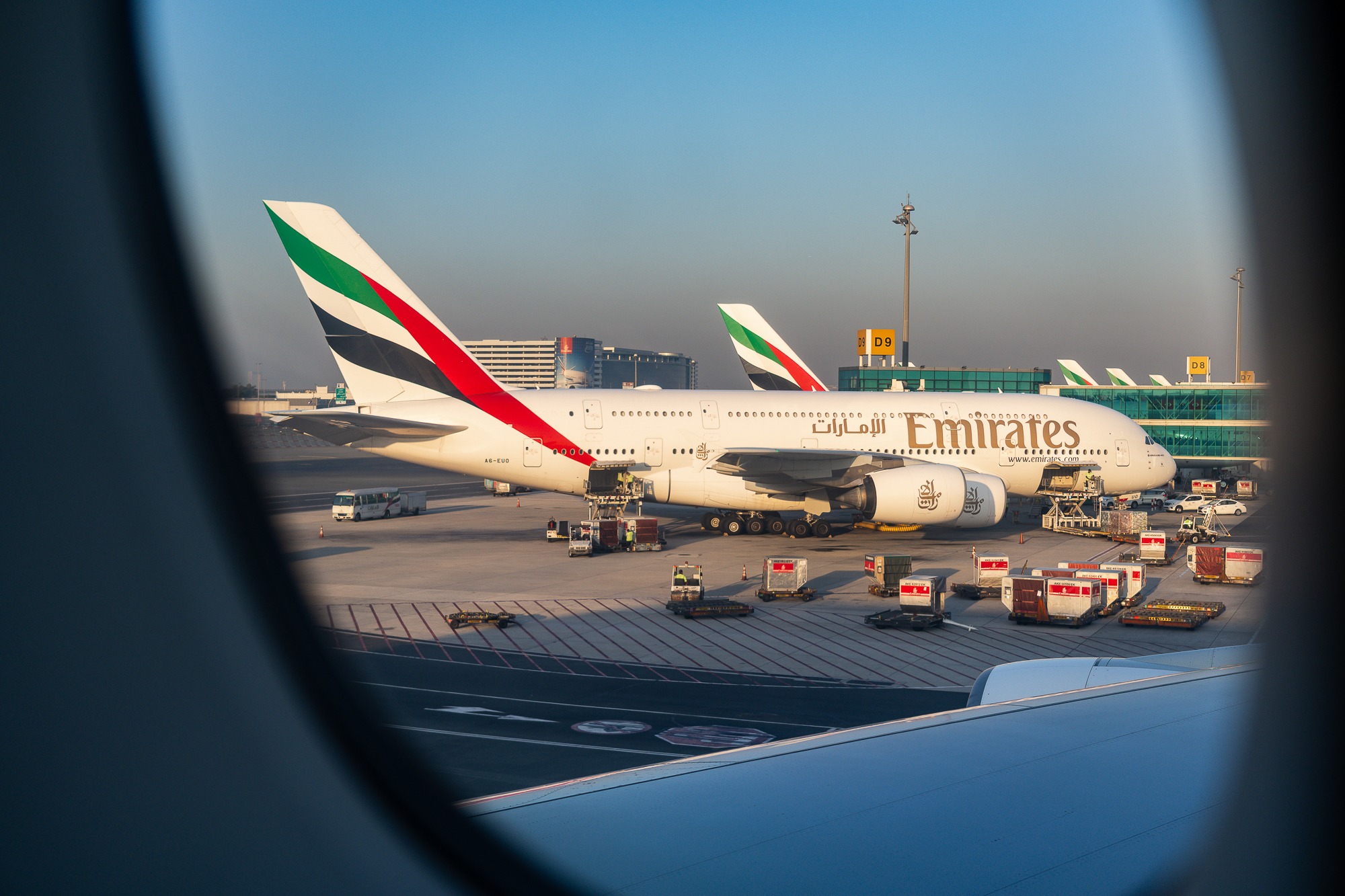
Between April and September, Emirates received nine Airbus A350s and completed full cabin refurbishments on 12 aircraft: nine A380s and three Boeing 777s. Its retrofit program represents a planned investment of more than US$7bn.
The airline installed Starlink on another 36 aircraft during the half year, bringing the equipped fleet to 57 as of September 30.
Chairman and Chief Executive Sheikh Ahmed bin Saeed Al Maktoum said the group entered the second half with “measured optimism,” while watching costs and geopolitical developments. Its cash position was US$14.7bn (AED54.1bn) at September 30, down from US$16.2bn (AED59.6bn) at March 31.
Featured image: Emirates