

.webp)
.webp)

.webp)
ATLANTA — Nearly everyone who has flown into Hartsfield-Jackson Atlanta International Airport (ATL) is familiar with the famous Fly Delta Jets sign seen near ATL’s international terminal. The sign is an Atlanta landmark, perched high above one of the city's most high-tech facilities – Delta TechOps, the facility that keeps “Atlanta’s Airline,” Delta Air Lines (DL), flying.
Airways received an invitation to tour the facility and talk with managers and staff about the mind-blowing work they do. Of course, we said yes and spent a day learning about the facility.
Over the next several days, Airways has a series of articles on the facility, taking a look at one of the largest engine test beds in the world, the engine shop (the only facility in North America authorized to do all work on all next-generation platforms), the hangars where technicians work on the aircraft structures themselves, and more.
But first, we’ll have an overview of this ginormous operation.
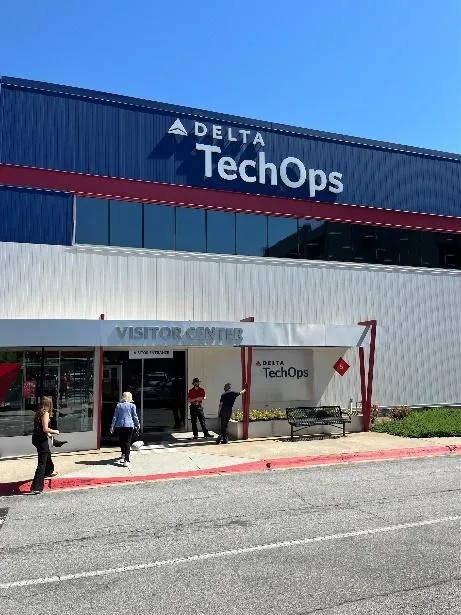
Delta TechOps is the second largest airline-owned MRO (Maintenance, Repair, Overhaul) facility in the world after Lufthansa Technik, which makes it also the largest such operation in North America. It employs approximately 7,000 aviation maintenance technicians (AMTs) out of about 13,000 total employees, with roughly 6,000 team members supporting other critical business functions.
A second large facility is located at Minneapolis-St. Paul (MSP) with maintenance operations at Detroit (DTW), Salt Lake City (SLC), New York City (JFK and LGA), Los Angeles (LAX), and Seattle (SEA). Delta TechOps has a maintenance footprint at 34 domestic airports in the US and 11 internationally.
The Atlanta facility is approximately 2.7 million square feet. That’s 62 acres or 47 football fields!
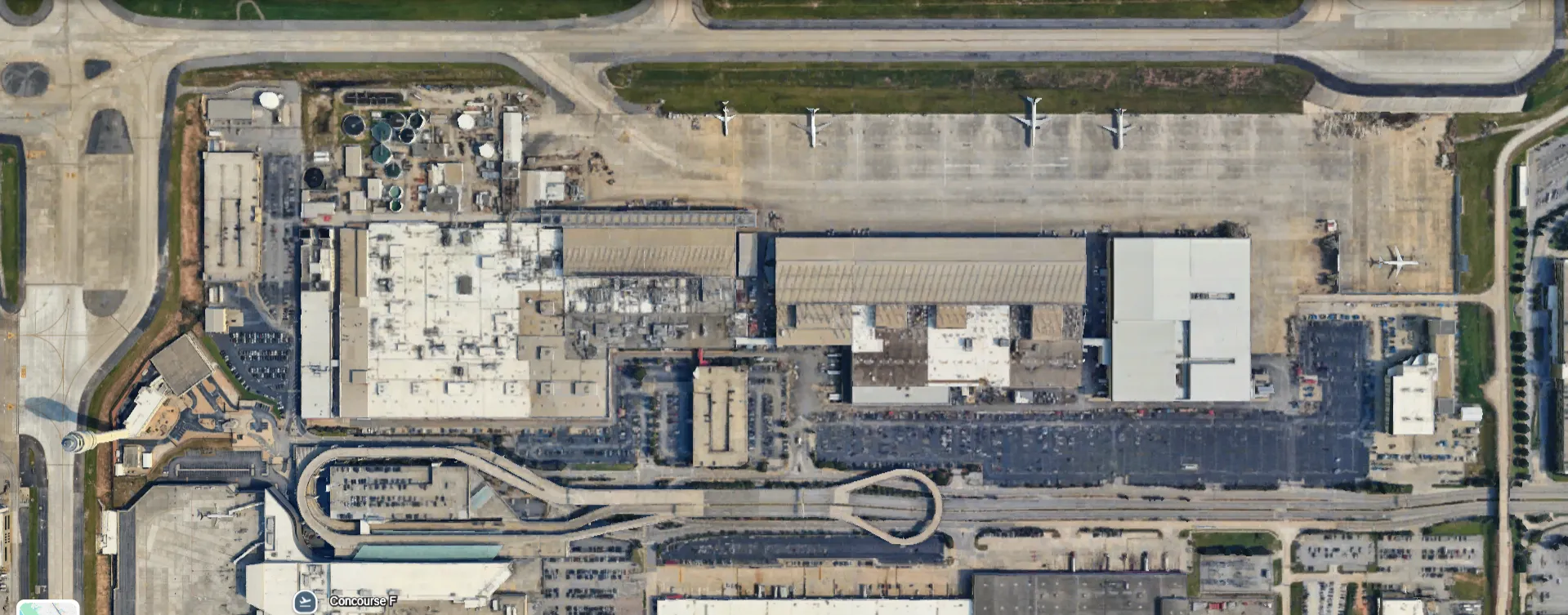
The majority of employees work at the Atlanta facility, which is on Maynard H. Jackson Boulevard, the road that accesses ATL’s international terminal, just under the famous sign.
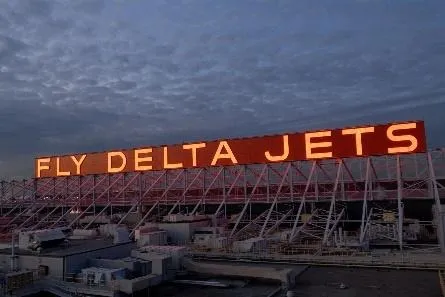
Revenue from third-party MRO business in 2025 was reported at US$822 million, with guidance for 2026 at approximately US$1.0 to US$1.2 billion.
Delta TechOps, in one form or another, has been maintaining aircraft for over 100 years. The original Technical Operations Center opened in Atlanta in 1960 and focused on maintaining only the Delta fleet. In 1983, the facility began its commercial MRO business, performing such work for other airlines. And in 2000, it started actively marketing and expanding its third-party business.
Today, Delta TechOps supports Delta Air Lines’ nearly 1,000 aircraft-strong fleet and more than 150 global partners. It’s truly a major player in keeping the world’s commercial fleet in the air.
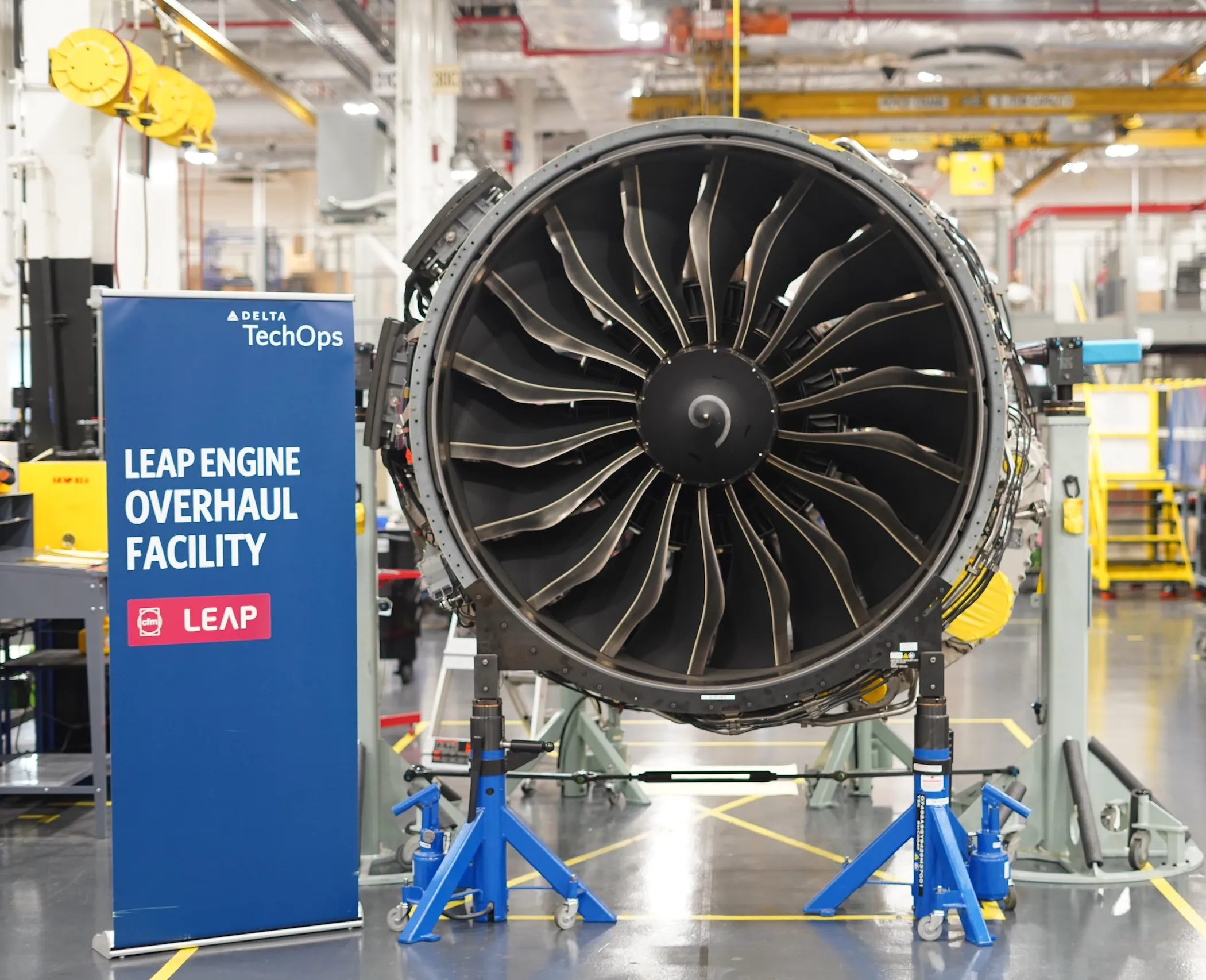
And its experience is deep. The shops there can work on nearly every commercial engine type flying today, including Pratt & Whitney, GE, and CFM legacy platforms. It is also the only North American MRO certified on all three major next-gen platforms: Rolls-Royce Trent 1000, 7000, and XWB; Pratt & Whitney GTF PW1100 and GTF 1500; and CFM LEAP-1B and LEAP-1A.
Believe me. It does A LOT of engine work. It seems as though there are engines everywhere at the facility!
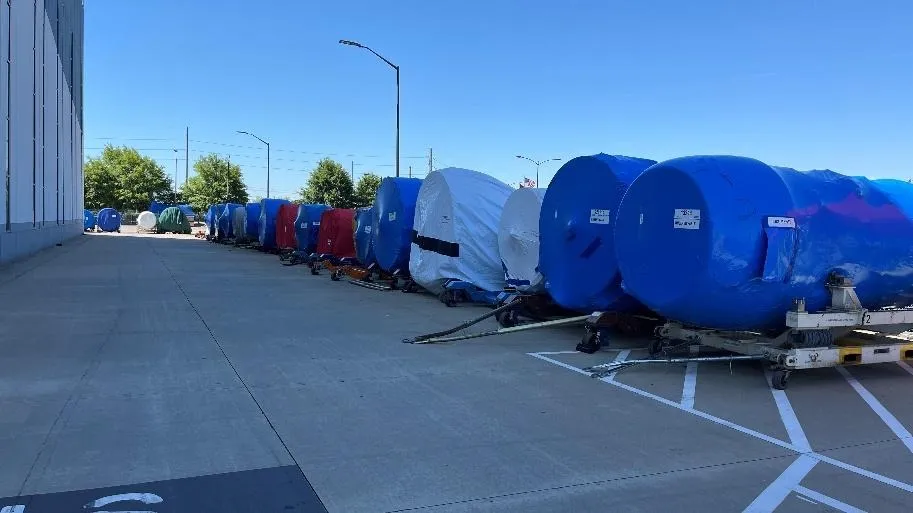
The facility has 25 in-house shops working on fuel & oil systems, hydraulics & pneumatics, composite structures, avionics, radios, flight instruments, and ATE systems – anything needed to keep your jet in the air.
Although it does not share details on its extensive government contracts, Tech Ops also provides defense-grade support and elite maintenance for Department of Defense platforms, including the C-40A, P-8A, C-17, C-5M, C-32, and KC-46.
Up next will be a look at one of the largest engine test chambers in the world – capable of handling up to 150,000 pounds of thrust!
Stay tuned!
Featured image: Delta TechOps



.avif)