Pratt & Whitney Wins British Airways A320neo Engine Deal, Breaking CFM's Hold


.webp)

FARNBOROUGH – British Airways (BA) has selected Pratt & Whitney GTF engines to power up to 63 Airbus A320neo family aircraft, ending decades of exclusive reliance on CFM International engines across its narrowbody fleet.
Pratt & Whitney, an RTX business, announced the order on Monday during the first trading day of the Farnborough International Airshow. The deal covers 33 firm aircraft and 30 options, with deliveries scheduled to begin in 2027. Pratt & Whitney will also provide maintenance for the engines through a 12-year service agreement, the company said.
“Today marks a pivotal moment and a strong vote of confidence in the GTF engine as the UK's flagship carrier, British Airways, becomes the newest GTF customer,” said Rick Deurloo, president of Commercial Engines at Pratt & Whitney in a mailed statement.
Pratt & Whitney Returns to British Airways’ Short‑Haul Fleet
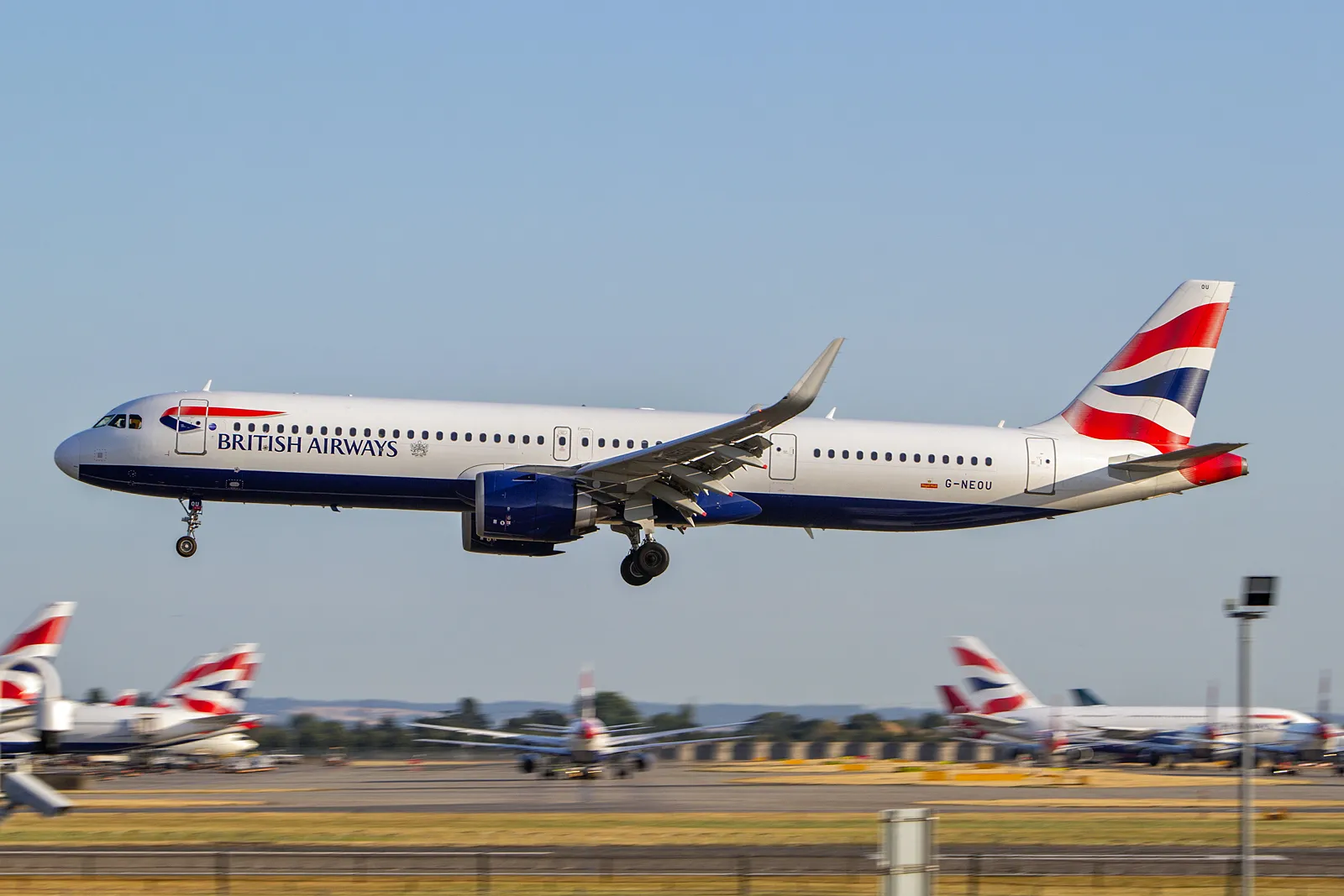
British Airways’ mainline modern narrowbody fleet is now dominated by CFM‑powered aircraft. According to the carrier’s published data, 34 A320neos and 20 A321neos are using CFM LEAP‑1A powerplants.
Alongside its CFM‑powered jets, the airline also operates 94 aircraft fitted with the IAE V2500. These comprise 23 A319‑100s, 60 A320‑200s, and 11 A321-200s. The IAE V2500 is produced by International Aero Engines, a consortium formed by Pratt & Whitney, Japanese Aero Engines Corporation, and MTU Aero Engines AG. Pratt & Whitney has not appeared on British Airways’ short‑haul fleet since 2001, when the airline retired its final Boeing 737‑200.
That changes with this order. Airbus offers airlines a choice of two engines for the A320neo family, the CFM LEAP 1A or the Pratt & Whitney PW1100G GTF, now evolving into the newer GTF Advantage variant. British Airways had consistently chosen CFM. The switch, even for a portion of future deliveries, gives Pratt & Whitney its first foothold at one of Europe's largest network carriers.
Pratt & Whitney claims that more than 2,800 GTF powered aircraft are in service with over 90 customers worldwide, with an order backlog exceeding 8,000 engines.
Rebuilding confidence
The order also carries symbolic weight for Pratt & Whitney, which spent the past several years working through a powder metal contamination issue that led to accelerated inspections and, in some cases, extended groundings across its PW1100G fleet at multiple airlines worldwide. These engine recalls and inspections were a proximate cause of the collapse of US-based ultra-low-cost carrier Spirit Airlines earlier this year.
The company has since introduced the GTF Advantage, an upgraded version of the engine certified by the Federal Aviation Administration in February 2025 and validated by the European Union Aviation Safety Agency in October 2025. Pratt & Whitney says the new engine delivers 4 to 8% more takeoff thrust and up to double the time on wing compared with earlier GTF models, along with improved fuel efficiency and range.
Why British Airways may be diversifying
For British Airways, splitting future orders between two engine manufacturers is a familiar strategy among large airlines, even if it marks a departure from the carrier's own recent history. An all-CFM narrowbody fleet exposed the airline to a single supplier's production schedules, pricing and any future airworthiness directives affecting that engine family. Adding a second engine type spreads that risk.
The tradeoff is added complexity. Operating two engine families on the same aircraft type typically means separate spare parts inventories, maintenance contracts, and technician training programs. Airlines that run mixed-engine fleets generally judge that the cost is worth paying in exchange for leverage over pricing and reduced exposure to any one manufacturer's problems.
Pratt & Whitney framed the agreement as support for British Airways' broader growth plans. The service agreement, spanning 12 years, adds long-term maintenance revenue on top of the initial engine sale, a structure common across the industry where service contracts often generate more revenue over an engine's life than the original purchase.
CFM's position remains largely intact
CFM International, a joint venture between GE Aerospace and Safran, did not immediately respond to the announcement. The company remains the dominant engine supplier to British Airways by a wide margin, and the new Pratt & Whitney order affects only a portion of future deliveries, not the existing fleet.
Industry-wide, the A320neo family is split almost evenly between the two engine options, and manufacturers routinely compete for individual customer orders even where one supplier holds a long-standing advantage. Monday's announcement is best understood as Pratt & Whitney gaining a toehold at a carrier it had not previously supplied, rather than a wholesale shift away from CFM.
What comes next
Deliveries of the new GTF powered aircraft are expected to begin in 2027. British Airways has not detailed how the 33 firm aircraft will divide between A320neo and A321neo variants, nor how the new jets will be phased into routes currently flown by its existing single-aisle fleet.
For Pratt & Whitney, the agreement adds a marquee name to its GTF customer roster at a moment when the company is working to demonstrate that its geared turbofan program has moved past its most turbulent period. For British Airways, the order reflects a broader industry pattern of airlines hedging engine risk across two suppliers rather than one, even at the cost of added operational complexity.
Featured/All images: Roberto Leiro/Airways



.avif)