ANCEN Report: Major Unknowns in Aviation’s Non-CO₂ Climate Impact


.webp)
.webp)
.webp)
.webp)
COLOGNE — A new report from the Aviation Non-CO₂ Expert Network (ANCEN) is warning that while aviation’s non-CO₂ effects account for a large share of the sector’s climate impact, the uncertainty range remains far higher than for CO₂—a problem that directly affects how regulators and airlines evaluate mitigation options beyond carbon.
Published by ANCEN Task Group 4, “Gaps and uncertainties in aviation non-CO₂ effects on climate” synthesizes the current scientific understanding and pinpoints priority research needs to support policymakers, regulators, and industry as they build credible pathways to reduce non-CO₂ warming.
The report attributes much of the uncertainty to incomplete knowledge of the background atmosphere, limited observations, gaps in process understanding, and the way key processes are represented in climate models.
Four focus areas with the biggest uncertainty signals
ANCEN highlights uncertainties across four major non-CO₂ categories:
- Contrails and contrail-cirrus (formation, persistence, and net warming impacts)
- Indirect aerosol effects (how emissions change clouds and radiative forcing)
- NOx-driven impacts on atmospheric composition (ozone formation and methane effects, varying by location and altitude)
- Smaller direct forcing components including sulphur, soot, and water vapor
The message: the non-CO₂ problem is real and material, but the industry still lacks enough high-confidence data to treat mitigation choices as plug-and-play everywhere.

Why this matters right now
Europe is moving toward more formal accounting and decision frameworks for non-CO₂ impacts, which makes the “uncertainty stack” increasingly consequential for airline operations and compliance.
Sector roadmaps have repeatedly emphasized that non-CO₂ effects can be comparable to—or even larger than—CO₂ impacts, while remaining harder to quantify consistently across routes and weather conditions. Read the Airports Council International Europe roadmap PDF here.
Beyond the SAF-only debate
Airways has previously argued that a 2050 net-zero pathway built primarily on SAF scale-up carries major execution risk. The ANCEN report adds a second pressure point: even if CO₂ pathways improve, non-CO₂ impacts (especially contrails and NOx) remain a large, uncertain variable—making the case for a broader mitigation toolkit that includes operations, routing, and better atmospheric measurement.
ANCEN said this Task Group 4 report will also feed upcoming work on evaluating mitigation pathways and separating uncertainties inherent to the underlying science from those introduced by specific strategies.
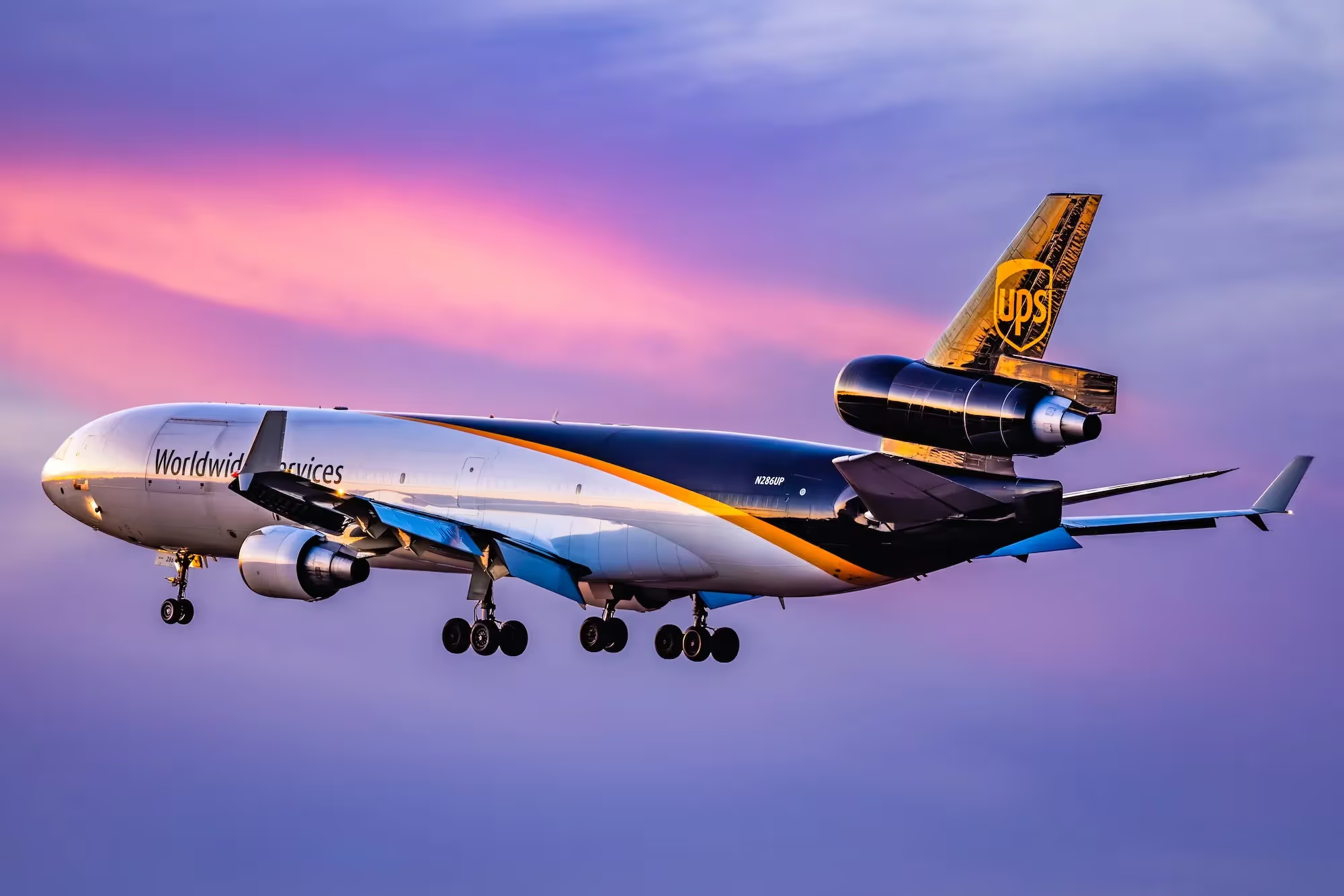
Featured image: Lorenzo Giacobbo/Airways



.avif)