Op-Ed: Let Spirit Fail the Right Way — Through Bankruptcy, Not Gov Ownership


.webp)
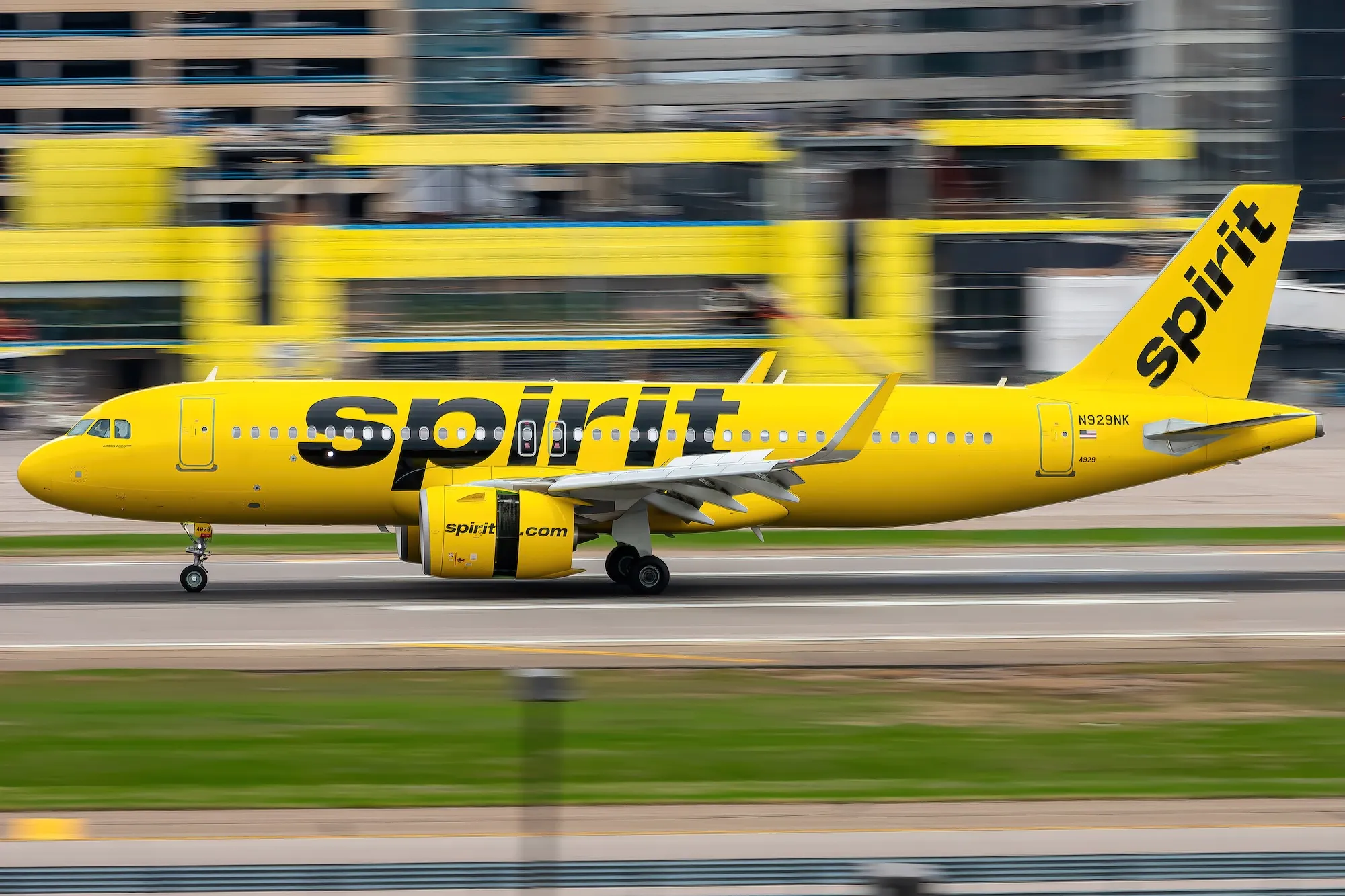
DALLAS — The possible rescue of Spirit Airlines (NK) by the U.S. government comes with one caveat that makes it sound less ideological than a classic nationalization: President Donald Trump has said the government could buy the airline at the “right price” and sell it later when oil prices fall.
That sounds less like permanent state ownership and more like distressed investing. The problem remains: the U.S. government should not own airlines.
Last week, The Air Current reported that NK had asked the Trump Administration for millions in emergency funding to offset rising fuel costs. Some NK creditors are questioning the carrier’s viability and are concerned it may be unable to pay an upcoming multimillion-dollar debt payment. If unable, NK may cease operations almost immediately.
This week, Reuters reported that the administration has discussed invoking the Defense Production Act as a possible legal basis to support NK’s bankruptcy restructuring. The reported package includes roughly US$500 million in financing and warrants that could give the federal government up to 90% of NK’s equity. The airline, meanwhile, is trying to exit its second Chapter 11 restructuring since late 2024 while facing a severe cash crunch.
The White House argument focuses on preserving jobs, passengers, and competition. But using emergency industrial powers to rescue a commercial airline stretches the Defense Production Act’s logic.
Title III authority is intended to expand or preserve industrial resources, critical technologies, and domestic industrial base capabilities essential to national defense. A commercial ultra-low-cost carrier (ULCC) is not a missile supplier, shipyard, vaccine plant, or critical minerals processor.
Bankruptcy is not the enemy of aviation
The stronger capitalist answer is simpler: let NK go through bankruptcy.
Not because the ailing ULCC is unimportant, but because aviation requires market discipline. Aircraft, gates, slots, crews, airport facilities, and routes do not vanish when a balance sheet fails. Those assets can be reorganized, sold, leased, absorbed by competitors, or relaunched under better capital and management.
Scott Galloway has made this argument sharply. In a 2021 discussion of airline bailouts, he said, “Airlines would still be flying if they’d all gone bankrupt.” His broader point was that bankruptcy wipes out shareholders, pressures management, and allows creditors or new owners to rebuild the business without asking taxpayers to preserve a failed capital structure.
That is not anti-airline. It is pro-market.
Galloway put the principle even more directly in No Mercy / No Malice: “The rescue package should protect people, not businesses.” That should be the standard here. If Washington wants to help the ULCC’s workers, it can support wages, benefits, retraining, health coverage, or transition assistance. It does not need to become NK’s owner.
Saving Spirit is not the same as saving competition
The usual bailout argument is that NK keeps fares low. That is partly true. ULCCs discipline the market. NK’s presence on a route puts pressure on legacy carriers and larger low-cost competitors.
But that does not mean NK’s corporate shell deserves federal protection.
If the low-cost model is viable, capital will find it. If NK’s aircraft, slots, and routes are valuable, buyers will emerge. If the model is not viable under current fuel prices, labor costs, debt, and consumer preferences, taxpayer ownership will not fix it. It will operate at full capacity without preserving failed equity. That is exactly what bankruptcy is for.
In a capitalist system, failure is not automatically a public emergency. Companies have cycles. Some grow, consolidate, shrink, or disappear. Their useful parts can serve the system better in the hands of competitors, creditors, lessors, or new investors.
That is not destruction for its own sake. It is creative destruction.
The problem is not airlines. The problem is political aviation finance
Airlines matter. That is exactly why they should not become political assets.
This is not to say that aviation does not need government. It needs safety regulation, antitrust enforcement, airport investment, air traffic modernization, consumer protection, and fair competition rules. But these are not the same as ownership.
Once the government owns an airline, every commercial decision becomes political. Which routes stay? Which cities lose service? Which labor contracts change? Which aircraft are parked? Which creditors are protected? Which competitors are disadvantaged by a government-backed rival?
A federally backed NK would not compete like a normal private company. It would enter the market with implied protection from the U.S. government. That distorts competition rather than protects it.
When state-owned airlines become political assets
Airline history is full of warnings.
Alitalia (AZ) is one of the clearest examples. Italy’s former flag carrier spent years under financial pressure, state support, failed rescue attempts, and political intervention before finally ceasing operations in 2021. The European Commission concluded that €900 million in Italian state loans to Alitalia were illegal under EU state-aid rules. ITA Airways was then allowed to launch as a slimmer, separate state-owned successor.
That is the pattern to avoid: years of public support, complex restructuring, then a new state-backed airline trying to escape the old one’s failures.
Cyprus Airways (CY) offers another warning. The carrier shut down in 2015 after the European Commission ordered it to repay more than €65 million in illegal state aid. The Cypriot government owned about 93% of the airline, and the ruling effectively left the already-troubled carrier unable to continue.
Air Malta (KM) followed a similar arc. After years of losses and restructuring, the carrier ceased operations in 2024 and was replaced by KM Malta Airlines. The old carrier had been weakened by government interference, a bloated workforce, and unsustainable costs; the replacement airline launched with eight leased Airbus A320 jets and fewer than 400 employees, compared with KM’s roughly 1,400.
Air India (AI) is another cautionary case. The Indian government sold the airline back to the Tata Group after years of losses and failed privatization attempts. A Reuters report noted that AI had cost taxpayers an average of nearly US$3 million per day for the previous decade before Tata regained control in a US$2.4 billion equity-and-debt deal.
The names change. The pattern does not.
Viasa and Conviasa show the Venezuelan version of the same problem
Viasa (VA), Venezuela’s former international flag carrier, is especially relevant to readers of aviation history and to this author. It was once one of Latin America’s recognizable international airlines, but it deteriorated under state control, privatization turmoil, labor conflict, and financial losses.
By early 1997, VA had ceased operations amid mounting losses and a lack of cash. FlightGlobal recalls that shareholders agreed to an “amicable” liquidation after efforts to avoid outright bankruptcy collapsed. The same report noted that Iberia (IB), then the major shareholder, held 45% of the company and that VA’s fleet would be transferred to IB as part of the restructuring arrangement.
The successor logic did not solve the deeper problem. Venezuela later launched Conviasa (V0) as a new state-owned flag carrier. But V0 became a state asset tied to the country’s political crisis. In 2020, the U.S. Treasury sanctioned V0, accusing the Maduro regime of using the state-owned airline to move officials around the world and of abusing state-owned assets to advance political activities.
That is why the Venezuelan case belongs in this post. It shows the danger of treating an airline not just as a transportation company but as a sovereign instrument.
Politics enters the cockpit
The recurring problem with government-owned airlines is not that governments are incapable of managing anything. It is that airlines are uniquely exposed to political pressure.
Routes become political promises. Staffing becomes patronage. Fleet decisions become national prestige projects. Losses become permanent because no elected official wants to be blamed for cutting service, closing a base, reducing jobs, or shrinking a national symbol.
Spirit is not a flag carrier. It is a private U.S. airline in a deregulated market. That distinction matters. The U.S. has a bankruptcy system precisely because failure is not supposed to be fatal to the economy.
Bankruptcy is not a moral condemnation. It is a mechanism for sorting assets, liabilities, claims, and ownership when a company’s old structure no longer works.
.webp)
The “temporary ownership” argument is seductive—and dangerous
The argument for a temporary government stake sounds practical: buy cheap, save jobs, sell high.
Trump’s own framing leans into that logic. He has said NK has “good aircraft and good assets” and that the government could sell the airline for a profit once oil prices fall. I can see where the President is coming from—he comes from the world of business.
But governments do not behave like private investors. They face political pressure, not just financial discipline. A private investor can cut routes, renegotiate contracts, sell assets, shrink the business, or walk away. A government owner inherits a political duty to avoid visible pain.
That is where temporary ownership becomes dangerous. Temporary rescues have a way of becoming open-ended commitments, especially in aviation, where jobs, connectivity, national pride, and consumer fares can all be used as arguments for continued support.
Let the useful parts keep flying
If NK can survive, it should survive with private capital. If it cannot, its assets should be reallocated to airlines and investors who can use them productively.
That may mean Frontier Airlines (F9), JetBlue (B6), Allegiant Air (G4), legacy carriers, aircraft lessors, creditors, or new investors. It may mean a smaller NK. It may mean liquidation.
In capitalism, that is not scandalous. That is how capacity is recycled.
The public does not need to preserve every corporate entity for aviation to function. It needs safe aircraft, competitive markets, fair rules, airport access, and workers who are not abandoned. Those goals can be served without turning a bankrupt airline into a government-owned airline.
The bottom line
While there have been major US government bailouts of the airline industry, a direct, full government takeover and operation of a single major carrier has not historically occurred. The NK case should not become a precedent.
If one airline can claim national-defense logic because it has aircraft, workers, passengers, and airport access, every distressed carrier can make the same argument.
The result would be neither capitalism nor coherent industrial policy. It would be political aviation finance.
Let NK’s useful parts keep flying. Let its workers be protected directly. Let creditors and shareholders absorb the risk they accepted. But do not turn a bankrupt airline into a government-owned airline and call it market discipline.
Bankruptcy is not the enemy of capitalism. It is one of capitalism’s failsafes: the mechanism that turns failure into reallocation, not collapse.
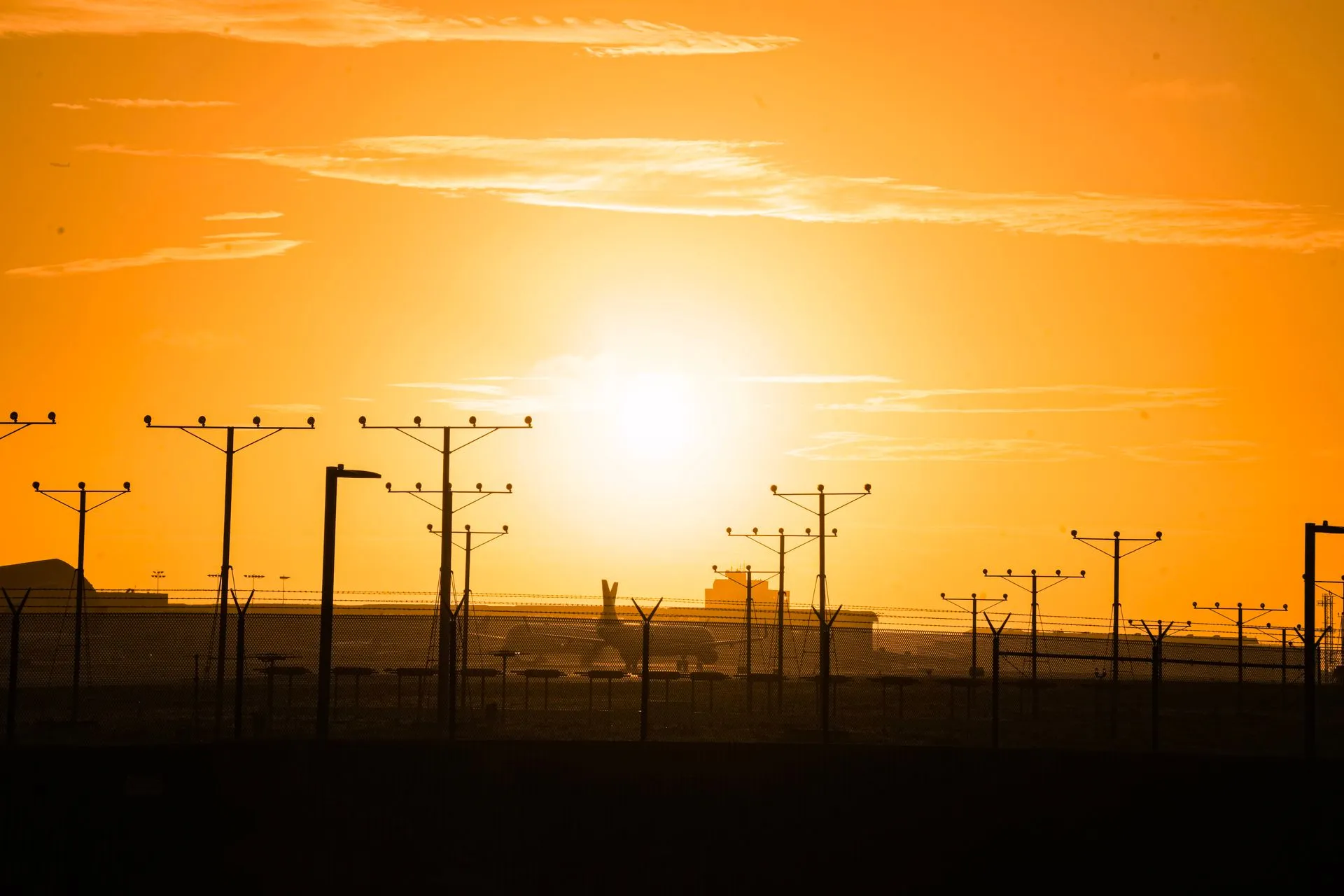
Featured image: Alexander Schraff/Airways


.webp)