

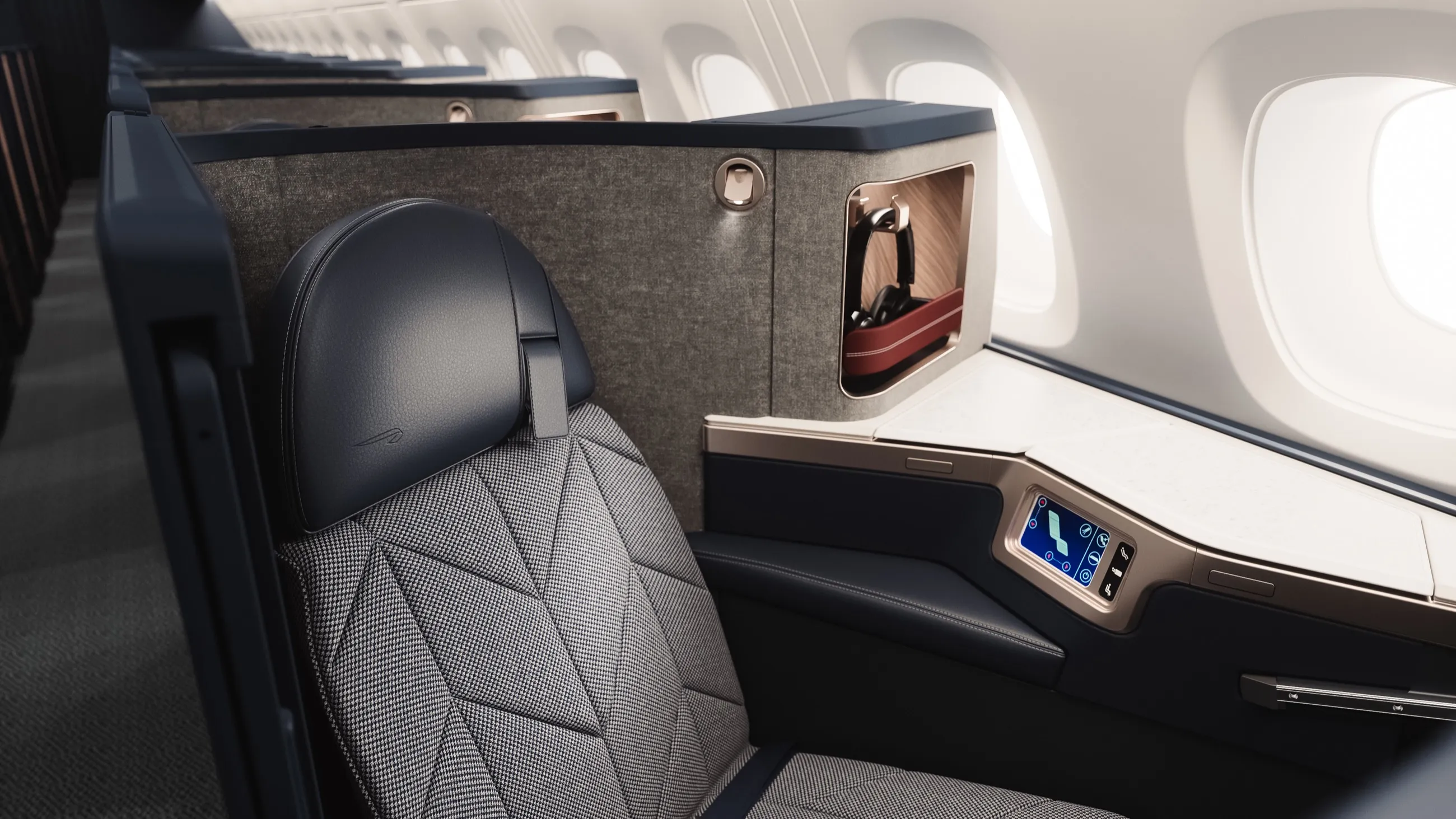
RIYADH — Boeing has delivered the first two 787 Dreamliner aircraft to Riyadh Air (RX), marking a major fleet milestone for Saudi Arabia’s new national carrier as it prepares to expand commercial operations from Riyadh King Khalid International Airport (RUH).
The two aircraft arrived in Riyadh as the first passenger jets from Riyadh Air’s order for up to 72 Boeing 787 Dreamliners. Boeing said the carrier will launch operations with the 787-9 on regional and long-haul routes, including early service to London, Cairo, and Jeddah.
First custom-built Dreamliners
The deliveries move Riyadh Air beyond its initial operational readiness phase and into the arrival of its own production aircraft. The carrier has already used a 787-9 technical spare for limited operations, but the newly delivered aircraft are the first customer Dreamliners intended to support its wider public schedule.
Riyadh Air plans to use the 787-9 as the backbone of its early long-haul network. Boeing said the aircraft will support the carrier’s plan to connect Saudi Arabia with markets across Europe, Asia, Africa, and North America.
Saudi aviation strategy
The milestone is directly tied to Saudi Arabia’s broader aviation and tourism strategy. Boeing said the Kingdom aims to attract 150 million visitors and serve 330 million passengers annually by 2030, with Riyadh Air expected to play a central role in that growth.
Riyadh Air has said it plans to serve more than 100 destinations by 2030, positioning RUH as a new premium connecting hub in the Gulf. That places the carrier in a competitive field already shaped by Emirates (EK), Qatar Airways (QR), Etihad Airways (EY), Saudia (SV), and Turkish Airlines (TK).
Why it matters
For Riyadh Air, the arrival of its first two 787-9s gives the airline the aircraft it needs to begin scaling beyond launch operations and start proving whether its premium, digitally native hub model can work in one of the world’s most competitive long-haul regions. For Boeing the 787 is central to Riyadh Air’s launch strategy and remains one of Boeing’s most visible widebody programs at a time when Gulf carriers are again driving large aircraft demand.
The next test will be operational: how quickly Riyadh Air can induct the aircraft, stabilize its schedule, and expand from early routes such as London Heathrow (LHR), Cairo (CAI), and Jeddah (JED) into the broader global network it has promised by 2030.
Featured image: Boeing



.avif)