


.webp)
.webp)
.webp)
.webp)
DALLAS — IndiGo (6E), India’s largest airline, is bringing its wide-body damp lease operations with Norse Atlantic Airways (N0) to an end from October 31, 2026. The move marks a temporary retreat from the airline’s wide-body ambitions, as IndiGo navigates a combination of airspace restrictions, higher fuel costs and challenging long-haul economics.
6E entered into a lease agreement with Norse Atlantic Airways back in 2024 to launch long-haul operations, under which the Indian carrier leased six Boeing 787-9s from N0. The aircraft allowed IndiGo to establish a presence on key European routes without having its own wide-body aircraft in the fleet.
IndiGo currently operates wide-body flights to Amsterdam (AMS), Manchester (MAN) and London (LHR), but will temporarily discontinue service to and from LHR. Flights to MAN will be discontinued as of 31 August 2026. Meanwhile, flights between Mumbai (BOM) and AMS will transition to the Airbus A321XLR from 25 October 2026. 6E currently has three XLRs in its fleet, serving destinations such as Athens (ATH) and Istanbul (IST).
The airline said in the press release that airspace constraints, elevated fuel costs, and currency pressures have impacted route efficiency, schedule integrity, connectivity, and overall competitiveness. But the airline plans to reinstate the routes to LHR and switch the aircraft type to AMS once the A350-900s are delivered.
“We will continue to strengthen our European network through services using the Airbus A321XLR, while maintaining internal momentum to prepare for our own widebody services in line with our long-term international ambitions,” added Abhijit Dasgupta, SVP, Planning and Revenue Management, IndiGo.
The ongoing airspace restrictions have led several airlines to take longer routes, especially since March this year. But for airlines from India, airspace restrictions mean they cannot fly over Pakistan, Russia, Ukraine, Iran, and parts of the Middle East. This makes the routings even longer when flying west to Europe. The total flight duration has increased by at least 30 minutes to an hour, depending on the destinations.
Fuel prices have added another layer of pressure. In addition to airspace restrictions, the increase in Aviation Turbine Fuel (ATF) prices has hampered 6E's long-haul plans for now. The price of ATF rose from approximately INR 92 in January 2026 to INR 115 per liter as of August 2026, a sharp 25% increase.
Currently, the airline has 60 Airbus A350-900 aircraft on order, with the first widebody expected to arrive in 2027. Until then, the A321XLR provides a way to keep serving markets such as AMS without relying on the Boeing 787-9s leased from Norse Atlantic.
Pushing A321XLR to Its Limits
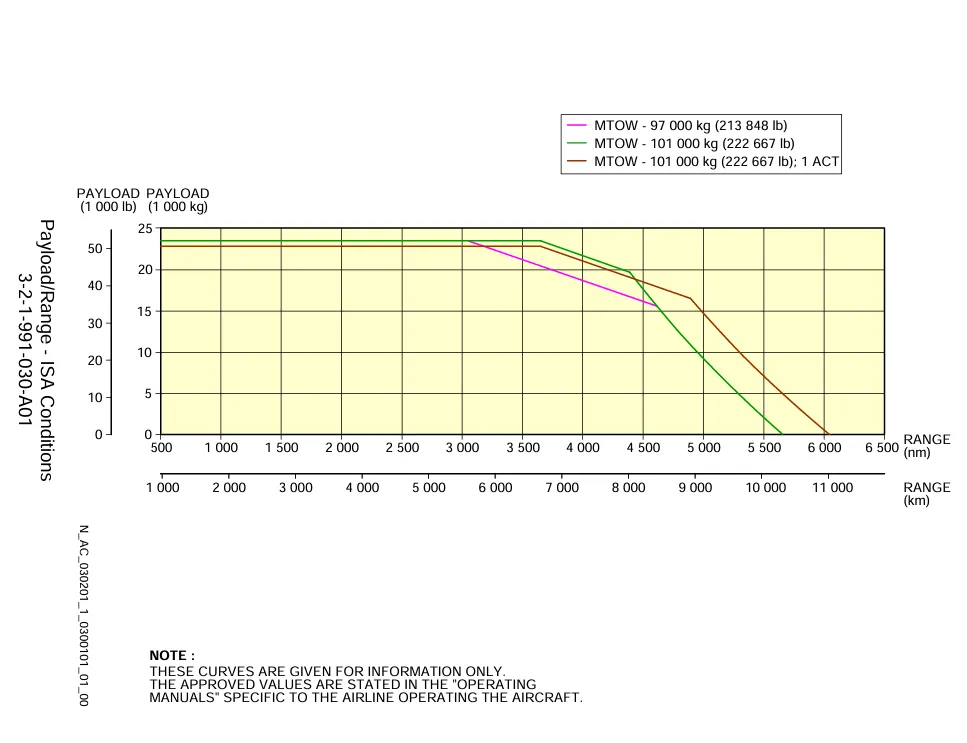
As shown in the aircraft performance data for the Airbus A321XLR, the aircraft can fly with full fuel and no payload up to approximately 5600 nm, or 6000 nm with an additional centre tank (ACT). Although this is not the real range when payload is added, Airbus advertises a range of 4700 nm with 11 hours of flying.
One of the longest routes for the XLR flown by 6E is between New Delhi (DEL) and Istanbul (IST), with a great-circle distance of approximately 2500 nm, but the actual distance is around 3500 nm (as per the flight data for DEL-IST on 29 July 2026).
The BOM-AMS route presents a significantly greater challenge. Although 6E flew an even longer route in March 2026, taking into account the EASA and N0’s risk assessment amid geopolitical restrictions, the route flown is very similar to that of other airlines, such as the Dutch national carrier, KLM, as of today.
According to the flight-tracking data for flight 6E21 connecting BOM and AMS on 29 July 2026, the aircraft flew approximately 4,400 nm. This is calculated directly from the flight coordinates from the ADS-B data system, as per AirNav radar. This range doesn’t account for the impact of wind on aircraft performance and fuel burn, making the equivalent still-air distance (ESAD) even longer.
This means that 6E21 with the A321XLR will be payload-restricted, and a simple calculation can help to determine the approximate payload limit for this flight.
The maximum take-off weight for the aircraft is 101 tonnes, and the XLRs for 6E do not have an additional ACT, just the rear centre tank (RCT). Given a maximum fuel capacity of 32 tonnes, the maximum available payload is 18.5 tonnes, since the operating empty weight (OEW) of the A321XLR is 50.5 tonnes. A fuel load of 32 tonnes is a reasonable assumption, accounting for additional fuel for scenarios such as diversions and adverse weather.
The payload includes not just the cargo but also passengers, crew, and baggage. Furthermore, based on the payload data, the total number of passengers can be estimated at around the lower 160s, with no cargo involved. This can go even lower, depending on the additional cargo uplifted.
Currently, the XLRs for 6E are configured with 12 IndiGo Stretch seats and 183 economy seats. That makes the route economics tougher for the airline. But maintaining access to a market such as Amsterdam is strategically important, particularly given the value of slots at a slot-restricted airport like AMS.
According to aviation flights, the first Airbus A350 for 6E has been allotted an MSN number, which means it is just a matter of time before the airline welcomes its Airbus widebody to the fleet. The airline expects the A350 to arrive in 2027, which seems to align with the timeline.
Featured image: Shyam VimalKumar/Airways


.avif)