

.webp)
.webp)
.webp)
.webp)
Today, in 1962, the Indonesian government established Merpati Nusantara Airlines to provide regional air services. The carrier, which used the IATA code MZ, became known for connecting remote communities across the archipelago.
Merpati began with four de Havilland Canada DHC-3 Otters and two Douglas DC-3s provided by the Indonesian Air Force, according to a history published by Indonesia’s Finance Ministry. By 1970, the airline was expanding into medium- and long-haul flying.

A Regional Role
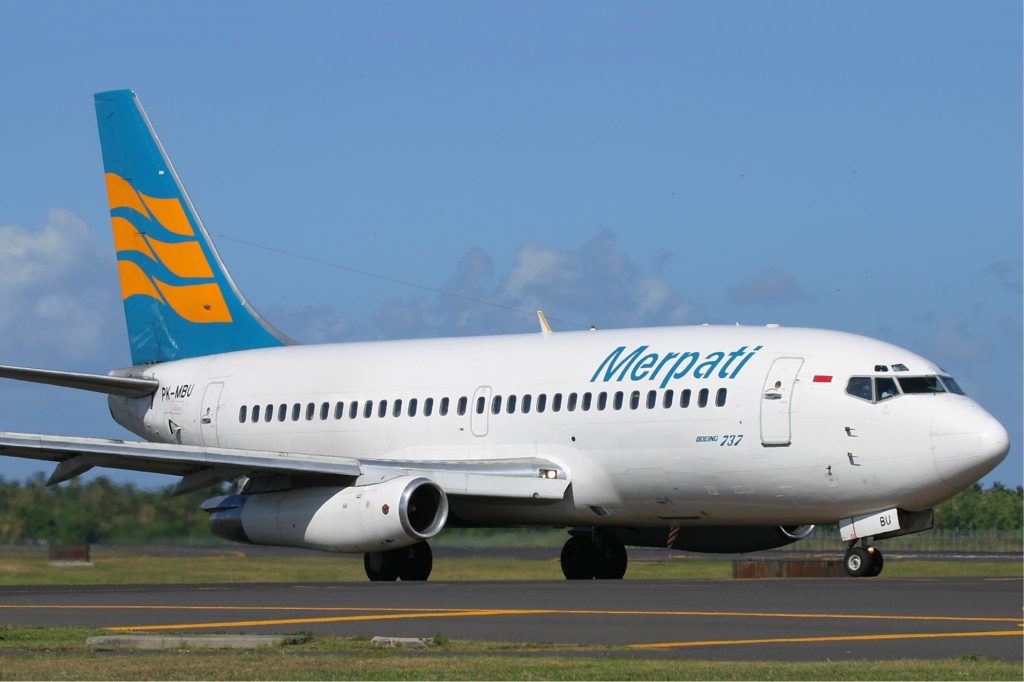
Over the years, Merpati combined its scheduled domestic network with international service to East Timor. Its fleet included turboprops such as the Fokker F27, DHC-6 Twin Otter and Xian MA60, alongside Boeing 737 jets.
The small-aircraft operation remained central to discussions about Merpati’s future. After its grounding in 2014, Indonesia’s then Director General of Civil Aviation Herry Bakti urged the carrier to concentrate on pioneer routes and remote communities, according to ANTARA. He pointed to short runways in eastern Indonesia and said smaller aircraft offered better prospects than its larger-aircraft operation.
Grounding and Failed Revival Plans
Merpati suspended all flights on February 1, 2014, amid debt-related cash-flow problems. Efforts to bring it back continued: CAPA records a government plan for a privatization tender in 2016, with a stake of up to 49% offered to investors. Three potential investors expressed interest.
The airline’s financial problems ultimately reached the courts. The Surabaya Commercial Court declared Merpati bankrupt on June 2, 2022. Indonesia subsequently formalized the company’s dissolution on February 20, 2023, through Government Regulation No. 8 of 2023.
The regulation also provided for liquidation and settlement of the dissolution process, with a deadline of five years from the bankruptcy declaration. The end of flying in 2014, bankruptcy in 2022 and the 2023 dissolution regulation were distinct stages in Merpati’s closure.
Featured Image: Merpati Nusantara Fokker F27-500 'Friendship'.
Featured image: Dmitriy Pichugin/GFDL 1.2



.avif)
_Merpati_Nusantara_Airlines._(8113284482)_(2).jpg)

