Shutdown: Spirit Airlines Ends Operations as Rescue Talks Collapse


.webp)
.webp)
.webp)
.webp)
DANIA BEACH — Saturday morning, South Florida-based ultra-low-cost carrier (ULCC) Spirit Airlines (NK) officially announced it was winding down operations.
The shutdown rumors began late Friday, with Reuters reporting that the bankrupt carrier was preparing to cease operations around 3 a.m. Saturday, May 2, 2026, after a board meeting ended without agreement on a rescue plan.
The Wall Street Journal also reported that a proposed US$500 million government rescue had collapsed, making liquidation likely unless a last-minute agreement is reached. As of late Friday, Spirit had not publicly confirmed a shutdown, but AOC crew messages circling the web said otherwise.
Rising fuel cost: the final nail in the coffin
The ongoing conflict in Iran has disrupted the flow of crude oil and refined products through the Strait of Hormuz, choking jet fuel supply and driving significant increases in both crude prices and refining margins. Additionally, refinery maintenance in certain markets exacerbated the price jump.
Spirit’s restructuring plan assumed jet fuel would stay at about US$2.24 per gallon in 2026, yet prices spiked to approximately US$4.51 per gallon, which, according to J.P. Morgan, could push the airline’s 2026 operating margin to negative 20%, adding about US$360 million in additional costs.
The crisis had been developing for weeks. On April 17, Reuters, citing The Air Current, reported that Spirit sought hundreds of millions in emergency government funding to offset fuel costs and prevent liquidation. By late Friday, the focus had shifted from rescue efforts to planning for an operational shutdown.
A carrier already in retreat
Cirium’s data indicates that Spirit’s collapse would be the culmination of a rapid decline, not the sudden loss of a healthy airline. In February 2026, Spirit carried about 1.7 million U.S. domestic passengers, representing 3.9% of the market, down from 5.1% a year earlier—a 24% drop in market share and 500,000 fewer passengers year over year for that month.
In addition, Spirit has 1,646,878 seats in the domestic U.S. market as of May 2026. According to Cirium's research, this represents the largest decline among major U.S. carriers, down 51.6% from May 2025 scheduled capacity and to a 1.77% share.
In other words, the airline was already operating at visibly reduced scale before the latest Friday-night reports.
Markets most affected by shutdown
Spirit's cease of operations and following flight disruptions will be concentrated in specific markets.
Cirium’s 2025 network snapshot shows the highest flight volumes in Fort Lauderdale (29,032), Orlando (20,476), Las Vegas (16,135), Detroit (11,758), New York/Newark (9,069), and Houston Intercontinental (8,331). These locations are likely to face the greatest challenges for stranded passengers and replacement capacity.
These destinations indicate that the carrier was not just a national ULCC but also a major fare disruptor in Florida-focused leisure and visiting friends and relatives markets, where its absence will be quickly noticed.
The fleet breakdown tells the same story
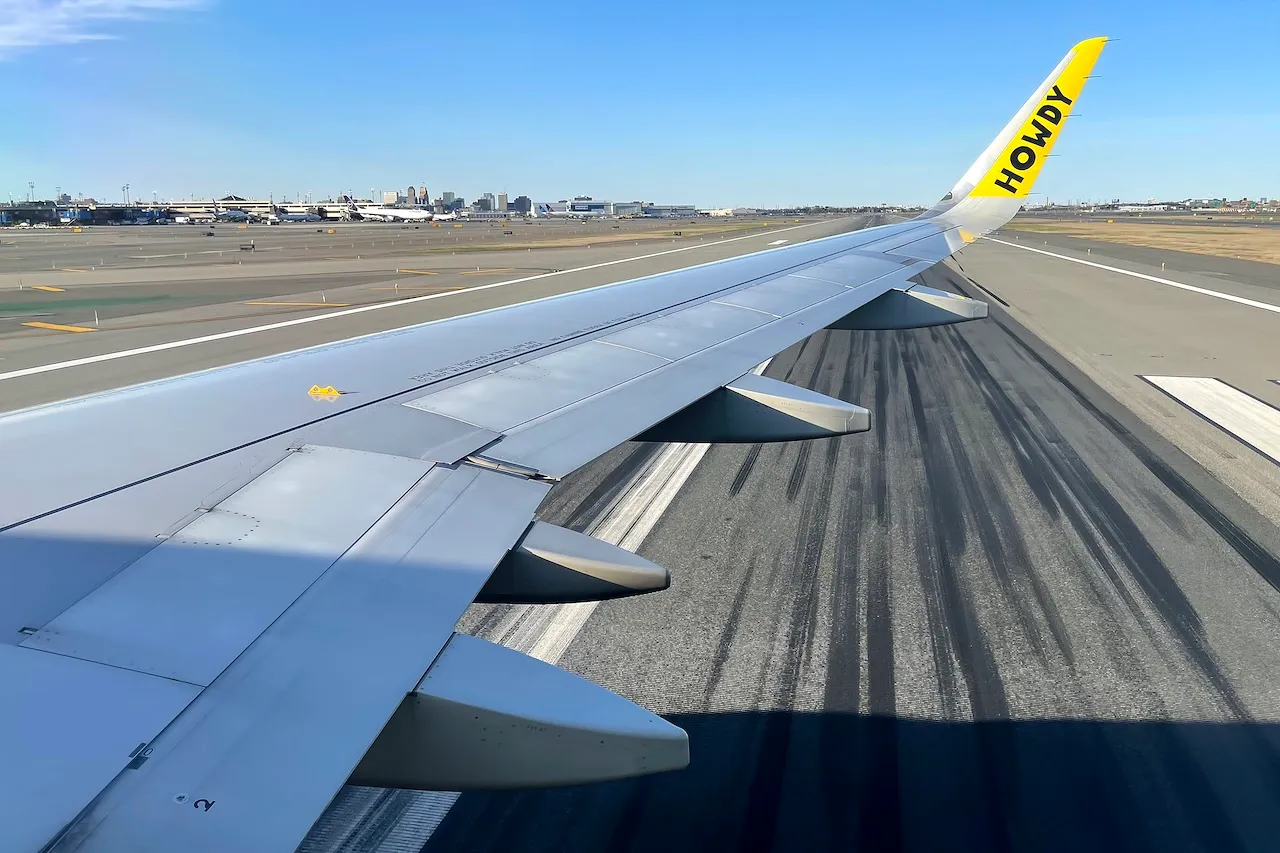
Spirit’s fleet profile further highlights the airline’s fragility. The ULCC’s fleet is relatively young, with an average age of about 7.3 years, but many aircraft are in storage. Cirium data shows 59 A320-family aircraft in service and 63 in storage; 37 A321 jets in service and 13 in storage; and only 13 A320neo aircraft in service, compared to 49 in storage. The aviation analytics company noted that many parked aircraft were affected by Pratt & Whitney GTF engine issues.
Fleet ownership is another weak point. 76% of Spirit’s fleet is leased, with only 24% owned, and AerCap, SMBC Aviation Capital, and Jackson Square Aviation are the largest lessors. In a liquidation, much of the fleet would return to lessors rather than remain with the airline.
A most significant collapse
The impact of Spirit's shutdown will extend beyond the loss of a single airline. Originally established as Charter One in 1983 and rebranded as Spirit Airlines in 1992, the airline adopted a disruptive business model focused on offering the lowest possible base fares, with customers paying separately for additional services. This approach positioned the carrier as a leading ULCC in the U.Ss.
The airline introduced unbundled, ultra-low-fare flying to Americans and made legacy carriers reconfigure their basic economy products, standardize bag fees, and match fares more aggressively.
Even competitors that opposed Spirit’s model spent years understanding it, adapting to it, and, ultimately, offering a better deal, at least when comparing the passenger experience, with one salient example being JetBlue (B6) East Coast routes.
Over the last two decades, we have seen Delta Air Lines (DL) explicitly refer to its Basic Economy as the “Spirit match fare” and American Airlines (AA) state that its stripped-down fare is designed to compete with ULCCs. Southwest Airlines (WN) also adopted similar à la carte pricing strategies, introducing bag fees and a basic economy product.
Spirit's business strategy ultimately had to contend with a myriad of challenges, including pressure from mainline carriers, substantial debt, a failed merger, post-bankruptcy vulnerability, grounded aircraft, a contracting network, and high fuel costs.
The shutdown is official
On Saturday morning, Spirit's website stated that "Spirit Is Winding Down All Operations," adding:
"It is with great disappointment that on May 2, 2026, Spirit Airlines started an orderly wind-down of our operations, effective immediately. To our Guests: all flights have been cancelled, and customer service is no longer available. We are proud of the impact of our ultra-low-cost model on the industry over the last 33 years and had hoped to serve our Guests for many years to come.
This website contains information about the wind-down process. If you have any further questions, please contact our claims agent, Epiq, by emailing SpiritAirlinesInfo@epiqglobal.com or calling (855) 952-6606 (for toll-free U.S. and Canada calls) or (971) 715-2831 (for international calls)."
You can read the full statement here.
What’s next for Spirit customers
Spirit says "Guests should not go to the airport. For more information regarding your refund status and next steps, please visit our Guests page." Vendors should also go to the airlines vendor page.
Booking confirmations, screenshots, and receipts should be kept by those who paid with a credit card. A chargeback might be the most sensible and expedient course of action if Spirit ceases operations without providing transportation. This is the most practical short-term expectation, but it is based on common consumer practice rather than an official Spirit policy.
Spirit will work on refunding customers who booked directly with the airline. If you booked with a travel agents, you have to go thorugh them to get your refund. Now word on what's going to happen with loyalty program points.
As for Spirit employees, 17,000 job will be impacted by the shutdown.
Legacy and major carriers offer support
United Airlines (UA) and American Airlines (AA) are now the short-term solution in situations where wider network coverage is more crucial than fare similarities, B6 in some Northeast and Florida overlaps, and Frontier (F9) in leisure markets where Spirit was prevalent. UA and AA were the initial responders during the first hours of disruptions.
Early Saturday morning, UA stated the following: "Today United Airlines launched several new initiatives to help make navigating this uncertain time a little easier."
"If you had a ticket booked on Spirit and your flight was canceled, for the next two weeks you can visit united.com/specialfares to find price-capped, one-way tickets from most cities where Spirit flew, including Atlanta, Chicago, Fort Lauderdale, Houston, Las Vegas, Miami, Newark, New Orleans and Orlando."
On its part, AA stated, "The American Airlines team is doing everything we can to support Spirit Airlines customers and team members affected by Spirit's immediate wind-down of operations. We are in touch with the Administration, including the Department of Transportation, on steps we are taking to help mitigate the impact on the communities Spirit serves and the traveling public.
To help customers whose travel may be disrupted, we immediately put rescue fares into place on Spirit routes where American also offers nonstop service. American serves 70 of the 72 airports Spirit presently serves, and 67 of the specific routes Spirit currently operates. We are also reviewing opportunities to add additional capacity — including utilizing larger aircraft and adding flights on critical routes — to support as many affected passengers as possible."
JetBlue following suit, stating that it was "offering $99 rescue fares to assist stranded travelers with immediate travel planned." I also sait it would "cap fares to ensure affordable rebooking options remain available as more travelers look to rebook and demand increases."
The New York JFK-base carrier also said it "will significantly expand its presence at Fort Lauderdale-Hollywood International Airport (FLL) with 11 new cities to help backfill critical service and allow customers to continue to see a strong selection of flights and destinations, " and "extend its jumpseat agreement for Spirit pilots and flight attendants trying to get home and offer interview opportunities for open roles at JetBlue."
Avelo Airlines (XP) also announced that it would offer "discounted fares, including 75% off base fares across its network, along with a seamless status match into the Avelo PLUS membership program to support travelers affected by Spirit Airlines' shutdown."
By late Saturday afternoon, Avianca (AV) had become the first major Latin American carrier to provide structured return options for stranded Spirit passengers.
The obituary
As Spirit ceases operations after 34 years, it will be remembered not as the brunt of many bad jokes but as the airline that made low fares a strategic force the U.S. aviation industry could not ignore. Larger carriers initially dismissed Spirit, then emulated and competed with it, ultimately adopting aspects of its approach.
As I opined last week regarding Spirit Airlines, bankruptcy is not a moral condemnation, at least not in the U.S. It is a mechanism for sorting assets, liabilities, claims, and ownership when a company’s structure no longer works.
In the end, Spirit’s legacy will endure beyond its operations. The yellow jets may disappear, but the market they helped create will remain.
Featured image: Andrew Henderson/Airways



.avif)